
Long before Singapore became an independent nation, an Indian Muslim chef created a biryani that would transcend cultures, generations and even royalty. More than a century later, Islamic Restaurant remains a remarkable custodian of Singapore’s culinary heritage.
For more than a century, this humble establishment has witnessed Singapore transform from a British colonial trading port into the modern metropolis we know today. It survived the Japanese Occupation, economic upheavals and changing food trends. Along the way, it has fed ordinary workers, community leaders, presidents and royalty, all united by an appreciation for good biryani.
Yet what makes Islamic extraordinary is not simply its age or illustrious clientele. It is the story of how an immigrant’s culinary ingenuity, influenced by Indian, Turkish and Chinese migrant tastes, created a distinctive style of biryani that remains remarkably faithful to its origins.
And interestingly, the story began with a little encouragement from a Chinese Hakka wife.
From a Tamil Immigrant to the Kitchens of the Alsagoffs
Through an arduous sea voyage, M. Abdul Rahiman left his village, Enangudi, and arrived in Singapore from Tamil Nadu in search of a better life. He eventually found employment with the influential Alsagoff family, merchants of Yemeni descent whose presence in Singapore dated back to 1824. The family had amassed considerable wealth through regional trade, particularly in spices and commerce connecting Southeast Asia with the Middle East.
Within the Alsagoff household, Rahiman rose to become Head Chef. It was here that his culinary education took an interesting turn. Apprenticing under a Turkish chef, he was exposed to cooking traditions quite different from those of his native South India. These influences would eventually inspire his own creations, including Islamic’s distinctive Chicken Mysore.
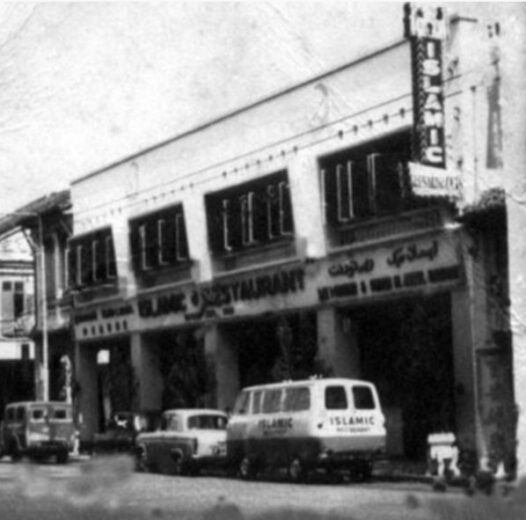
Before establishing Islamic Restaurant, Rahiman operated a modest food stall serving Indian curries with rice. It was reportedly his Chinese Hakka wife, Aisha Zarifa,
In the 1920s, Chinese residents constituted approximately three-quarters of Singapore’s population. Rather than reproduce the stronger spice profiles of traditional Indian biryani, Rahiman developed a gentler, more restrained rendition that would appeal to Chinese, British and other communities.
What emerged was a biryani distinctly shaped by Singapore’s multicultural environment, an immigrant’s interpretation of a familiar dish adapted to a new homeland without abandoning its culinary roots.
At Islamic Restaurant, the dish is known as Beryani, a name that pays homage to the Persian word Beryan, meaning “fried before cooking”, reflecting the dish’s historical origins.
A Restaurant That Witnessed a Nation Being Born
Islamic Restaurant’s guest list reads like a chapter of Singapore’s history. Its distinguished patrons included Singapore’s first President, the late Yusof Ishak, former Chief Justice Wee Chong Jin, and regional royalty, including the Sultans of Brunei, Johor, Perak and Perlis. The restaurant also played a part in Singapore’s independence celebrations in 1965, catering food during a defining moment in the nation’s history.
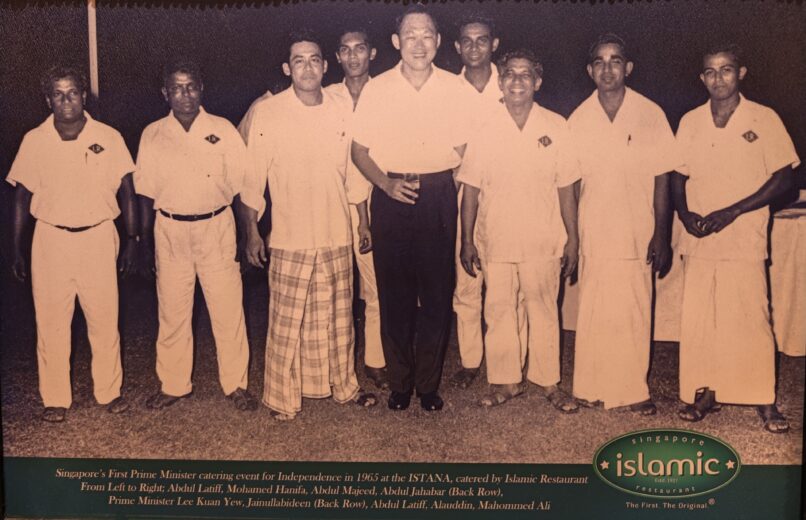
But Islamic’s significance extended beyond feeding prominent personalities. It was a community gathering place where people came to meet, discuss business and settle disagreements. This was an era when restaurants played a far greater social role than simply providing food. Its reputation as neutral ground and familiar anchor for the immigrant communities made it a place where community meetings and clan disputes could be discussed over a meal.
Where Every Photograph Has a Story
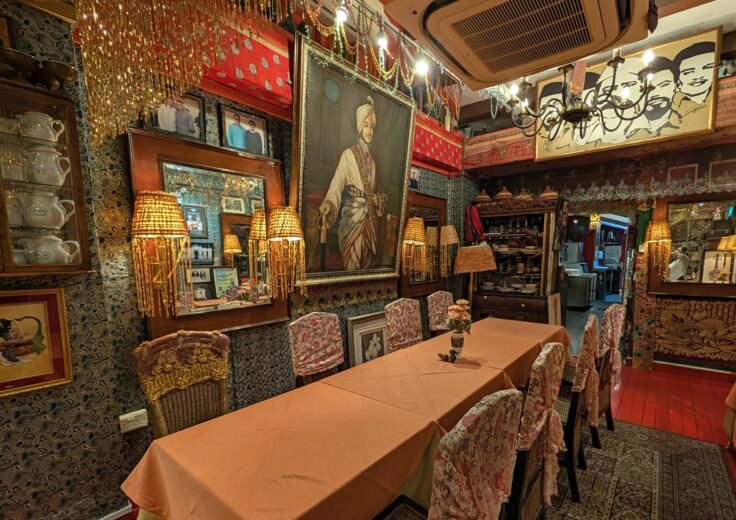
Stepping into Islamic Restaurant is rather like entering a family archive that happens to serve exceptionally good food.
The eclectic interior is filled with photographs, framed documents, old menus and memorabilia accumulated over generations. Among the fascinating exhibits are cheque books from the 1950s belonging to a bank that no longer exists, and a sales receipt dated 1961 recording a meal costing 23.95 Malayan and British Borneo dollars which would approximately cost $120 in Singapore dollars today.
Old menus reveal dishes that might surprise modern diners, including pigeon and sheep’s brain. Pigeon was once regarded as a luxury ingredient, while sheep’s brain reflected the nose-to-tail eating traditions familiar to South Indian Muslim communities, where making full use of an animal was both practical and culturally ingrained.
The restaurant has not always occupied its present premises, although North Bridge Road has remained central to its story. Its current building also enjoys the unusual distinction of being among the relatively few heritage establishments in Kampong Glam permitted to operate second-floor dining.
The photographs and memorabilia represents more than an object preserved, they tell of a family’s resilience and the determination required to keep the business alive through extraordinarily difficult times, and a reminder that the survival of a century-old restaurant is rarely the result of good cooking alone.
The Quiet Craftsmanship Behind the Spices
At Islamic, tradition begins long before a pot reaches the stove.
Rather than rely on commercially prepared spice powders, the restaurant continues to source dried spices according to its own specifications, roasting and preparing them in-house. This allows greater control over freshness, aroma and consistency.
Their relationships with spice suppliers stretch back decades. These suppliers understand the restaurant’s expectations and the particular qualities required of each ingredient. Till today, the family maintains its preference for natural ingredients without artificial flavourings or preservatives. The family’s kitchen philosophy revolves around an indepth understanding of how individual ingredients interact, and how this commingle creates food that is thoughtfully spiced for a more satisfying result. This philosophy is apparent in each of Islamic’s dishes.
The Beryani – A Century of Restraint and Refinement
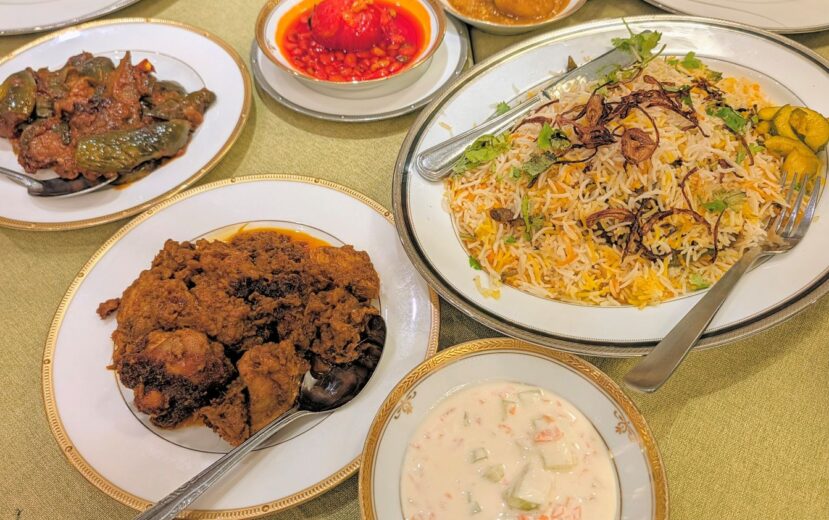
We ordered the signature Mutton Biryani and Duck Beryani, both prepared according to recipes the family says have remained largely unchanged for more than a hundred years.
Eating beryani is a little like unwrapping a present. Beneath the fragrant mound of rice lies the promise of something delicious, and there is a certain satisfaction in uncovering the meat concealed within. As we parted the fluffy grains, beautifully braised pieces of mutton and duck emerged, moist and richly coloured, their surfaces coated with deeply caramelised spices. It required very little imagination to anticipate a satisfying meal.
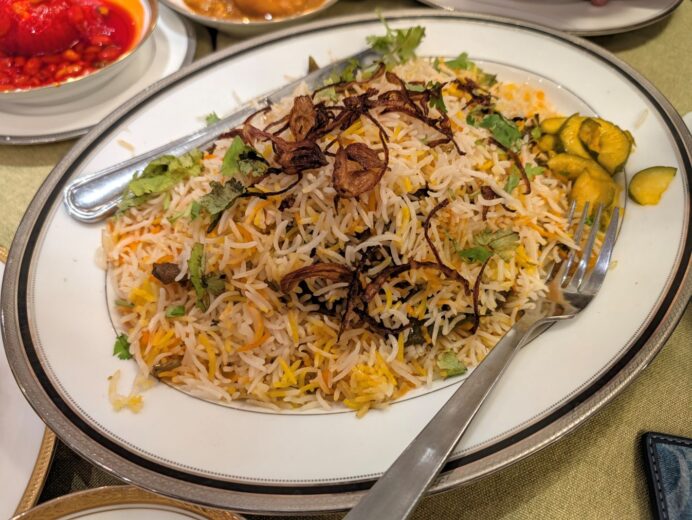
The rice was beautifully cooked, with long, separate grains that remained light and fluffy. Its fragrance was warm and inviting, but noticeably more restrained than many bolder Indian biryanis. A gentle savoury sweetness ran through the rice, reminiscent of slowly fried onions, complemented by the earthy warmth of roasted spices. Fried shallots and fresh coriander for toppings provided contrasting aromas, the latter adding welcome freshness to the richer elements. The proprietor shared one small detail of their family recipe: Islamic uses white pepper rather than black pepper. It is a subtle distinction that reflects the attention paid to balancing flavours.
The mutton was exceptional in tenderness. A gentle nudge with a spoon was sufficient to separate the meat from the bone, and each mouthful yielded almost effortlessly. It retained a satisfying meaty character without pronounced gaminess.
The duck was equally tender, with moist flesh that had absorbed the surrounding spices beautifully. Between the two, however, we preferred the mutton. Its naturally firmer texture provided a more satisfying bite and stronger contrast against the delicate rice.
There is a tendency to judge biryani by the intensity of its spices, as though louder flavours necessarily mean better cooking. Islamic’s rendition challenges that assumption. Its strength lies in restraint. The spices are present, layered and fragrant, but never overwhelm the principal ingredients. Achieving such balance requires confidence and an intimate understanding of the recipe. There is a noticeable difference between food that is aggressively spiced and food that is thoughtfully spiced. The former can impress immediately, but the latter requires an understanding of how individual ingredients interact and when restraint produces a more satisfying result.
Dalcha – The Comforting Companion
A good biryani deserves an equally good dalcha, and Islamic’s rendition certainly did not disappoint. Perhaps this comes as no surprise, given that founder M. Abdul Rahiman hailed from Enangudi in Tamil Nadu, a region renowned for producing some of the finest dalcha in South India. His culinary roots are evident in this deeply comforting dish, which proved to be one of the most enjoyable components of our meal.
The dalcha occupied that delicious middle ground between a hearty soup and a thick stew. Lentils and potatoes had been cooked until wonderfully soft and creamy, giving the gravy a substantial body without making it excessively heavy. Its flavour was deeply savoury, with warm, earthy spices creating gentle complexity rather than aggressive chilli heat. The lentils contributed their characteristic nuttiness, while softened potatoes added a comforting, almost velvety quality.
Spoon a little dalcha over the fluffy basmati rice and the grains eagerly absorb the aromatic gravy. Each mouthful becomes richer and more succulent, with the rice providing a lovely counterpoint to the savoury stew. It was the sort of accompaniment that quietly encouraged another spoonful, followed by another. Even without biryani, we would have been perfectly content enjoying the dalcha on its own.
Chicken Mysore – When Indian and Turkish Traditions Met
Among the dishes distinguishing Islamic from other biryani establishments is Chicken Mysore, a culinary fusion of Indian and Turkish flavours attributed to founder M. Abdul Rahman.
Unlike a typical chicken curry swimming in gravy, Islamic’s Chicken Mysore features pieces of chicken coated in a thick, concentrated spice paste that has been patiently cooked down.
The aroma was intriguing. There was a gentle smokiness and toasted nuttiness that reminded us unexpectedly of local otak-otak, although the flavour itself was quite different. Much of this character came from fried onions incorporated into the spice paste, together with coconut cream reduced during cooking. The combination produced a rich, warm fragrance with subtle caramelised undertones.
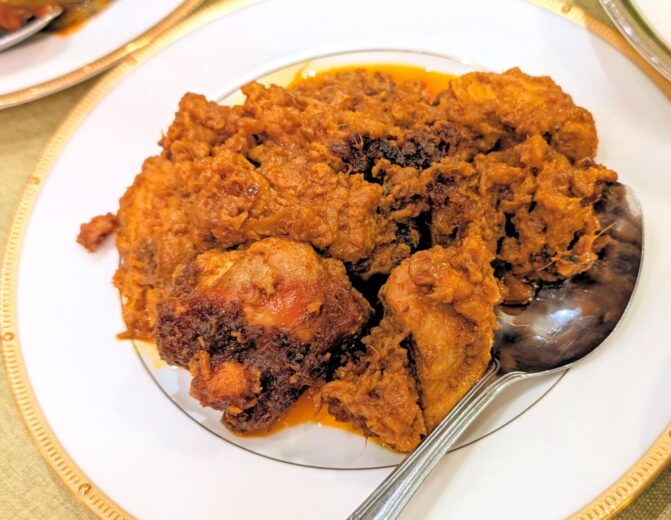
The paste clung generously to each piece of chicken without relying on an abundance of sauce. The meat remained moist and tender, retaining just enough resistance for a pleasant bite. More importantly, the seasoning had penetrated beyond the surface, so the chicken itself was flavourful rather than merely carrying a coating of spices.
Brinjal and Tomato Pachady – Two Very Different Personalities
Pachady is a broad category of South Indian preparations ranging from vegetable chutneys to cooling yoghurt-based accompaniments. Islamic’s brinjal and tomato versions offered two wonderfully contrasting interpretations.
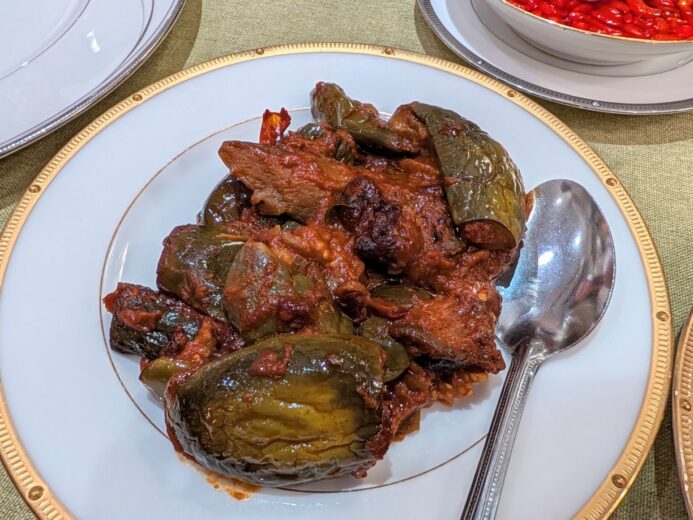
The Brinjal Pachady was particularly memorable. Made using green eggplant, which generally possesses a gentler, slightly sweeter character than its purple counterpart, the dish delivered an unexpectedly complex combination of flavours. There was sweetness, mild tanginess, measured chilli warmth and, most prominently, a deep savoury richness that lingered pleasantly. The eggplant had absorbed the seasonings like a sponge, becoming wonderfully soft and almost pillow-like. Yet it retained its shape rather than collapsing into a purée, allowing the vegetable’s natural texture to remain part of the experience.
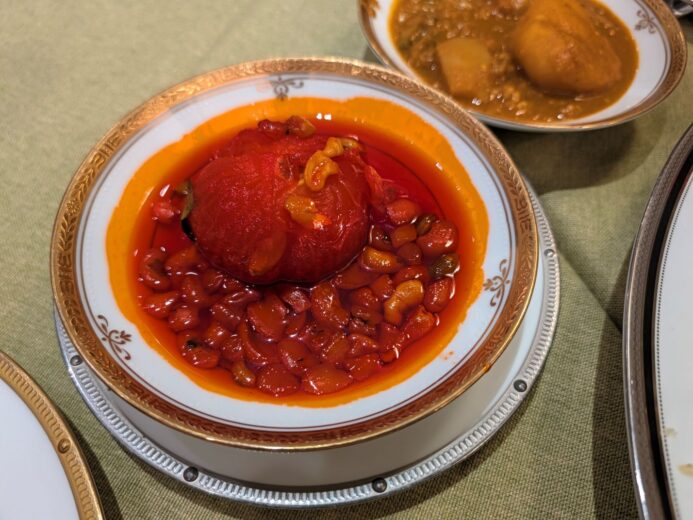
The Tomato Pachady, meanwhile, played an entirely different role. Bright red and glossy, the tomatoes had been cooked in light sugar syrup, producing delicate sweetness balanced by their natural acidity. Its sweet-tangy character refreshed the palate between mouthfuls of savoury dishes. Toasted cashew nuts added earthy nuttiness and creamy crunch, tempering the sweetness while providing another dimension of texture.
Together, these two preparations demonstrated how thoughtful accompaniments can elevate an entire meal without demanding centre stage.
Mariam Bread – A Recipe Born from Kindness
Not every treasured recipe at Islamic originated in its own kitchen. One of its most beloved items, Mariam Bread, came about through a rather charming encounter.
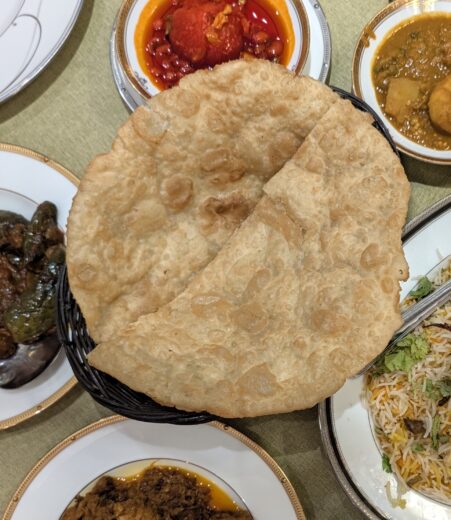
According to the family, a woman named Mariam once sold handmade bread along a small lane near the mosque in Kampung Glam. During a heavy downpour, Rahiman invited her to shelter beneath the covered five-foot walkway outside Islamic and continue selling her bread there. As Mariam grew older, the restaurant eventually offered to purchase her recipe, preserving the bread as part of its menu.
It is a lovely story reflecting the relationships that once formed naturally within neighbourhood communities.
Mariam Bread is fried in a shallow pan until its thin layers become beautifully crisp, delicate and flaky. The result is wonderfully light in texture, with fragile layers that separate easily when pulled apart. A secret to its lightness lies in incorporating hot melted butter into the flour during preparation. Before modern mixers became commonplace, this was an arduous process performed entirely by hand, and certainly not one for the faint-hearted.
The bread had satisfying crispness without feeling excessively heavy or greasy. Its delicate layers made it particularly enjoyable for scooping up the richer sauces and gravies. It is easy to understand why this unassuming bread has become almost legendary among regular customers.
More Than a Restaurant, a Family’s Responsibility
Today, Islamic Restaurant is led by third-generation custodian Kaliloor Rahaman, alongside his son Mathews Abdul Rahman, nephews Abdul Hasani and Rahmani Abdul Wahab, and a niece who prefers to remain behind the scenes. Together, they carry forward the family’s century-old culinary legacy, preserving the recipes, craftsmanship and hospitality that have defined Islamic Restaurant for generations.
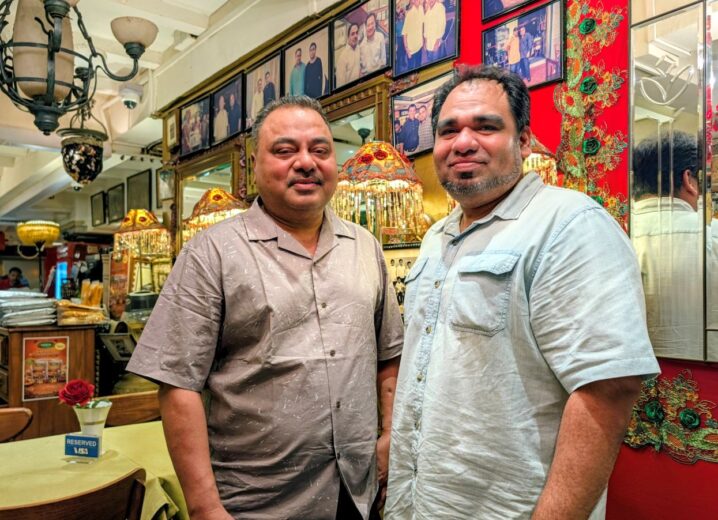
What struck us during our visit was the warmth and familiarity between the proprietors and their customers. Regulars walked in comfortably, some knowing exactly what they wanted without consulting a menu. The family recognised their preferences, and exchanges felt more like conversations between old acquaintances than routine transactions.
We were told that their oldest regular customer is now in his nineties and continues to enjoy Islamic’s biryani through frequent home deliveries. A customer whose lifetime has spanned so much of Singapore’s modern history still finds comfort in a familiar meal from the same family restaurant. It says something about the relationship between food and memory that no amount of fashionable restaurant design can manufacture.
Islamic possesses something increasingly difficult to replicate: an unbroken connection between the food being served today and the people who first created it. Its recipes are not preserved merely as historical relics, but remain part of a living kitchen, prepared for customers who genuinely enjoy eating them.
The family understands that its responsibility extends beyond maintaining a successful business. Every pot of beryani, every batch of roasted spices and every piece of Mariam Bread continues a culinary tradition shaped by generations before them.
Why Islamic Restaurant Still Matters
Singapore’s culinary identity evolved through generations of migration, cultural exchange and the adaptation of traditional recipes to local tastes. Islamic Restaurant is a remarkable example of this evolution. Its beryani was born from an Indian migrant’s culinary knowledge, enriched by Turkish influences, encouraged by his Chinese Hakka wife and adapted to suit Singapore’s multicultural society.
For younger diners accustomed to bold flavours and constantly changing food trends, Islamic’s food might seem understated. Yet its beauty lies in the restraint and craftsmanship behind its preparation. Equally meaningful is the warmth of its hospitality, where customers are remembered and welcomed with a familiarity increasingly rare in today’s digital dining culture.
A hundred years ago, M. Abdul Rahiman set out to feed the people of Singapore. Three generations later, his family continues to honour that simple ambition through their food, craftsmanship and hospitality. Perhaps Islamic Restaurant’s greatest achievement is not merely surviving a century, but ensuring that the spirit of its founder lives on in every meal served.