
There are some meals you eat, and then there are meals that quietly stay with you long after the bowl is empty. At Lau Tan Kopitiam, it is not just about fishball noodles—it is about heritage, patience, and a quiet defiance against the rush of modern food culture.
“Lau Tan,” which means “Old Tan” in Hokkien, is more than just a name on a signboard. It is a story that began in 1959, when the original Mr. Tan pushed his humble food cart through the streets of downtown Johor Bahru. What started as a simple livelihood has since grown into a three-generation legacy, with several outlets across the city. Yet, not all are the same.
Each outlet crafts its own fish products and menu, and the branch in Taman Molek feels especially personal—perhaps because it is helmed by Mr. Tan’s grandson, who carries both the recipe and the responsibility forward.
And yet, it is precisely this stubborn patience that defines the experience here.
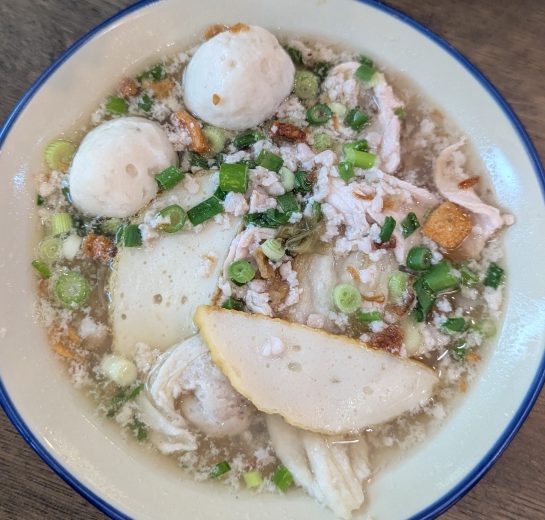
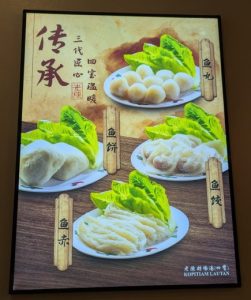
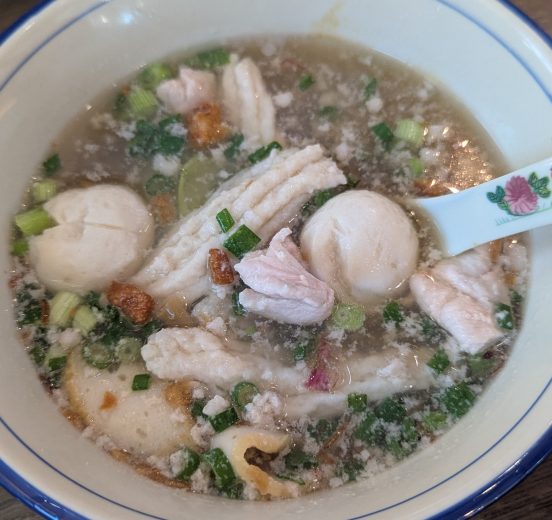
The fishballs are, quite simply, the heart of the bowl. Made from fresh yellowtail fish—chosen for its natural sweetness and soft texture—they are entirely free of preservatives. This is important, because in today’s market, many fishballs are padded with flour and MSG to reduce cost and extend shelf life. At Lau Tan, the opposite philosophy prevails. Here, you taste fish, not filler.
The first bite tells you everything you need to know. There is a distinct bounce—firm yet yielding—followed by a clean, natural sweetness that lingers gently. It is a texture that feels alive, almost springy, and unmistakably handcrafted. It stands in contrast to the fish dumplings, which offer a softer, more delicate chew. Their skins are thinner, more restrained, allowing the filling to shine without overwhelming the palate.
Then there is the fried fishcake. Golden on the outside with a gentle crispness, it gives way to a satisfying bite in the center. It may not have the exaggerated crispiness of some commercially produced versions, but that is by design. The absence of excessive flour means the texture is more honest—less theatrical, more grounded.
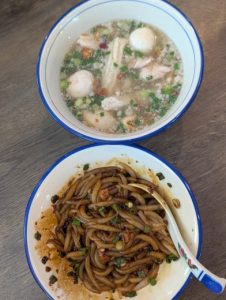
The noodles themselves are wonderfully customisable. Whether you prefer yellow noodles, rice vermicelli, flat rice noodles, or even the charmingly named “mouse tail” noodles, there is something for every mood. You can build your bowl with a variety of ingredients—pork slices, fresh oysters, fish slices, leafy greens—creating a meal that feels uniquely yours.
Whether you choose it soup-based or dry, the result is comforting, hearty, and deeply satisfying.
If noodles are not what you’re craving, the kopitiam offers a spread of familiar Malaysian favourites—laksa, nasi lemak, kaya toast—but it is clear where the soul of the kitchen lies. Everything else feels like a supporting cast to the star performers: the fishballs, fish paste, and dumplings.
The setting itself is refreshingly unpretentious. Wooden tables and chairs, simple decor, and an atmosphere that echoes the kopitiams of the 1960s. There is no attempt to modernise or reinvent the space. It is functional, familiar, and welcoming—like stepping into a place that has always been there, waiting for you.
It is the kind of place where mornings start early and conversations flow easily. Where a bowl of noodles is not rushed, but appreciated. Where regulars return not for novelty, but for consistency.
One detail worth noting: the fish products are also available for purchase, but only in limited quantities. And true to their philosophy, they must be consumed fresh. Without preservatives, there is no compromise on shelf life—only a commitment to quality.
In many ways, Lau Tan Kopitiam represents something increasingly rare. It is a business that values continuity over convenience, craft over shortcuts, and the customer’s experience over easy profit. It does not try to impress with gimmicks or trends. Instead, it offers something far more meaningful—a bowl of food made with care, shaped by history, and served with quiet pride.
A humble, honest bowl of fishball noodles may seem like a simple thing. But here, it carries the weight of three generations, the discipline of tradition, and the warmth of a family’s legacy.
And perhaps that is why it tastes so good. Simple. Hearty. Timeless.