
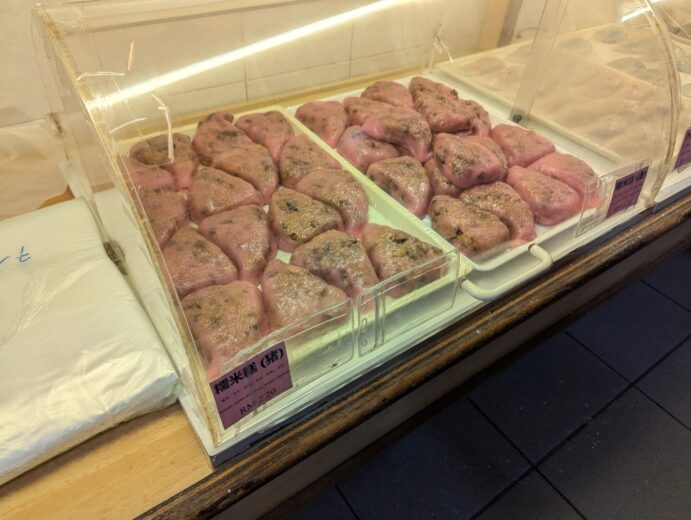
Tucked within the lively neighborhood of Taman Ungku Tun Aminah in Johor Bahru, Min Corner stands as a quiet yet enduring testament to tradition. Established in 1977, this humble eatery has spent nearly five decades preserving the craft of Teochew kuih—unassuming in appearance, yet deeply rooted in culture and memory.
To understand Min Corner is to first understand Teochew kuih itself. Originating from the Chaoshan region of Guangdong province in China, Teochew cuisine arrived in Malaysia and Singapore with migrants in the early 19th century. Along with them came the art of making kuih—delicate parcels typically fashioned from rice or tapioca flour skins, filled with either savory or sweet ingredients. The word “kuih” stems from the Southern Min (Hokkien and Teochew) term koé (粿), historically used to describe rice-based snacks and sweets. Over time, these humble creations became woven into the culinary fabric of the region, quietly passed down through generations.
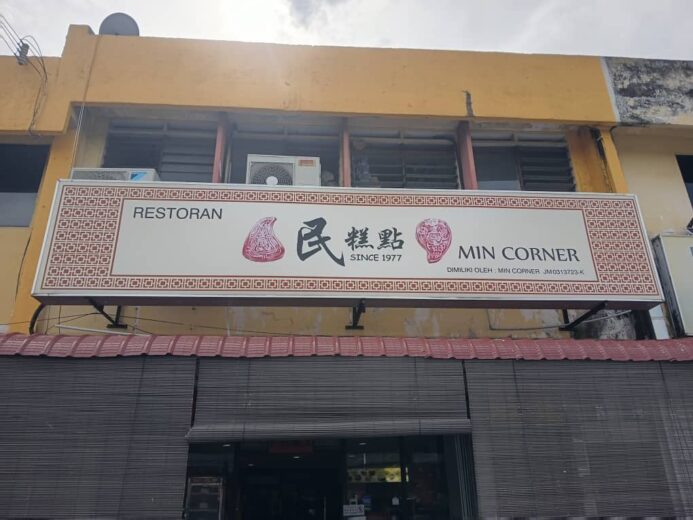
Step into Min Corner at almost any hour, and you are immediately met with a scene that speaks volumes. The shop is constantly bustling—queues forming for takeaway orders, while tables fill quickly with diners eager to enjoy their meals on the spot. Multi-generational families sit side by side with young working adults, retirees, and regulars who have made this part of their regular routine. There is an unspoken rhythm here: trays continuously replenished, fast flowing takeaway line, conversations flowing. It is a place where heritage meets everyday life, effortlessly.
We began with a selection of familiar crowd-pleasers: Soon Kuih, Png Kuih, Ku Chye Kuih, and Ang Ku Kuih.
The Png Kuih, or “rice peach,” is instantly recognizable by its symbolic shape. Peaches represent longevity and immortality in Chinese culture, making this kuih a common offering in prayers and ancestral worship. Inside, the filling is hearty and deeply comforting—a mixture of glutinous rice, peanuts, mushrooms, and dried shrimp. The rice is well-balanced, neither overly sticky nor dry, absorbing the rich umami flavours of the ingredients. Each bite delivers a satisfying medley of textures and aromas, grounding and familiar.
The Ku Chye Kuih is a standout. Its skin is beautifully translucent and impressively thin,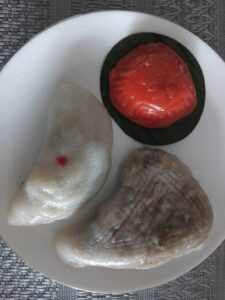
In fact, this is where Min Corner truly distinguishes itself. Compared to many other kuih makers, they have perfected the art of crafting thin, slightly chewy skin wrappings. Many vendors opt for thicker skins for ease of wrapping and lower production costs, but here, the difference is evident—lighter, more refined, and never doughy. Each kuih feels carefully constructed rather than mass-produced.
The Ang Ku Kuih—literally “Red Tortoise Kuih”—provided a sweet finish. Symbolising longevity and health, it is traditionally used in celebrations such as elderly birthdays, baby full-moon celebrations, and Chinese cultural festivals like Ti Gong Seh (the birthday of the Heavenly Jade Emperor). The version we tried was filled with toasted peanuts—fragrant, nutty, and comforting. Compared to the other kuih, the skin here was on the thicker side, and we felt it could have been thinner. That said, it remained soft and slightly chewy, making it more forgiving and still enjoyable.
Beyond kuih, Min Corner also serves a range of beloved Malaysian street fare including Mee Siam, Mee Rebus, Nasi Lemak, Laksa, Cendol. These dishes complement the kuih offerings, turning Min Corner into more than just a specialty shop—it becomes a complete, everyday dining spot.
During the Dragon Boat Festival, the shop takes on an added layer of tradition, offering rice dumplings (bak chang) for purchase or pre-order. Filled with glutinous rice and a rich mix of ingredients, these seasonal treats further reflect Min Corner’s role in preserving festive food heritage.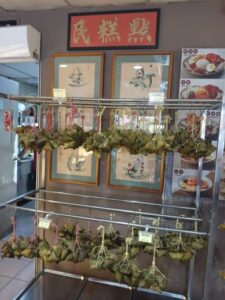
What sets Min Corner apart is not innovation, but restraint. In an era where food is often reimagined or modernised, this establishment remains firmly rooted in authenticity. There is no attempt to elevate these kuih beyond what they are meant to be. Instead, they are made with consistency, care, and respect for tradition.
There is also an undeniable sense of continuity here. Many heritage food makers operate quietly, without the amplification of social media, sustained instead by loyal patrons and word of mouth. Min Corner is one such place—a living archive of culinary knowledge that risks fading if not appreciated.
Eating here feels less like dining and more like participation in a shared cultural memory. Teochew kuih has never been about spectacle. It is food meant to be savoured slowly, often shared among family and friends, across generations.
Min Corner reminds us that food is more than sustenance—it is connection. To history, to people, and to place.
And in its bustling corner of Johor Bahru, Min Corner continues to do what it has always done—serve kuih that quietly carries the past into the present.
*Based on flavour and quality, this place is in Bib Gourmand territory.