Damyang may be best known for its bamboo forests, but for many Koreans, this small town in Jeollanam-do is synonymous with duck. Producing almost half of South Korea’s duck supply, the region has long been celebrated for its mallard duck and its iconic regional dish, ori-tang (duck stew), a recipe believed to have originated in the 1970s from a local duck farmer.
Our visit wasn’t planned.
Driving from Sunchang, we arrived too late for our original destination. Rather than call it a day, we followed instinct and found ourselves at Damyang Myeongga Ori, a spacious countryside restaurant dedicated almost entirely to Damyang’s famous duck stew. With room for around a hundred diners and filled mostly with elderly locals finishing their weekday lunch, it immediately felt like we’d stumbled upon somewhere special.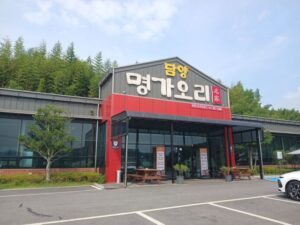
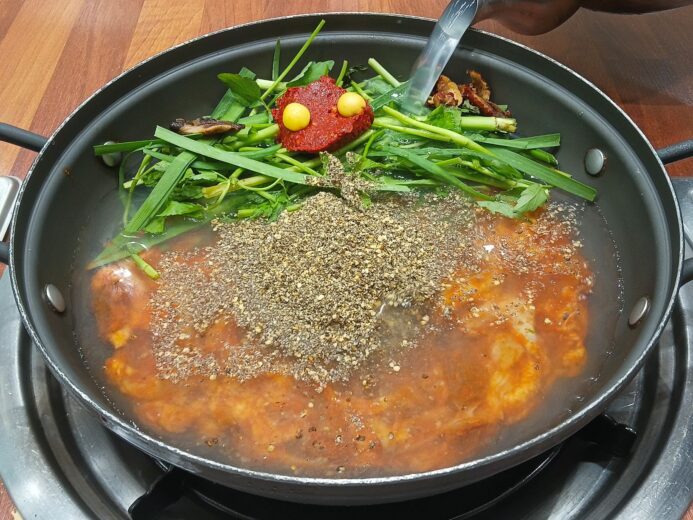
Soon, a steaming pot arrived at our table. Beneath the broth lay an entire layer of sliced raw duck, covered with dried mushrooms, jujubes, ginkgo nuts, gochujang with an astonishing amount of finely ground perilla seeds. Beside it came what could only be described as a mountain of minari and garlic chives, together with the usual spread of banchan. 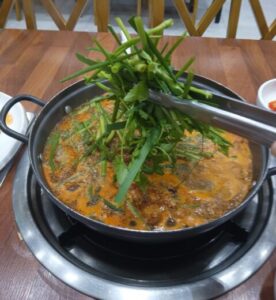
Like any good hot pot, the stew evolves throughout the meal. Greens are continuously added as you eat, gradually enriching the broth while keeping it fresh. The fragrant minari and chives don’t overpower the duck. Instead, they balance its richness beautifully, adding brightness that makes every mouthful feel lighter than expected.
We made one mistake.
Thinking of duck the way we usually cook it, we carefully lowered the heat to avoid overcooking the meat. The server quickly returned, smiled, turned the flame back up, and encouraged us to let it boil vigorously. Surprisingly, despite the rolling boil, the duck remained remarkably tender from beginning to end. Instead, the stronger boil thickened the broth, concentrating the flavours into something wonderfully nutty and deeply comforting.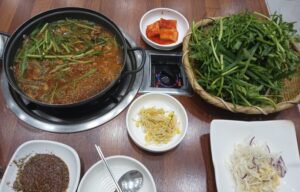
The duck itself was unlike the versions we’re accustomed to in Southeast Asia. It wasn’t gamey or overly fatty, but clean, tender and delicate. Dipped into a vinegar and perilla seed sauce, each bite became richer yet brighter at the same time, with the tangy sauce cutting through the duck’s natural richness perfectly. 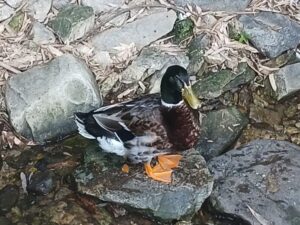
As the broth reduced, rice was stirred into the remaining stock to make a comforting porridge that absorbed every last drop of flavour. Thick with perilla, buttery in texture and intensely savoury, it was the perfect ending to the meal.
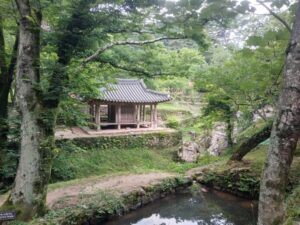
Damyang may be famous for bamboo dishes such as daetongbap (bamboo rice), bamboo ice cream and bamboo hotteok, alongside specialties like tteokgalbi. We missed most of them this visit, although we did wander through the beautiful 400-year-old Soswaewon Garden, where wild mallard ducks quietly swam through its streams. Somehow, it felt like the perfect ending to a day that reminded us that the best meals aren’t always the ones you plan—they’re often the ones that find you.