
There are restaurants that impress you in the moment. And then there are those that stay with you – quietly, long after the meal ends.
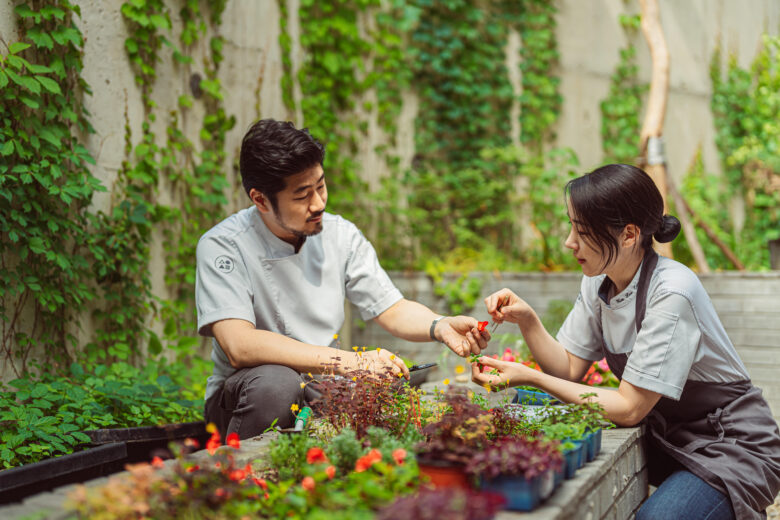
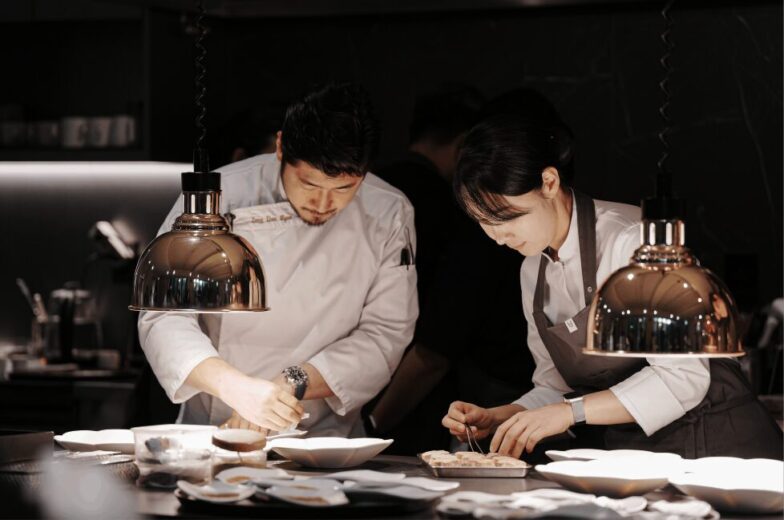
At Soul Dining, a one-Michelin-star restaurant led by husband-and-wife team Chef Yoon Dae-Hyun and Chef Kim Hee-Eun, the experience goes beyond the plate. It is not merely about precision, technique, or even taste though all are present in abundance. It is about something quieter, deeper, and far more difficult to articulate: a conversation between chef and diner, spoken through food.
On the menu, Chef Kim writes a simple note: “We are driven to give you an experience that moves not only your heart but your soul as well.” It is a simple statement – one that many might overlook – but here, it feels deeply sincere. Chef Yoon echoes this philosophy: “Food becomes valuable when it is soulful.”
These words could easily feel aspirational elsewhere. At Soul Dining, they feel lived.
“I chose the name Soul because I believe the restaurant must have a soul,” she says. “Cooking is another form of communication. It is a very honest, person-to-person conversation between me and my guests.”
In a dining landscape that often equates “modern” with innovation or technique, Chef Kim’s interpretation feels almost disarmingly grounded.
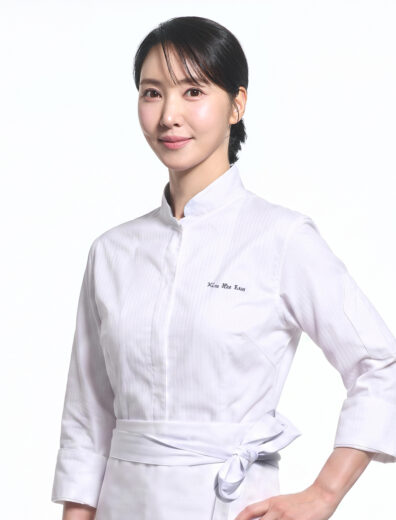
“People tend to misunderstand the word modern,” she says. “They think it means new technology or something completely different.
But for me, perspective is more important. Tradition must be respected, it’s not something that we replace. Modern cuisine doesn’t mean we move away from it. It means we understand it, and then express it in our own way.”
There is no sense of rebellion in her tone. No urgency to redefine. Instead, there is humility – a quiet confidence that evolution does not need to be loud to be meaningful. It is a way of seeing – of honouring what has come before while expressing something personal and present.
When asked where a dish begins, Chef Kim doesn’t mention technique or sourcing.
“I think most things in life come from memory,” she says. “It is our experiences and feelings that shape us.”
She explains that she keeps notes, not just of flavours, but of moments.
“Whenever I try something new, I write down what I tasted, but also how I felt. Later, when I create a dish, I go back to that moment and try to recreate that feeling.”
What arrives at the table is no longer just a composition of ingredients, it is a translation of memory.
“It’s not only about good ingredients. Ingredients are a way to execute. But the soul of the dish comes from experience. When guests eat my food, I want them to feel something – not just taste something.”
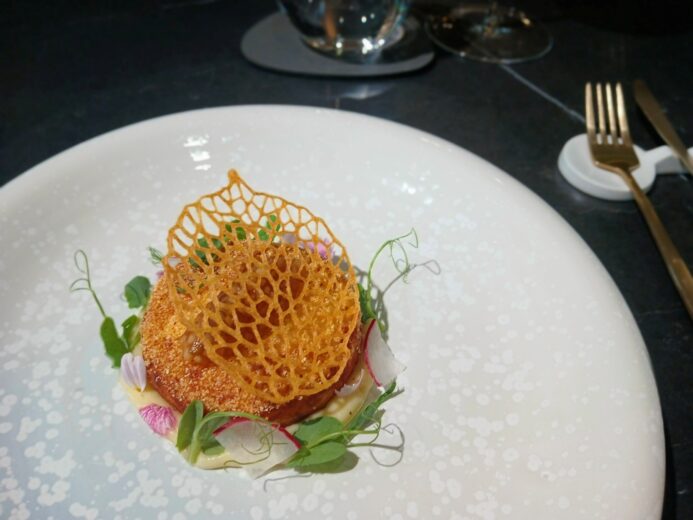
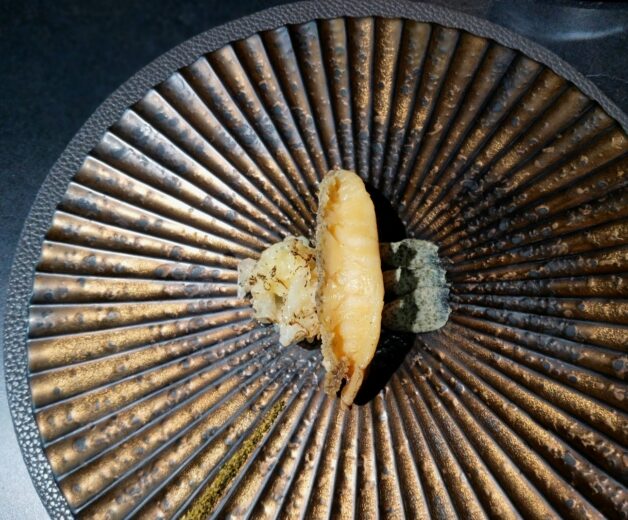
One of the most striking expressions of Chef Kim’s philosophy comes through her treatment of humble ingredients, particularly the ones often overlooked.
The dish 7 Mushroom is, at first glance, disarmingly simple. Mushrooms and egg are everyday ingredients that exist in countless home kitchens. Familiar, almost ordinary, each are presented with care and restraint.
Seven types of mushrooms appear in different forms – powdered, crisped, folded into the egg. The steamed egg itself defies expectations. Neither wobbly soft nor firm, it holds an airy density – creamy and luxurious. Paired with the earthy flavours of mushrooms, it becomes a deeply comforting dish.
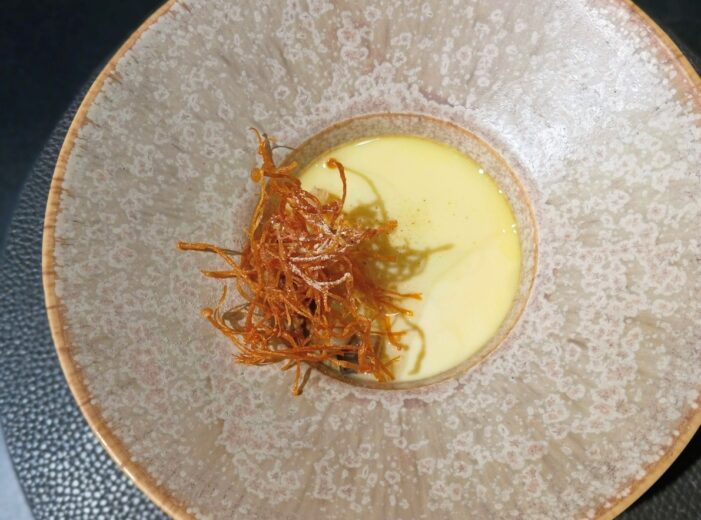
“I think even a simple dish can carry emotion,” she adds. “Many people have memories of eating something like this.” “Korean food isn’t just mainstream fast food that is commonly seen in international media. In Korea, we apply a wide range of cooking techniques such as steaming, poaching, fermentation, boiling; some of them may seem simple but it is often the simplest things are the hardest to perfect. It is about using these techniques and applying them in the right manner to honour the ingredients.”
And that is precisely what makes it powerful. It is a dish that does not rely on grandeur. It reminds us that simplicity, when treated with respect, can be profound.
When asked which dish feels closest to her right now, she doesn’t hesitate.
“The Pithivier with Burdock, and Ceramic,” she says.
“In Korea, burdock is seen as a very humble ingredient. Many people think it is not important. But I wanted to show its true potential.”
Instead of using pastry, she uses burdock itself as the outer shell. Inside, a delicate composition of spinach, scallop mousse, sea bream, and enoki mushroom comes together. It is not just a culinary choice – it feels like a reflection of her culinary philosophy. Served individually, each component might feel complete. But together, they transcend themselves. It is not just balance, it becomes harmony and unity.
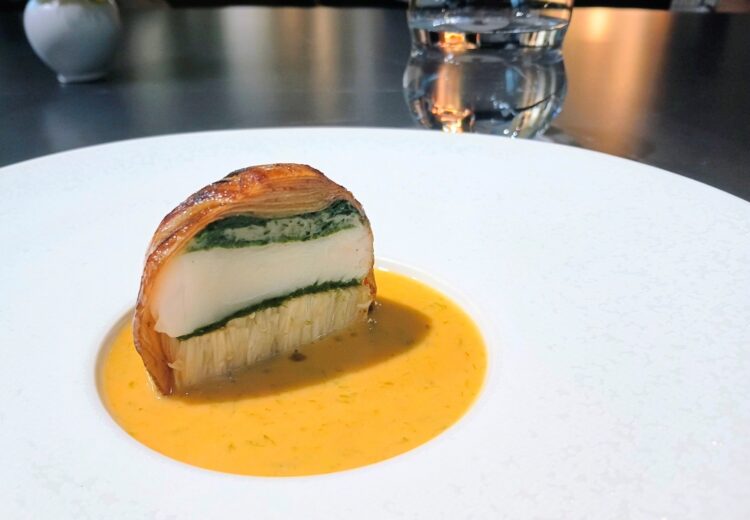
The dish embodies her philosophy: that ingredients, like people, are not defined by status. It is in their relationships – with one another, and with the hands that shape them – that meaning is created.
Her past as a ceramic artist surfaces most clearly in her dessert – Ceramic.
“I studied ceramics before becoming a chef,” she shares. “So this dish is very personal.”
Inspired by the Korean moon jar “dalhangari” which were historically used to store grains, the dessert places pine nuts at its heart, an ingredient Chef Kim believes is often overlooked and misunderstood.
“Many people don’t realise that pine nuts originated from Korea. I wanted to show how precious they are.”
The dish unfolds with quiet intricacy, almost meditative in its construction. Yet she gently resists calling it art.
“It’s not about making something beautiful,” she says. “It’s about expressing something meaningful.”
And yet, when it arrives at the table, there is an instinctive pause – a hesitation to disturb something so delicately composed. It draws you in, asking you to slow down, to take a moment before the first bite.
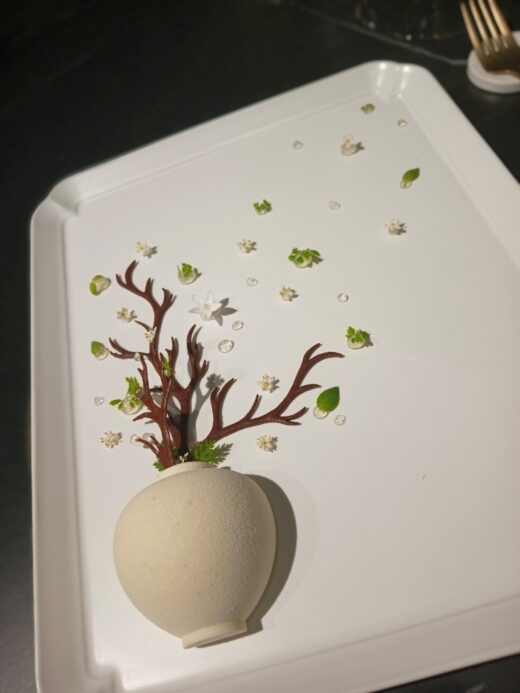
With each spoonful, the experience becomes contemplative. You find yourself lingering – savouring not just the flavours, but the care behind them.
Pine nuts take centre stage, supported with quiet elegance by notes of coffee, citrus, and vanilla. A soft, delicate mousse forms the shape of the jar, giving way to contrasting textures – the gentle crunch of bitter coffee elements, the brightness of citrus gel, and the freshness of microgreens that lift and reset the palate.
There is a sense of freedom in how the dish unfolds. Each component can be explored in its own sequence, allowing the diner to discover new expressions with every bite.
It is not only visually striking, but deeply engaging – an experience that invites both play and reflection in equal measure.
When the conversation turns to how Korean cuisine is perceived globally, she answers without hesitation.
“It’s not only about taste,” she says. “It’s about culture. Korean culture is about sharing. Sharing is caring. This cultural DNA is reflected in our cuisine and the way we eat.”
She describes a traditional Hanwoo Ban-sang meal – different families and restaurants will have different side dishes, beef cuts, rice and soup. There isn’t a set format for a perfect Ban-sang, but there is a common thread that runs through, Chef Kim explains “Everything is different,” she says, “but it comes together as one meal that we share with friends, co-workers, family.”
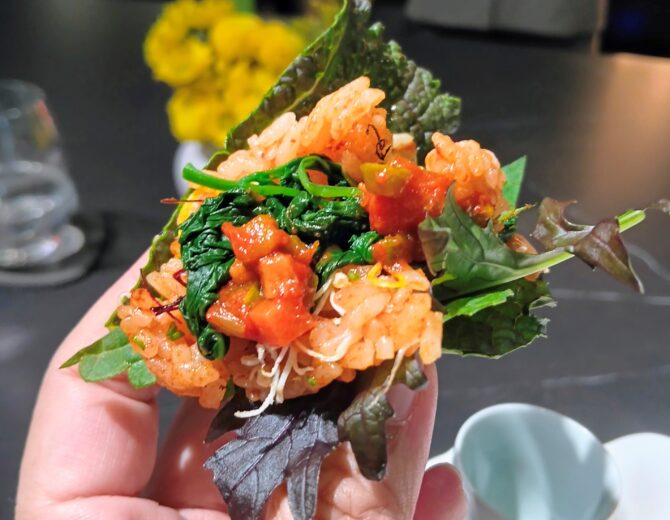
Then she offers an example that lingers.
“At Soul, we ferment our own sesame leaves, they are stacked together during fermentation. When you try to take one, the next one follows, and then another. You cannot separate them easily. That’s what Korean food is like, everything is connected. And it connects people and experiences.”
When asked how she balances tradition and innovation, she recalls a formative moment early in her career.
For her, respect is not about strict adherence.
“It is not just following a recipe,” she explains. “It is understanding why it exists. Why ingredients are used in a certain way. What people believed when they created it.”
Only then, she believes, can something new be created with integrity.
Towards the end of the conversation, we asked her what dish still humbles her.
She answers without hesitation. “Soup.”
“Soup takes time. There is nowhere to hide. If something is wrong, you can taste it immediately. Each ingredient must be added at the right moment, every flavour must find its place.
In some ways, I think I am like soup.”
It is an unexpectedly poetic answer and perhaps the most revealing.
“I’m always on the path of constant learning and cultivating my skills,” she adds. “Always absorbing. Always trying to become better.”
It is only after the meal ends that you fully embrace what Chef Kim and Chef Yoon set out to create.
At first, the experience feels refined, thoughtful, quietly precise. Each dish arrives with intention, every element carefully considered. But somewhere along the way, something shifts. The meal stops being something you analyse and becomes something you feel.
There is a softness to it. A gentle sense of calm, paired with quiet anticipation.
You begin to notice not just the flavours, but the emotions behind them – the familiarity of humble ingredients, the comfort of warmth, the quiet satisfaction of fulfilment, and the subtle thrill of discovery in unexpected combinations.
And then, almost without realising it, the experience deepens.
By the end of the meal, you understand that you have not simply tasted food.
You have been moved – guided into moments of stillness, of reflection, of quiet, reverent awe.