
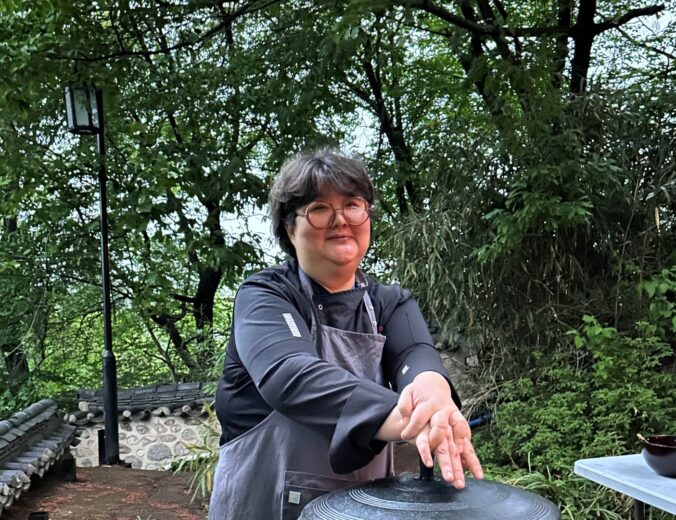
Located opposite Seoul’s historic Jogyesa Temple, Balwoo Gongyang is unlike any other restaurant in Korea.
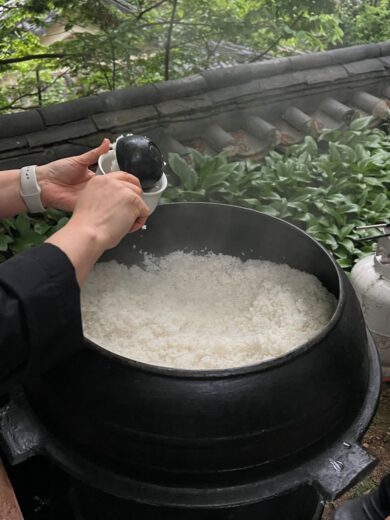
“Balwoo” refers to the monk’s set of nested bowls, while “Gongyang” means offering. Together, they represent an approach to eating rooted in gratitude, mindfulness and respect.
For many people outside Korea, temple cuisine is unfamiliar. It is entirely plant-based and prepared without meat, seafood or the five pungent vegetables traditionally believed to disturb meditation. Instead, flavour is built through seasonal ingredients, natural fermentation and ingredients such as mushrooms, kelp and perilla seeds. Nothing is wasted, and every meal is prepared with the intention of nourishing both body and mind.
There was something unusual about our meal at Balwoo Gongyang. After eating across Korea, this meal presented an unspoken peaceful rhythm, restraint, and harmony.
Every course felt thoughtful and quietly satisfying, yet none of it seemed interested in impressing us through extravagance or excess. The flavours were gentle but complete. Every ingredient felt intentional. Without realising it, we found ourselves slowing down, paying closer attention to each bite than we normally would.
As we left our private dining room to meet Chef Kim, one question lingered in our minds.
Why did this meal feel so different?
Chef Kim Ji-Young welcomed us with an easy smile that immediately put us at ease.
She spoke softly, laughed often and carried a warmth that felt entirely genuine. There was no sense of self-importance despite leading the kitchen of one of Korea’s most respected restaurants.
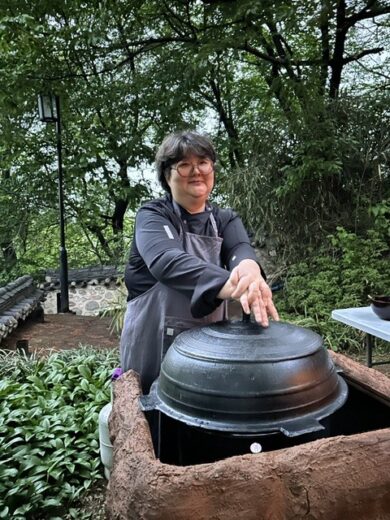
Temple cuisine is often associated with monks rather than professional chefs, so we were curious what first drew Chef Kim towards this path.
“There wasn’t one dramatic moment that led me to temple cuisine. I wasn’t formally trained as a chef and only began cooking in my late twenties. My mother specialized in traditional Korean cuisine, so I naturally developed an interest in Korean food. I first studied royal court cuisine.”
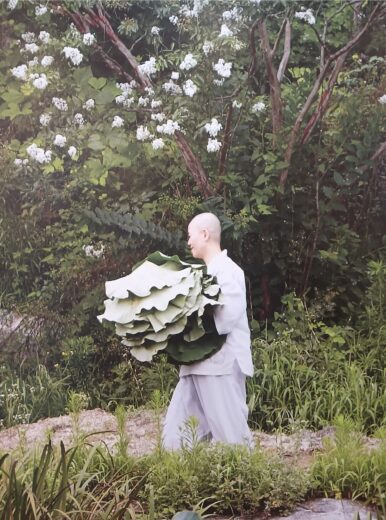
“At that point, I never imagined it would become my life’s work. Years later, I met Venerable Sun Jae again and had the opportunity to work alongside her. Looking back, I believe everything happened through the right timing and the right encounters.”
Many chefs describe defining moments that changed their lives forever. Instead, her journey unfolded gradually, allowing each encounter and each lesson to quietly lead her towards the next. Looking back, it somehow felt fitting. Temple cuisine itself teaches patience, seasonality and trusting in the natural rhythm of things. Perhaps her own journey reflected those very same principles.
When people think about studying under a master chef, they often imagine years spent perfecting knife skills, mastering fermentation or learning closely guarded recipes. So we asked Chef Kim a different question.
What was the most valuable lesson Venerable Sun Jae taught you that had nothing to do with cooking?
Her answer came without hesitation.
“Although I learned many cooking techniques from Venerable Sun Jae, the greatest lesson she gave me was about compassion. She often said that the most important quality of a cook is not knife skills or the ability to make delicious food, but having compassion for others. She taught me that food prepared with a compassionate heart has a different meaning, and that how we treat people is just as important as how we prepare a meal.”
As we looked back over the courses we had just enjoyed, we began viewing them differently. The greatest ingredient in temple cuisine isn’t fermentation, seasonality or technique. It was compassion that transcends into the way Chef Kim treats the gifts that nature provides.
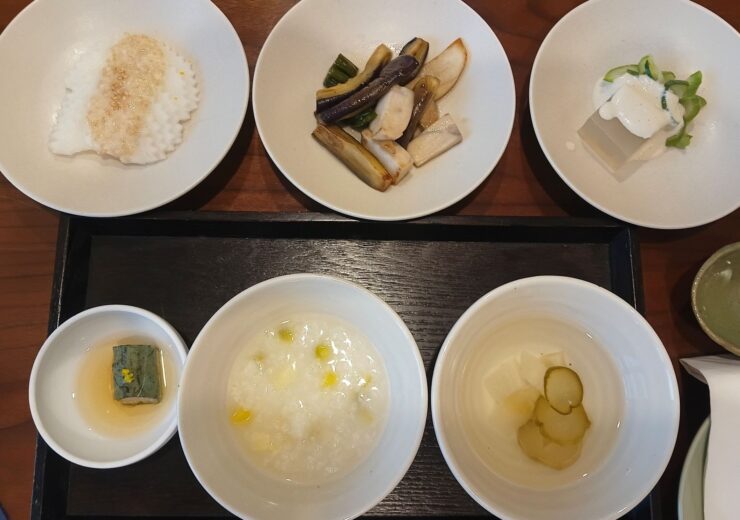
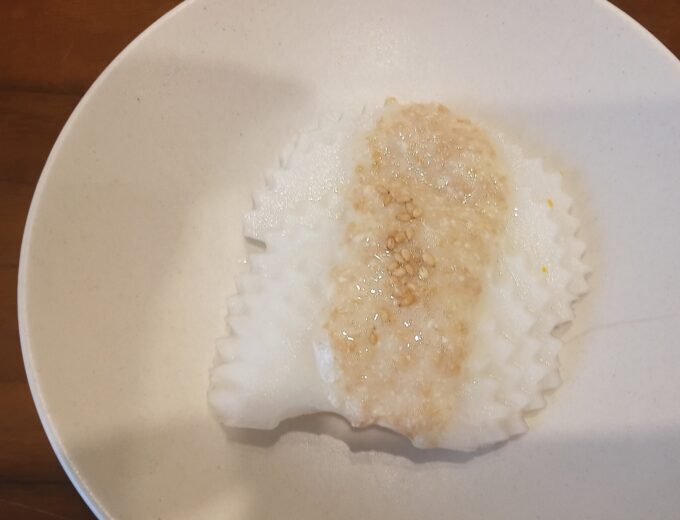
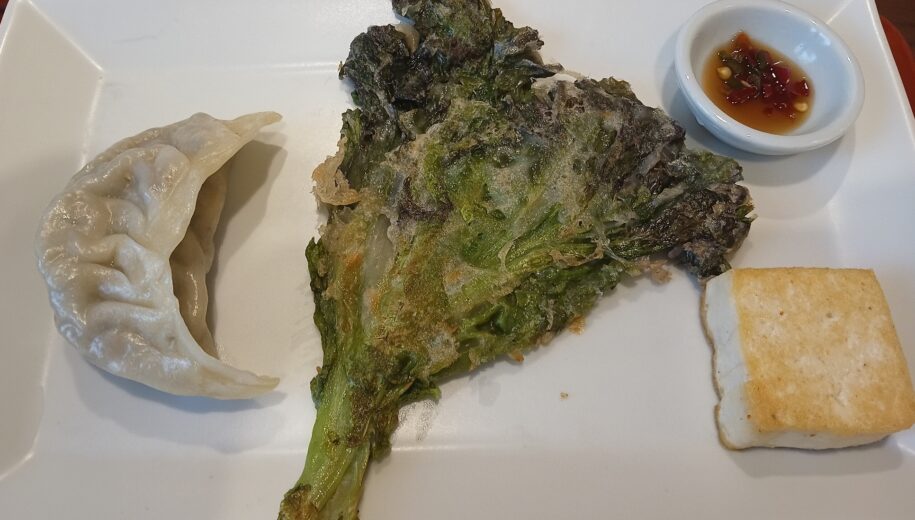
The meal had opened with a simple perilla leaf wrap roll, intended not to excite the palate but to gently awaken the digestive system. It was a subtle beginning, preparing the body rather than demanding its attention.
The Korean melon salad embodied another principle of temple cuisine – respecting every ingredient. The melon was sliced thinly to preserve its delicate crunch, while the dressing made from its very seeds is transformed into a savoury accompaniment blended with Korean pear.
As our conversation continued, we wondered whether there had been a defining moment when Chef Kim realised temple cuisine had become more than simply her profession.
“There wasn’t one single moment when I suddenly realized it. Instead, it became clear little by little.”
She explained that while working in conventional kitchens, she often found herself questioning whether stronger flavours or more visually striking presentations were always the healthiest choices.
“Temple cuisine showed me a different path. It taught me that food can nourish both the body and the mind, and that cooking can be an act of care rather than simply creating something delicious. Over time, I realized this was not just my profession – it was the work I wanted to dedicate my life to.”
That distinction stayed with us long after the interview ended.
Modern dining often celebrates innovation, spectacle and the relentless pursuit of bigger flavours. There is nothing inherently wrong with that. Yet temple cuisine asks an entirely different question – how food cares for the person eating it.
As food writers, it is almost instinctive to ask a chef which dish best represents their cuisine.
So we asked Chef Kim a simple question.
Which dish at Balwoo Gongyang best represents the soul of Korean temple cuisine?
“It’s difficult for me to choose just one dish because I believe the entire Balwoo Gongyang course represents the spirit of Korean temple cuisine.”
She explained that every course is built around seasonal ingredients, traditional fermented sauces and the principles of temple cooking.
“Rather than a single signature dish, I believe the true essence of temple cuisine lies in the harmony of the entire meal, the respect for nature, and the care given to every step of the cooking process.”
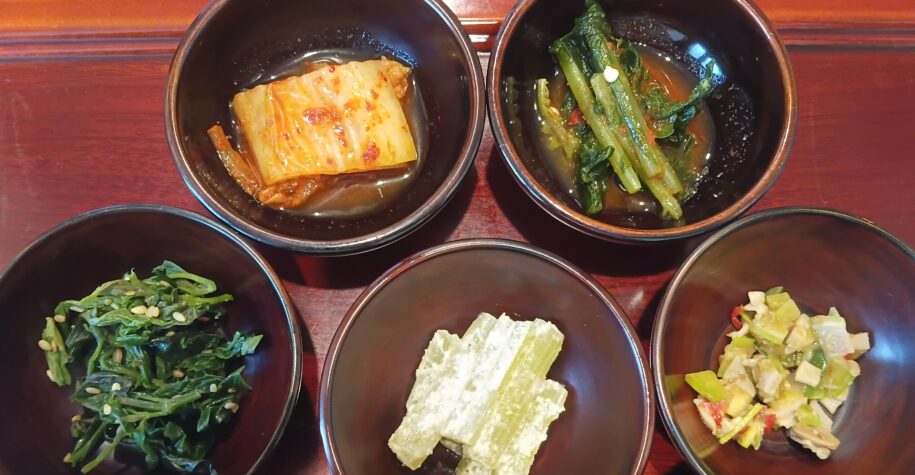
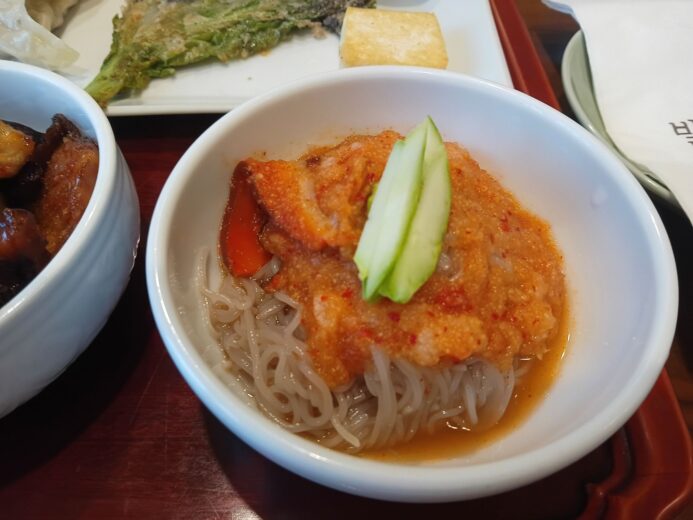
The Korean melon salad was no longer simply an elegant appetiser. It reflected the philosophy of respecting every part of an ingredient, transforming even the melon seeds into part of the dressing. Monk’s Smile was no longer just an outstanding bowl of cold buckwheat noodles. It became another chapter in a meal that gradually unfolded with quiet purpose. Even the gentler temple-style kimchi found its place within that progression, complementing rather than competing with everything that came before it.
Today, thanks in part to Netflix’s Culinary Class Wars, many people around the world are discovering it for the first time through Venerable Sun Jae. With that growing international interest comes an important question.
How can temple cuisine reach new audiences without losing the philosophy that defines it?
Chef Kim’s answer was both simple and unwavering.
“Making temple cuisine accessible doesn’t mean changing its philosophy. Rather, I think people should be able to experience its values naturally through the food itself. When a meal is prepared with sincerity, respect for nature, and compassion, those values can be felt even without words.”
Those words perhaps explain why Balwoo Gongyang leaves such a lasting impression. It simply invites them to experience it.
Before we concluded our conversation, we asked Chef Kim what she hoped people would ultimately take away from temple cuisine.
“Temple cuisine is much more than vegetarian food. It is a way of respecting nature, honoring all living beings, and caring for both the body and the mind.”
Her answer beautifully captured the spirit of everything we had experienced that afternoon.
“In the end, food should do more than satisfy hunger. I believe a truly meaningful meal should also bring comfort and peace to the heart. That is the spirit of temple cuisine, and it is the spirit I hope to continue sharing through my cooking.”
When we first walked into Balwoo Gongyang, we knew we would be eating good vegetarian cuisine. Looking back, we finally understood why the meal had felt so different.
It was because every dish reflected the values of the person who prepared it, the centuries-old culinary wisdom, and recognition of quality.
Some chefs create memorable meals. Others are entrusted with preserving a nation’s culinary heritage. After spending an afternoon with Chef Kim, we left believing she is doing both.