
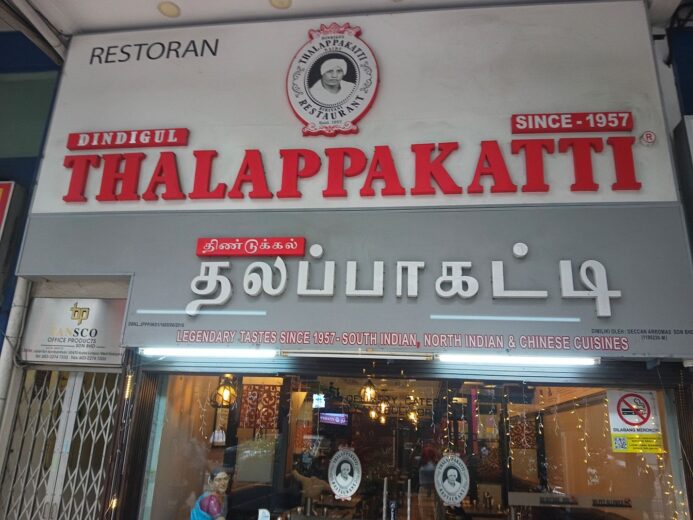
Dindigul Thalappakatti may not have originated in Malaysia, but we felt this Indian import was worth a Humble Mention.
Founded in 1957 by Nagasamy Naidu in Dindigul, Tamil Nadu, the restaurant began as the small Anandha Vilas Biriyani Hotel. Naidu was known for always wearing his distinctive white thalappa, or turban, earning him the nickname “Thalappakatti Naidu.” What started as a little four-seater serving his wife’s style of biriyani eventually grew into a restaurant chain with more than 100 outlets around the world.
And fortunately, Kuala Lumpur gets a taste of it too.
Malaysia has a wonderfully deep relationship with Indian food, and around Brickfields there is certainly no shortage of homegrown Indian restaurants deserving attention – several of which we hope to visit soon. But Dindigul Thalappakatti came recommended, so a quick meal before catching our flight seemed like a good opportunity to find out why.
We ordered the Chicken 65 Biriyani, and it was the rice that immediately caught our attention.
Unlike the long-grained basmati commonly associated with biriyani, Thalappakatti uses Seeraga Samba, a small-grained rice traditionally associated with Tamil Nadu. The grains are short and fine, somewhat resembling cumin seeds, and have a remarkable ability to soak up flavour.
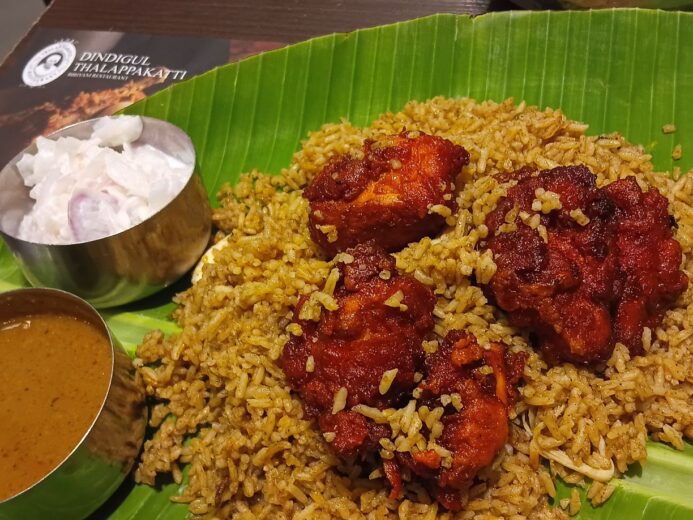
Combined with freshly ground spices and traditional slow cooking, the result was one of the most intensely flavoured biriyani rices I have personally tasted. Every little grain seemed to carry the spices with it. The Chicken 65 was pretty good too. There is hardly one universally agreed way of making Chicken 65, so personal preference inevitably comes into play, but this version ranks comfortably among the better ones we have eaten.
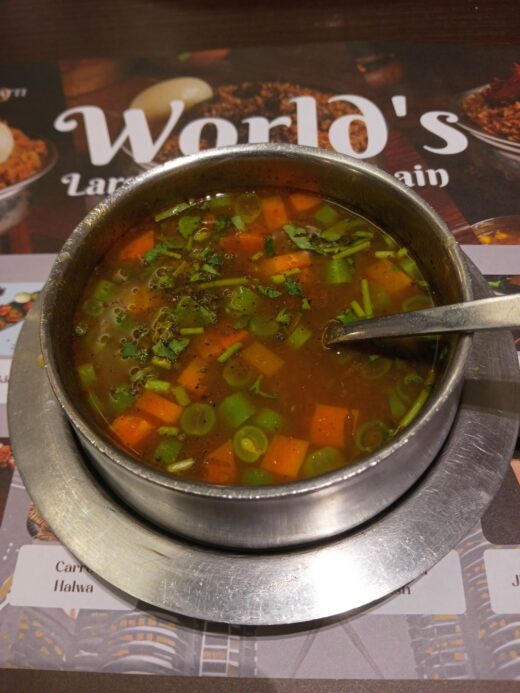
We also ordered the Vegetable Rasam, which provided a lovely counterpoint to the richness of the biriyani. Tangy, peppery and aromatic, it was surprisingly light and clean rather than oily.
Even the vegetables showed some care: the carrots retained a gentle crunch while the French beans were softer without being cooked into submission.
What stood out from this short meal was the freshness of the ingredients and the restaurant’s continued emphasis on the ingredients and cooking methods behind its original style of biriyani.
This was never intended to be a comprehensive review. It was a quick, light meal before a flight – although ordering biriyani and Chicken 65 perhaps stretches the definition of “light.”
And anyone familiar with Indian restaurant menus knows the problem: they tend to read like small novels. One visit barely gets you past the opening chapter.
For now, we are quite content with what we tried. The rest of the menu will have to wait.