
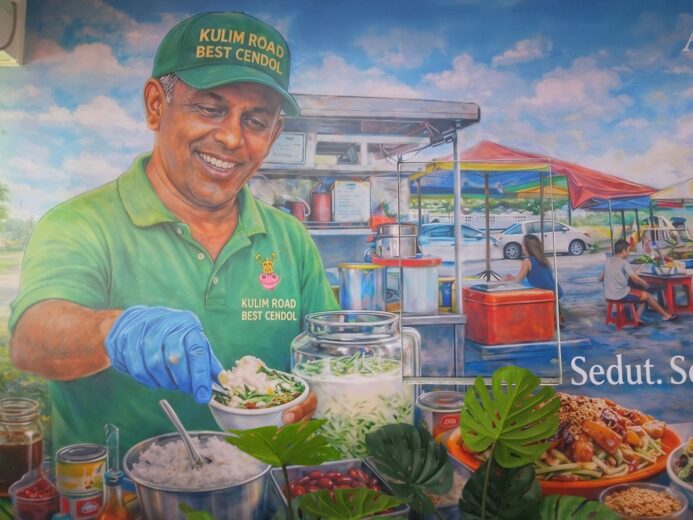
Cendol is one of those Malaysian desserts that looks deceptively simple. Shaved ice, coconut milk, green cendol jelly and gula melaka. Four basic components, assembled in a bowl.
Surely, how difficult could that be?
Quite difficult, because when there are so few ingredients, there is nowhere for a bad one to hide.
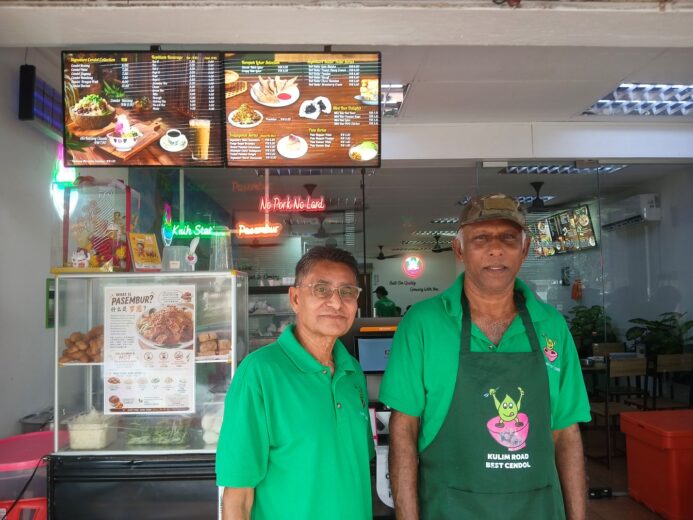
Originating from Bukit Mertajam, Penang, Kulim Road Cendol recently opened an outlet in Taman Johor Jaya, Johor Bahru, managed by members of the same family.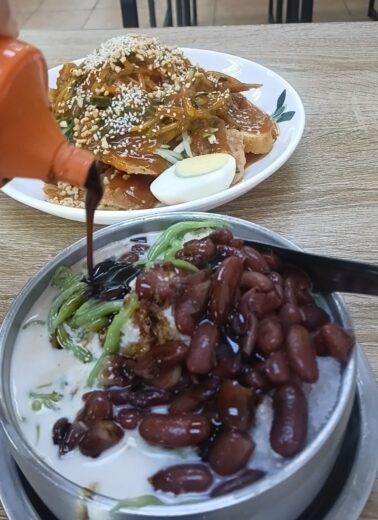
Today, the business has reached its fourth generation. What impressed us wasn’t simply that the family business had survived this long, but that the current generation remains insistent on continuing the methods passed down from their founding great-grandfather.
It would certainly be easier to buy some of the ingredients ready-made.
They choose not to.
For the family, making cendol isn’t merely about selling dessert. There is a legacy attached to every bowl, and the fourth generation sees itself as its custodian.
A Simple Dessert With a Long Story
The precise origins of cendol are difficult to pin down, with variations of similar desserts found across Southeast Asia. What we do know is that shaved-ice desserts became increasingly accessible in Malaya during the early 20th century as commercially produced ice became more widely available.
What was once a luxury associated with refrigeration and chilled drinks eventually found its way into the hands of street vendors. Blocks of ice could be shaved and combined with ingredients already familiar to the region – coconut milk, palm sugar and pandan.
Somewhere along the way, a humble bowl became one of Malaysia’s most beloved ways of surviving the afternoon heat.
The Green Stuff Matters
The defining ingredient is, of course, the green cendol strands.
Traditionally made from starches such as rice flour combined with tapioca or mung bean flour, good cendol should be soft, smooth and gently yielding. Freshly made strands have a noticeably different character from some factory-produced versions, which can be considerably firmer and more rubbery.
At Kulim Road, the cendol is still made fresh daily.
Fresh pandan leaves are squeezed for their juice before being mixed into the batter and cooked. The result is naturally green rather than fluorescent, with a lightly translucent, glossy appearance and the unmistakable fragrance of pandan.
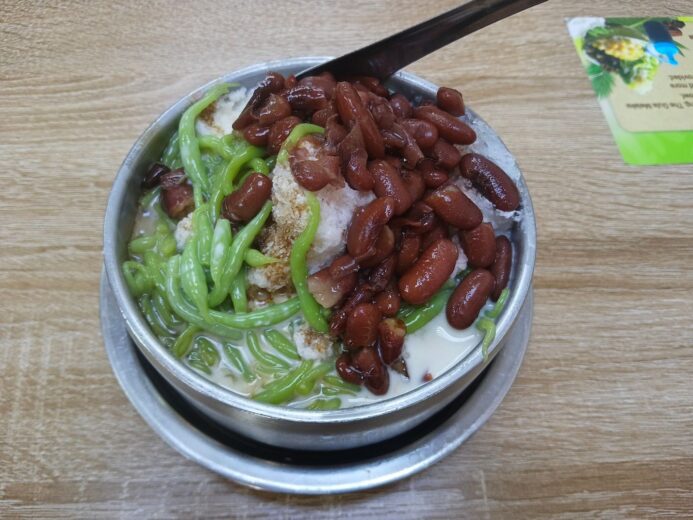
The coconut milk receives similar attention. A particular type of coconut is used, freshly grated on site and squeezed for its milk. It is rich and aromatic without becoming excessively heavy, with a slight savoury undertone balancing the sweetness of the dessert.
These may sound like small details. But they are precisely the details the fourth generation refuses to compromise on.
We added red beans to ours. Kulim Road uses the larger kidney bean variety, cooked until soft while retaining enough structure not to collapse into mush. They add an earthy richness and another texture to an otherwise very smooth dessert.
Interestingly, Kulim Road doesn’t construct its cendol into the towering mountain of shaved ice commonly seen elsewhere. Neither is the ice shaved into ultra-fine snow.
There is some logic behind this.
Too much ice means too much dilution. Shave it too finely under the Malaysian heat and you’re soon drinking sweet coconut water instead of eating cendol. Here, the slightly coarser ice melts more slowly, providing enough chill while preserving the richness of the coconut milk until the final few spoonfuls.
And if you happen to possess a particularly demanding sweet tooth, there is no need to whisper your request. A bottle of gula Melaka sits on every table.
Your cendol. Your rules.
Don’t Ignore the Pasembur
Alongside the cendol, we ordered their Indian Pasembur – a salad of crispy fritters, boiled egg, tau kwa, cucumber and jicama generously coated in a sweet potato-based sauce and finished with crushed peanuts and sesame seeds.
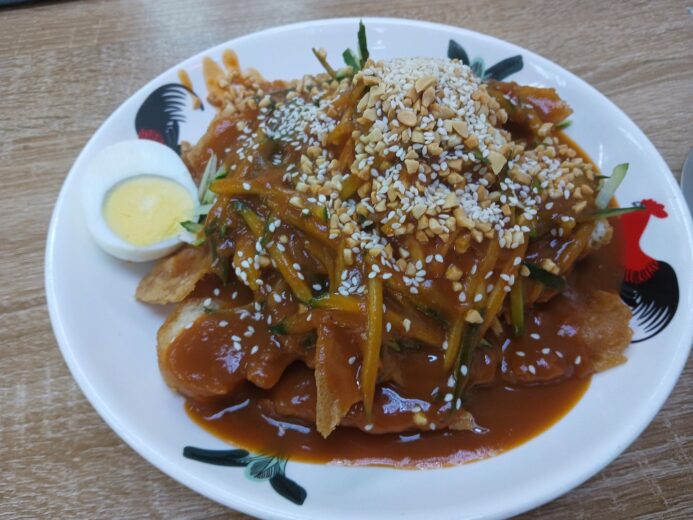
Once again, the emphasis on making rather than buying continues. The components are prepared in-house instead of simply arriving from external suppliers.
The sweet potato sauce is lighter than many versions we have encountered. Its sweetness feels natural rather than aggressively sugary, with a consistency thick enough to cling to everything without drowning the plate.
Cucumber and jicama provide coolness and crunch against the fried ingredients. The fritters are light and crispy without being excessively greasy, while the occasional chunk of potato provides a welcome savoury interruption.
Pasembur is traditionally eaten at room temperature, and when everything is tossed together properly, it becomes one of those gloriously messy Malaysian dishes where crispy, soft, fresh, nutty, sweet and savoury somehow coexist on the same plate.
There is enough sauce to coat every ingredient, but not so much that everything turns soggy.
It isn’t elegant.
It isn’t supposed to be.
Custodians of a Good Bowl of Cendol
Four generations is a long time for any family business. With every generation comes the temptation to make things faster, cheaper and easier. Today, practically every component can be bought pre-made, pre-cut, pre-mixed and conveniently delivered in a plastic bag.
Kulim Road could probably do the same. Instead, the fourth generation remains insistent on preserving the methods of their great-grandfather. There is something quietly admirable about that.
Heritage food isn’t preserved simply because an old signboard remains hanging above a shop, or because a business can count the number of decades it has existed. It survives when the next generation understands what made the food worth preserving in the first place, and then accepts the responsibility of continuing to do it.
In that sense, the fourth generation at Kulim Road aren’t merely running the family cendol business.
They are custodians of their great-grandfather’s legacy.