
There was a time in Malaysia when nasi lemak did not need a shopfront, a logo or a social-media account.
Through the 1970s and 80s, it was not unusual to see people walking through neighbourhoods carrying small rattan baskets filled with nasi lemak and other homemade foods. Even today, away from the shopping malls and fashionable cafés, Malaysia’s tradition of home cooking sold from roadside stalls, front porches and occasionally the back of a car remains very much alive.
Nasi Lemak Tudong Saji came from this world.
Its story began with Puan Kauju and her children selling nasi lemak outside their village home. The food was protected beneath a tudong saji – the traditional woven food cover once found in countless Malaysian kitchens. Lift it, and out came the aroma of coconut rice, sambal and freshly prepared dishes.
Today, Tudong Saji occupies a corner shophouse in Seri Alam, Johor Bahru. The surroundings may have changed, but much of the kampung spirit remains.
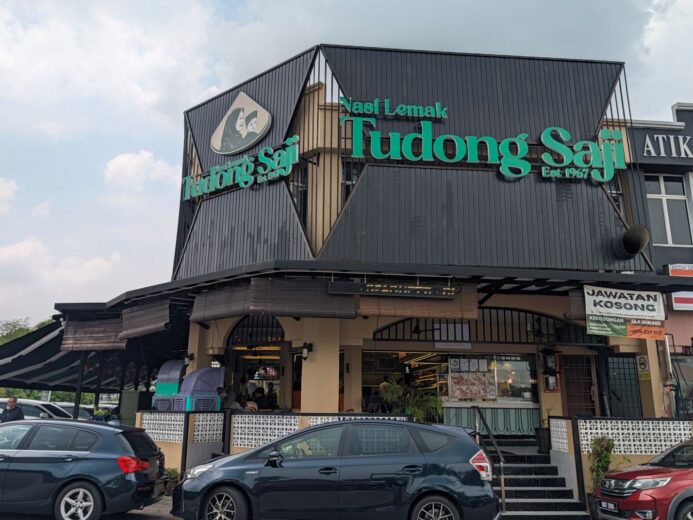
No Lobster Necessary
Nasi lemak has come a long way from its humble beginnings. Every Malaysian state – and arguably every cook – seems to have an opinion about how it should be served.
We have also survived the era when apparently nasi lemak wasn’t sufficiently luxurious unless a lobster was sitting on top of it.
Tudong Saji has resisted such ambitions.
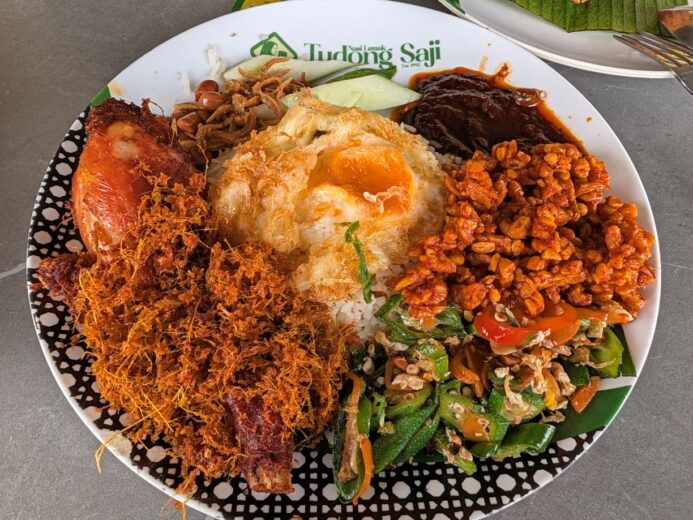
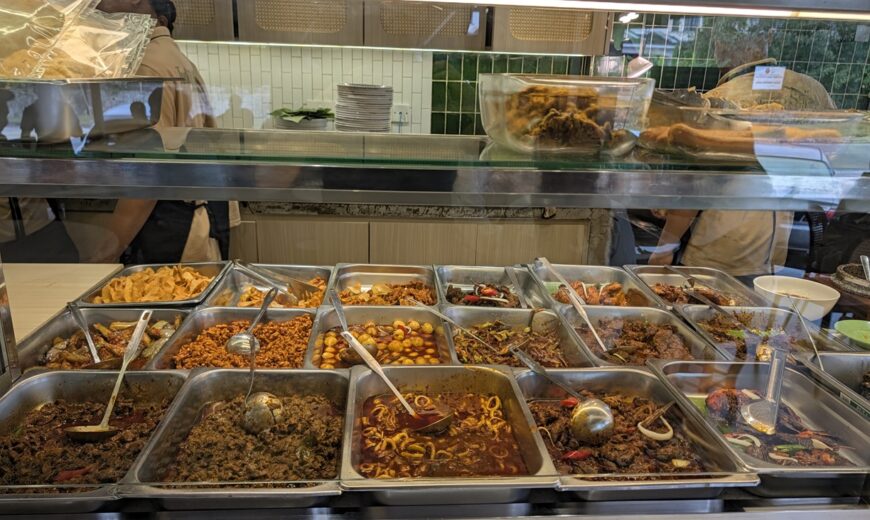
Instead, there are more than 20 dishes from which diners can assemble their meal. But with something as fundamental as nasi lemak, we prefer to begin with the basics: coconut rice, sambal, anchovies, peanuts, egg and fried chicken.
There are two fried chicken choices – Ayam Goreng Berempah and Western-style fried chicken. We tried both and suggest the former.
The chicken was generously covered with crisp fried spices and remained surprisingly tender despite having been pre-fried for the lunch crowd. After a very tall glass of syrup bandung, our breath still had the unmistakable perfume of lemongrass from the rempah.
The classic sambal biasa was another respectable showing. Mild rather than fiery, it leaned towards sweetness without becoming cloying. Onion came through gently, while proper cooking until pecah minyak (oil breaking) had removed any raw edge and produced a dark, well-caramelised sambal.
We particularly liked the ikan bilis. Tudong Saji uses the smaller variety, lightly browned and crisp without being greasy. They were clean tasting, gently savoury and, importantly, properly cleaned. Yes, the tiny details do matter.
The egg was less successful. Served cool, it had lost some of the richness an egg should contribute to nasi lemak. We would probably choose the hard-boiled egg next time.
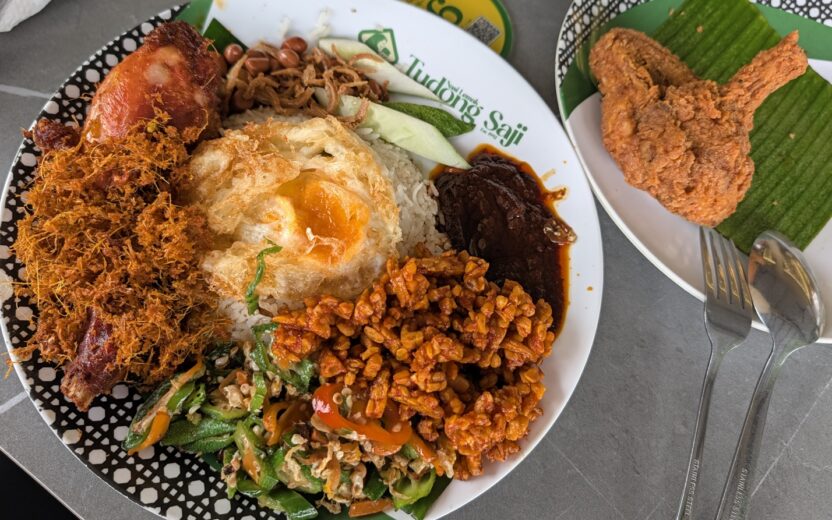
And then there is the most important component: the rice.
Compared with some of the stronger nasi lemak we have tasted around Malaysia, Tudong Saji’s rice could do with considerably more character. The coconut fragrance was restrained and it lacked the depth and lemak richness we were hoping for.
A Little Extra From the Kampung Table
In the spirit of customisation, we added fried tempeh (fermented pressed soybeans) and stir-fried ladies’ fingers.
The tempeh was lightly sweet, mildly spicy and nicely fermented, retaining its clean nutty and earthy character.
The ladies’ fingers were even better. Poorly cooked okra can become a plate of vegetable slime – hardly anyone’s idea of lunch. Here, they were sliced thinly, kept their texture and were simply seasoned with garlic.
Tudong Saji may not serve the perfect nasi lemak yet. The rice, in particular, deserves more coconut richness and fragrance. But there is plenty here that is already done well: good sambal, quality ikan bilis, respectable ayam goreng berempah, simple kampung dishes and warm, remarkably efficient hospitality.
More importantly, behind the corner shophouse is still the story of a mother and her children selling nasi lemak outside their village home, lifting a woven tudong saji whenever a customer arrived.
Food heritage often comes from the humblest origins, and here it began under a rattan cover.