
Tucked within the lively enclave of Sri Hartamas, DubuDubu earns its Humble Mention not by grandeur or trend, but through a quiet, focused devotion to one humble ingredient—tofu.
Still relatively new to the scene, DubuDubu stands apart with a clear purpose: to showcase freshly made Korean tofu and soondubu in its most honest form. Here, tofu is not an afterthought or side dish—it is the heart of the menu. The owner prepares it daily using his grandmother’s recipe, a small but meaningful act of preservation that grounds the entire dining experience in heritage. Freshly made Korean soondubu is a rarity in Malaysia and deserves a Humble Mention.
For many, Korean cuisine is often reduced to familiar staples like kimchi or barbecue. But DubuDubu gently broadens that perspective. Across many Asian cultures, tofu has long been valued as something nourishing, comforting, and deeply versatile. This restaurant leans into that shared understanding, offering a distinctly Korean interpretation that feels both refreshing and rooted.
The space itself hums with quiet validation—tables filled with Korean expats who return not out of novelty, but recognition. It speaks to an authenticity that doesn’t need to announce itself loudly.
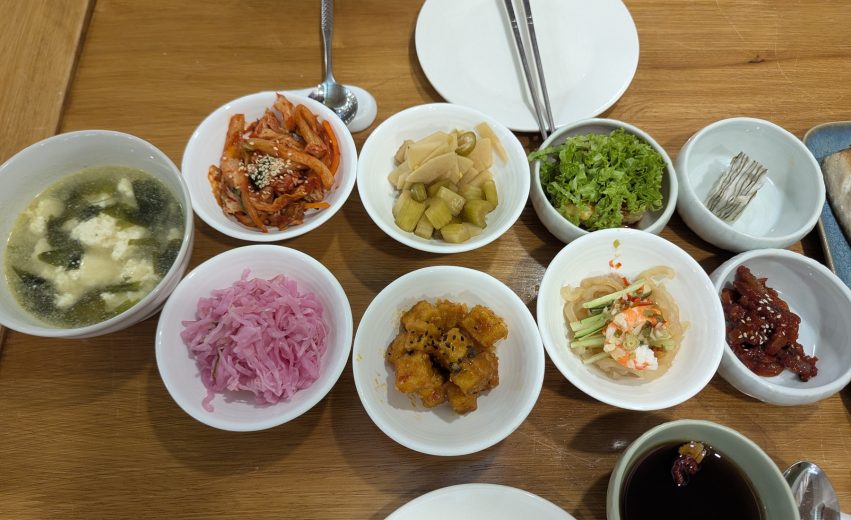
The meal begins, as it should, with banchan—but not the expected assortment. Instead, there is a thoughtful, almost curious spread: pickled young papaya offering a light tang, cabbage, and sesame-laced pickled perilla leaves that bring an aromatic depth rarely seen in local Korean establishments. It’s a small but telling detail—the kind that reflects care, not convenience.
Then comes the Soondubu Jjigae. Served piping hot, the stew arrives bubbling with a rich, umami-laden broth. The spice level is measured—present, but never overwhelming (not at least by Malaysian standards). At its centre, the soondubu reveals itself: unpressed, delicate, softly crumbly, and almost creamy in texture. It carries the gentle, unmistakable taste of soybeans, cutting through the broth with a calming balance. Mixed with generous portion of zuchinni in the soup, it is both hearty, healthy and soothing – the kind of dish that invites you to eat generously without hesitation.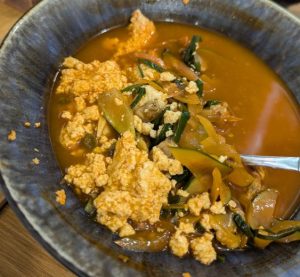
For those seeking something more structured, the Signature Sotbap Jeong Sik offers a well-composed set. With a choice of grilled mackerel or beef bulgogi, it is accompanied by a perilla seed seaweed tofu soup—clean, subtle, and intentionally restrained so as not to compete. A highlight here is the fried tofu finished with perilla oil, elevating what is often seen as a mild ingredient into something fragrant and deeply satisfying.
The experience is completed tableside, where rice—black or brown—is cooked fresh in a stainless steel pot, timed patiently over fifteen minutes. It’s a simple ritual, but one that reinforces the restaurant’s ethos: good food, made with care, meant to be enjoyed without rush. Definitely try the black rice, it’s got a deep and nutty aroma almost similar to Malaysia’s local black glutinuous rice.
While tofu’s origins may trace back to China, its expression across cultures continues to evolve. In Malaysia, tofu dishes in Chinese eateries often follow familiar paths. DubuDubu offers something different—a gentle, thoughtful reintroduction to tofu through a Korean lens.