
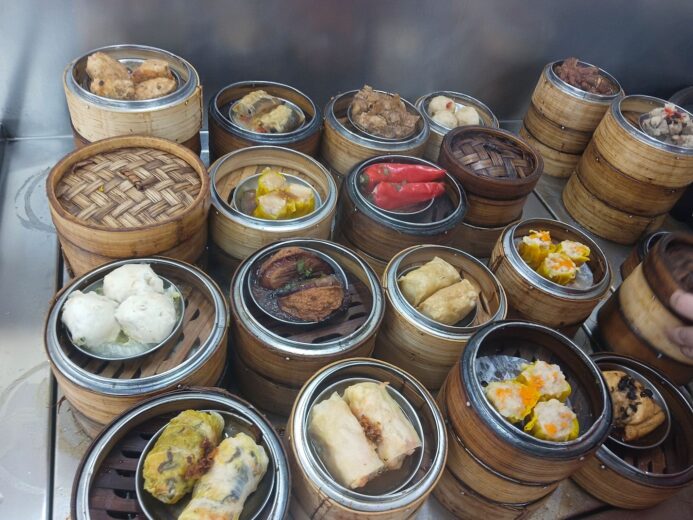
There was once a remarkably sophisticated way of ordering food.
You looked at it. You pointed at it. And somebody gave it to you.
At Gim Cheng Restaurant in Taman Daya, Johor Bahru, this revolutionary method is still alive and well.
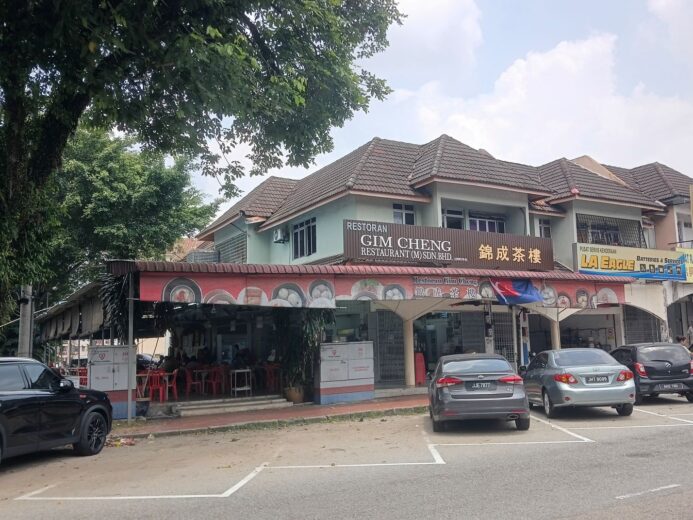
For 19 years, this corner-shop dim sum restaurant has quietly built a loyal following without becoming particularly noisy on social media. Perhaps it has been too busy making dim sum.
While many modern dim sum restaurants now hand you a menu, an order sheet or a QR code requiring several taps before breakfast can commence, Gim Cheng puts much of its dim sum right in front of you.
Menus are full of promises. Photographs can be flattering. But a display of actual steaming dim sum is the absolute truth.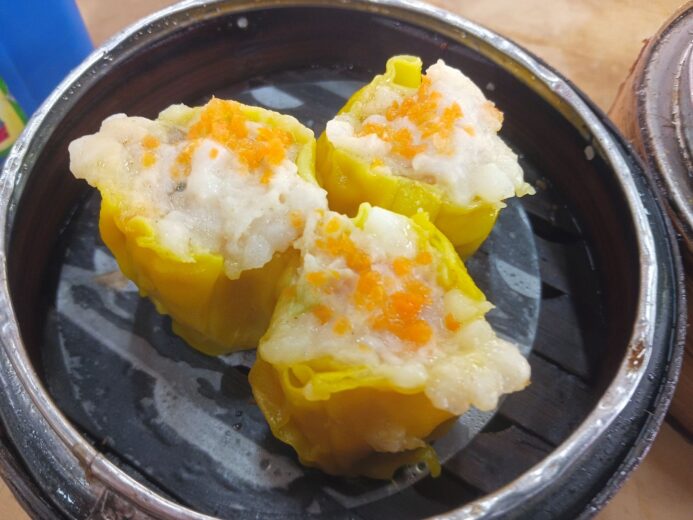
You scan. You lock onto your target. You point.
“That one.”
Your finger has officially become a universal translator.
Once selected, the dim sum is dispatched on a battle-tested aluminium tray bearing more craters than the moon. No designer crockery here. That tray looks as though it has served several thousand breakfasts and has no intention of retiring. It is self-service too, so grab your food and find yourself a table.
Standing beside all that steam while choosing breakfast also comes with a complimentary facial. Who said Gim Cheng doesn’t offer wellness?
Old Faithfuls First
Gim Cheng offers a respectable selection of traditional dim sum alongside some more contemporary creations, but we went straight for the old faithfuls: har gow (prawn dumpling), siew mai (pork dumpling), braised chicken feet, black bean pork ribs, chive dumplings and egg tarts.
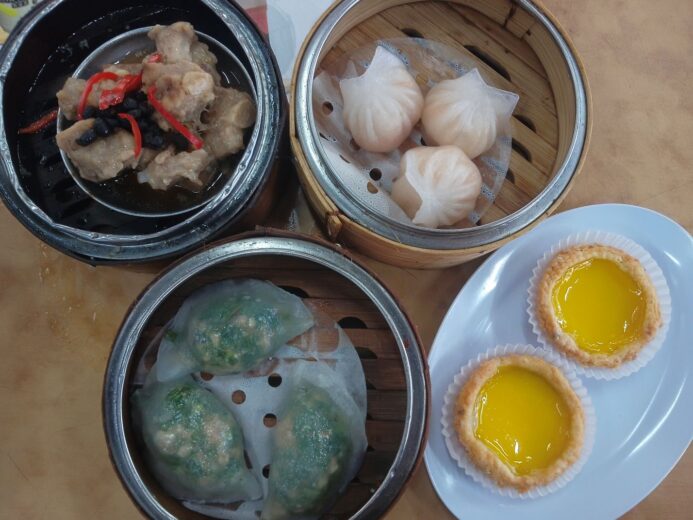
Because there is little point asking what you can do with the fancy stuff until we know what you can do with har gow.
The owners learnt their dim sum craft from chefs in Ipoh before establishing Gim Cheng in Johor Bahru. Today, the city’s dim sum landscape is considerably more crowded, including chains, central kitchens and factory-supplied products.
Gim Cheng still makes its dim sum fresh daily and cooks it on-site.
Freshly made dim sum doesn’t have to survive a lengthy career involving production, packing, transportation, refrigeration and reheating before finally arriving at your table. The shorter journey helps preserve moisture, texture and flavour – particularly noticeable in delicate dumplings.
The har gow was a good example. Its translucent wrapper was thin, slightly stretchy and carried just enough chew. Even after sitting for a while and cooling down, it remained supple rather than turning gummy or rubbery. The pleats were neat, with the pink prawn filling teasingly visible beneath the skin.
Then came the controversial one.
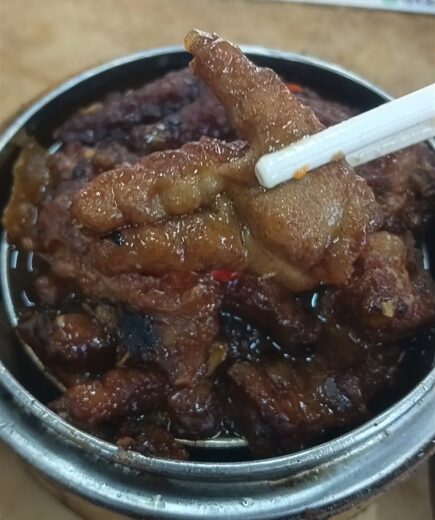
You either understand them or stare at people who eat them as though some explanation is required.
These were plump and beautifully braised, holding together until the gentlest bite released that wonderfully soft, gelatinous texture. The collagen coated the tongue while a restrained five-spice fragrance, slight chilli warmth and savoury sauce kept things balanced without becoming cloyingly sweet.
And then we met the egg tart.
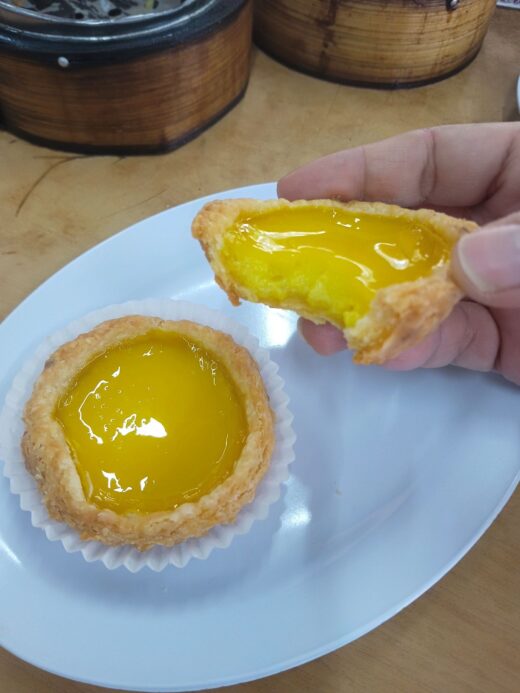
The pastry looked slightly imperfect around the edges, which became completely irrelevant approximately one bite later. The shell was light, mildly buttery and wonderfully crumbly, collapsing almost immediately in the mouth. Inside sat a silky, softly eggy custard with a surface so glossy and reflective that it probably needed its own sunglasses.
Crumbly pastry. Warm egg fragrance. Gentle sweetness.
The sort of sinful little combination capable of making toes curl and eyes briefly roll towards the ceiling.
We shall maintain some dignity and stop there.
Gim Cheng isn’t trying particularly hard to look fashionable. It doesn’t need to. There is something refreshingly straightforward about seeing your breakfast, pointing at your breakfast, and carrying it back to your own table.
This is only a Humble Mention, so we’re leaving the rest of the menu for you to investigate yourself. Just remember to bring your most important ordering equipment.
Your index finger.
Related articles about Dim Sum: