
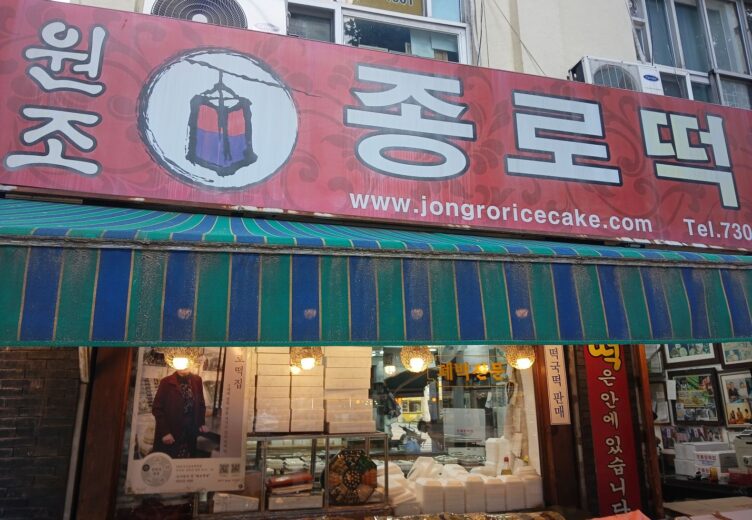
While wandering through the charming streets of Insadong, we stumbled upon Jongno Rice Cake, an 80-year-old dessert shop now run by its second generation. Like many traditional businesses, it quietly goes about its craft without much fanfare.
Our first visit came late in the afternoon. Most of the shelves had already been emptied, leaving only Yakgwa, Korea’s traditional honey pastry. Deep-fried into a beautiful flower shape before being soaked in honey syrup, it was soft, fragrant and wonderfully moreish. Throughout the rest of our trip, we found ourselves craving it and tried versions from several other shops, but none quite matched what we remembered. Returning to Jongno later, we discovered that the Yakgwa we had fallen in love with was supplied by another maker. As much as we wanted to write about that memorable pastry, fate had other plans.
Instead, we discovered what Jongno Rice Cake has been making for generations – traditional Korean glutinous rice desserts. The display was filled with timeless favourites including Yaksik, a fragrant steamed glutinous rice cake sweetened with honey, chestnuts, jujubes and pine nuts; Injeolmi, soft rice cakes coated in roasted soybean flour; Gyeongdan, delicate glutinous rice balls rolled in fragrant powders; Chapssal-tteok, chewy rice cakes filled with sweet red bean paste; and Songpyeon, the iconic half-moon rice cakes traditionally enjoyed during Chuseok. These are desserts many Koreans still grow up eating and continue to serve during celebrations, ancestral rites and important family gatherings.
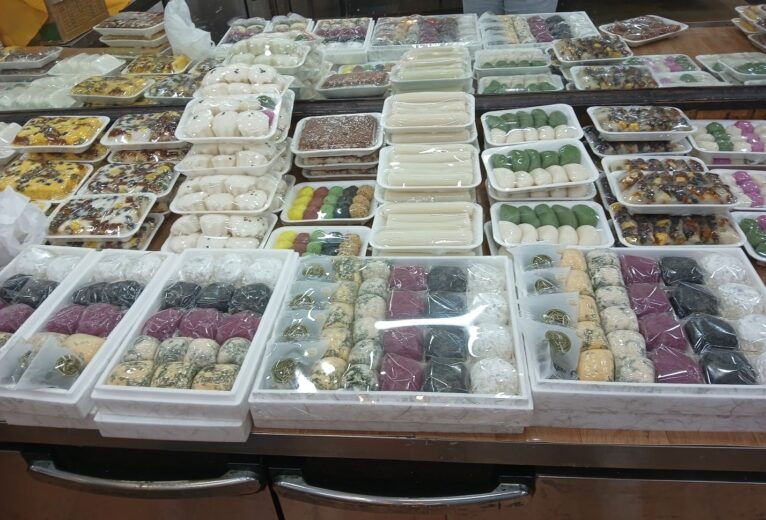
We decided to try the Gyeongdan, made using Korean glutinous rice (chapssal) from the shop’s decades-old recipe. Although it’s called “glutinous” rice, it actually contains no gluten. The name simply refers to its sticky texture after cooking. Its naturally high amylopectin content gives the rice cake its wonderfully soft, chewy bite while making it suitable for many people following a gluten-free diet.
The rice balls were incredibly soft and smooth, with a gentle natural rice fragrance. They came coated in several traditional powders including toasted soybean, mugwort and white sesame. The toasted soybean was pleasantly nutty and almost reminded us of roasted peanuts, while the mugwort carried a delicate herbal aroma. Our favourite was the white sesame, whose rich nuttiness and tiny crunchy sesame seeds created a lovely contrast against the pillowy-soft rice cake.
What surprised us most was how light everything felt. Despite being made from glutinous rice, the desserts never became overly dense or heavy, making them easy to enjoy even after a meal. It was a gentle sweetness that never became overwhelming, allowing the natural flavour of the rice to shine through.
We can’t confidently say these are Korea’s finest traditional rice cakes, but that’s not really the point. Shops like Jongno Rice Cake preserve recipes and traditions that have been enjoyed for generations. If you’re exploring Insadong, it’s a worthwhile stop to experience a small but meaningful piece of Korea’s living dessert heritage.