As we drove from Pohang to Sokcho, one stop was non-negotiable – Gangneung’s famous Chodang Sundubu Village. Today, more than 20 restaurants line its streets, each proudly making their own tofu and sundubu (soft tofu). While the village as we know it today flourished in the 1970s and 1980s, its tofu-making tradition stretches back over 500 years. During the Joseon Dynasty, the scholar Heo Yeop pioneered tofu production here using mineral-rich seawater instead of salt as the coagulant, creating the softer texture that Chodang tofu is known for. In the years after the Korean War, local widows continued the tradition, making tofu to support their families.
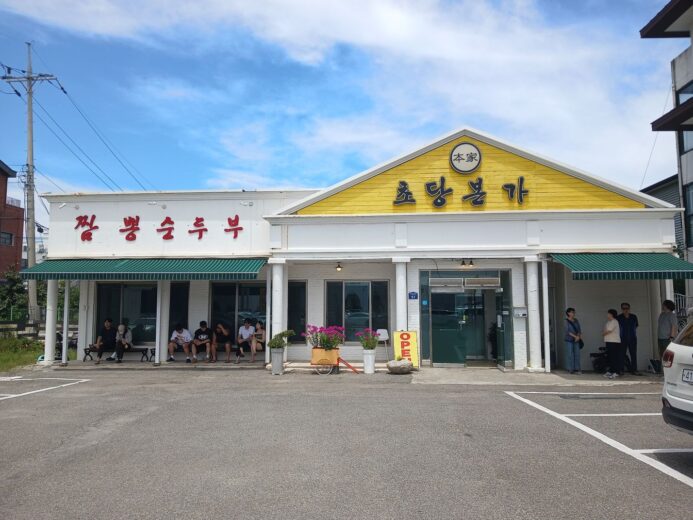
Many restaurants have grown into large, beautifully designed establishments. Others have built reputations around extensive menus. Staying true to the Humble Belly way, we searched for something simpler. A modest white building with a queue quietly forming outside caught our attention. No flashy signboards. No grand entrance. Just locals patiently waiting.
That was Chodang Bonga.
Their signature dish is Beef Brisket Jjamppong Sundubu.
Jjamppong is one of Korea’s most beloved noodle soups, tracing its roots to the Chinese dish Chaomamian brought by immigrants to Incheon in the early 1900s. Over time, Korean chefs transformed it with generous amounts of chilli flakes and chilli oil, creating the fiery soup recognised today. One hallmark of a truly great jjamppong is the elusive smoky depth known to the Chinese as wok hei – the “breath of the wok” – achieved only through exceptional control of heat and timing.
The broth arrived glowing crimson, its surface shimmering with droplets of chilli oil. Before taking the first sip, there was an unmistakable aroma of fire. It wasn’t smoky in the conventional sense, but carried that deep charred fragrance only intense wok cooking can create.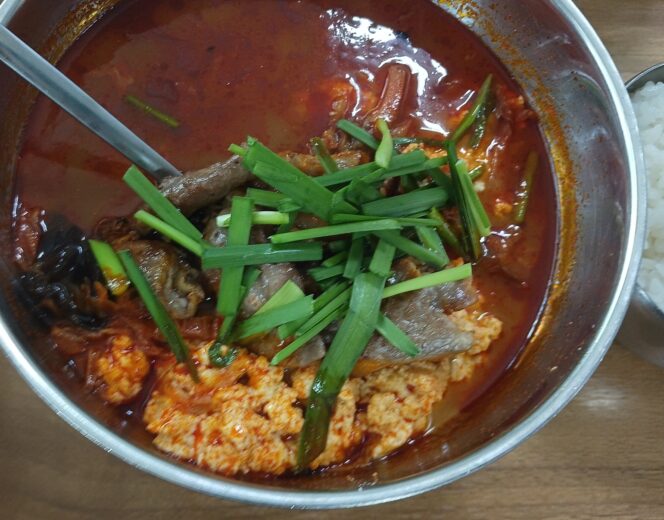
Despite its fiery appearance, the broth remained remarkably clean and balanced. Thin ribbons of beef brisket were tender enough to fall apart effortlessly, bringing gentle savouriness without overpowering the soup. Floating throughout were clouds of freshly made sundubu, impossibly soft and creamy, soothing the palate between spoonfuls of the rich broth. It was a bowl built on harmony rather than intensity.
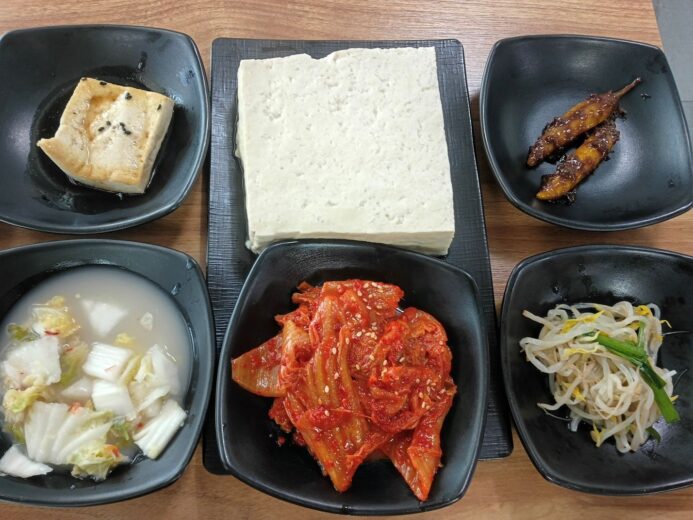
Curiosity led us to order a serving of plain tofu as well.
If the jjamppong celebrated complexity, the tofu celebrated honesty.
Still steaming from the kitchen, it was almost too hot to eat. Even before tasting it, the gentle aroma of fresh soybeans filled the air. People often say tofu has little flavour of its own, merely absorbing whatever accompanies it. We beg to differ.
Good tofu speaks for itself.
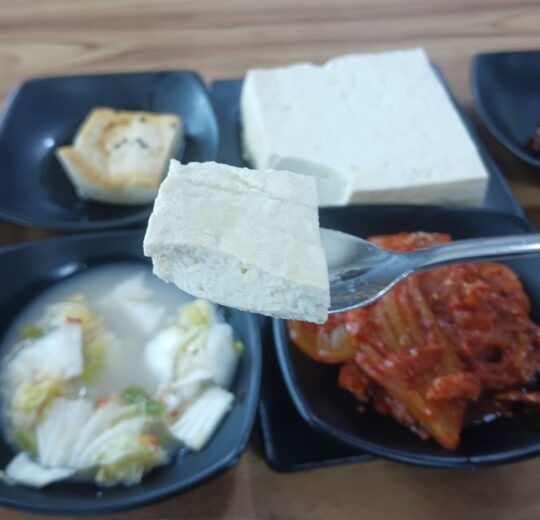
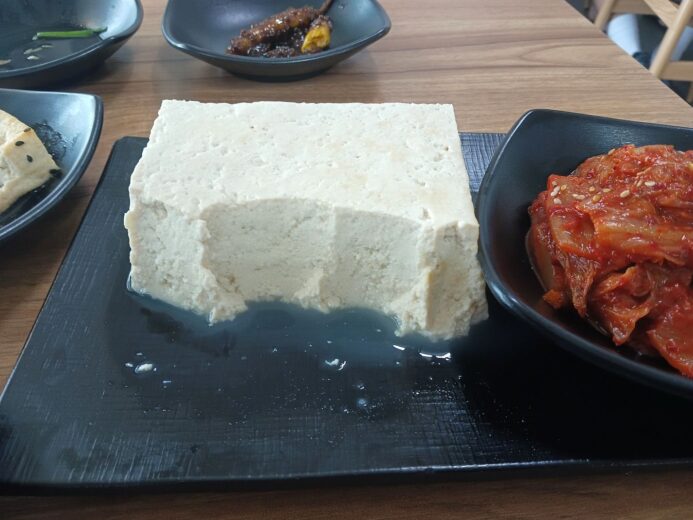
There was a delicate sweetness followed by a gentle nuttiness that lingered quietly after each bite. Firmer than sundubu yet much softer than Chinese firm tofu, it lacked the silky smoothness of Japanese tofu. Instead, it possessed a subtle grain that reminded us it had been handcrafted rather than engineered. It was simple, comforting and deeply satisfying.
When we later sat down with co-owner Mr Kim Dae-hwan, he laughed before revealing what he considered the restaurant’s biggest secret.
“I can’t cook,” he said with a grin.
“The magic happens with my wife.”
He spoke with genuine pride. Before opening Chodang Bonga, his wife had spent years working in different Korean restaurant kitchens, quietly refining her skills. They never started the restaurant chasing fame or accolades. She simply loved cooking, and he wanted people to enjoy what she created.
That experience became evident long before the main dishes arrived.
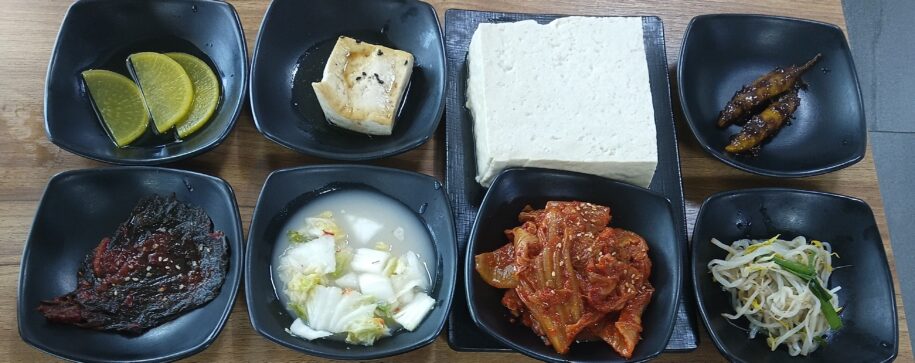
Every banchan was made in-house. Nothing came from bottles or ready-made packets. The white kimchi was crisp, lightly sweet and refreshing. The gochujang-marinated perilla leaves balanced bright herbal notes with deep fermented richness. The soy-pickled Cheongyang chillies remained beautifully firm, their initial salty sweetness giving way to a satisfying peppery heat. Each dish offered its own character, yet together formed a harmonious meal. Among all the banchan we enjoyed throughout Korea, these comfortably ranked among our favourites alongside Dooam and Chon Rice.
As our conversation drew to a close, we asked Mr Kim one final question.
“What makes you happiest about running Chodang Bonga?”
He paused for a moment before answering with a gentle smile.
“I just want people to have a happy time when they come here.”
It was such a simple answer.
Not, “I want to be the best.”
Not, “I want to open more restaurants.”
Not even, “I want to become famous.”
He simply hoped that every customer – young or old, local or traveller – would leave happier than when they arrived.
As we spoke, Mr Kim would excuse himself every few minutes.
“Please excuse me,” he would say with a slight bow before hurrying over to refill someone’s water, greet a newly arrived family, or check that another table was enjoying their meal. A moment later, he would return to our conversation with the same warm smile, picking up exactly where we had left off.
His wife quietly expresses her care through the food.
Mr Kim expresses his through people.
Before we left, we asked if we could take a photograph of the couple together. They politely declined. We also asked whether we could have a quick look inside the kitchen. Again, a gentle smile and a polite “no.”
In an age where restaurants often compete to reveal every detail of their operations, they were content to let the food speak for itself.
Perhaps that is exactly why Chodang Bonga feels so genuine.
The kitchen speaks through honest cooking.
Mr Kim speaks through quiet hospitality.
Together, they remind us that true hospitality isn’t about grand gestures or polished dining rooms. Sometimes, it is simply two humble people dedicating themselves to making sure every guest leaves happier than when they arrived.
And somehow, that makes the tofu taste even better.