There are some places that don’t just serve food—they serve memory.
Hua Mui is one of them.
Long before café culture became a lifestyle, before brunch menus needed personality and plating became performance, Hua Mui was already quietly doing what it has always done best: feeding people with honesty, consistency, and a kind of familiarity that feels almost like home.
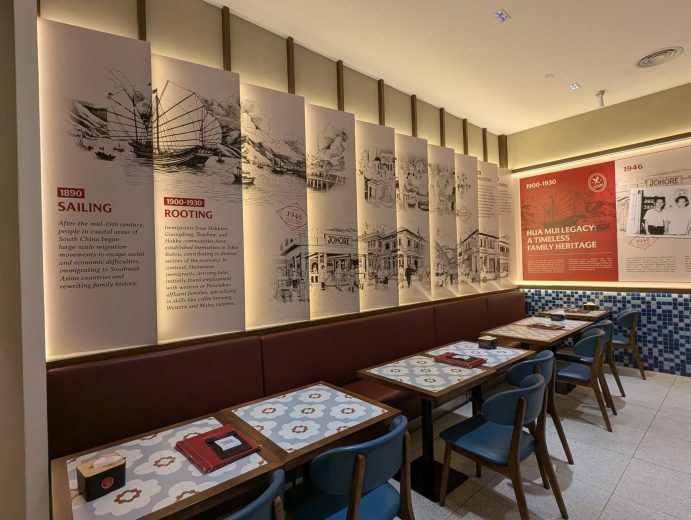
Mr. Chiang Kia Boon was a Hainanese immigrant from Wenchang. Due to famine, poverty, and political instability, many people from China migrated to a region known as Nanyang, which today includes Malaysia and Singapore. The Hainanese were among the last dialect groups to arrive, much later than those from Fujian, Canton, and Amoy. With most lucrative industries already occupied, many Hainanese found work as domestic helpers or street food vendors.
At Hua Mui, Mr. Chiang created his own version—one that would go on to outlive generations.
The early menu was simple but telling: Hainanese chicken chop, fish and chips, steak, lamb chop, fried rice, Hainan mee, kaya toast, and the comforting Egg & Chips breakfast set. From the very beginning, Hua Mui adopted a “no pork, no lard” philosophy, making it accessible to Malaysia’s multiracial community—something that continues today with its Halal certification.
But Hua Mui’s story is not just about how it started.
It is about what happens when a legacy is unexpectedly passed on.
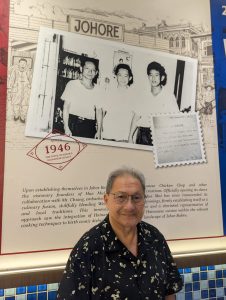
For David Chiang, Hua Mui was never just a business. It was where he grew up.
“I used to run around the streets of Johor Bahru town,” he recalls. “From a young age, I would come into Hua Mui and the cooks would give me a few bites of the chicken chop.”
That sense of familiarity changed abruptly in 1969, when his father passed away in an accident. At just 16 years old, David—the third of six siblings—was suddenly responsible for continuing what his father had built.
“I started as a waiter,” he says simply.
There were no manuals. No recipes written down. It was a time when cooking was less about documentation and more about devotion.
Only people—and memory.
I started as a waiter. I had zero experience, so I had to learn everything from the ground up. I was very fortunate because the staff and cooks guided me. They showed me how to prepare the dishes and drinks. The sauce especially—I remembered the taste by heart. Everything was from memory.
That “memory� would become one of Hua Mui’s greatest strengths. The signature brown sauce, never formally documented, has remained unchanged to this day. It is a way of cooking that relies not on measurement, but on instinct.
If there is one thread that runs through David’s journey, it is patience. Nothing at Hua Mui was learned overnight.
Coffee, for instance, was not simply made—it was mastered. Elsewhere in the kitchen, the lessons were just as exacting.
At the original outlet, kaya toast is still prepared over charcoal, just as it was decades ago. As a young apprentice, David had to learn how to control the heat—too strong, and the bread burns; too weak, and it takes too long.
“It sounds simple,” he says, “but it takes time.”
These small rituals—brewing coffee, tending charcoal, remembering customers—form the backbone of Hua Mui’s identity.
Hainanese coffee is very unique. The way you pull it, the way you brew it, the temperature—it all matters. It took me months to get it right. Perfection is not just about technique, but also about consistency. In those days, regular customers didn’t need to place their orders. We remembered every customer’s preference, and their coffee would arrive almost as soon as they sat down.
If there is one philosophy that defines Hua Mui, it is consistency.
Not as a slogan, but as a discipline.
This quiet accountability has shaped Hua Mui’s philosophy.
Not innovation for the sake of novelty. Not reinvention for attention.
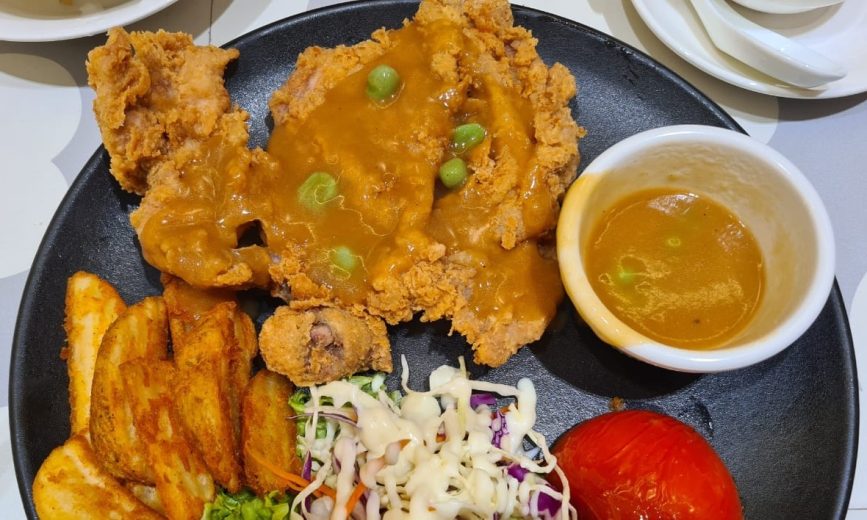
Behind the scenes, processes have been carefully designed so that every outlet can replicate the same experience. The batter on the chicken chop remains light and crisp, thanks to an old technique of incorporating soda biscuits. The meat stays juicy, while the signature brown sauce—rich, savoury, and unmistakably familiar—remains unchanged.
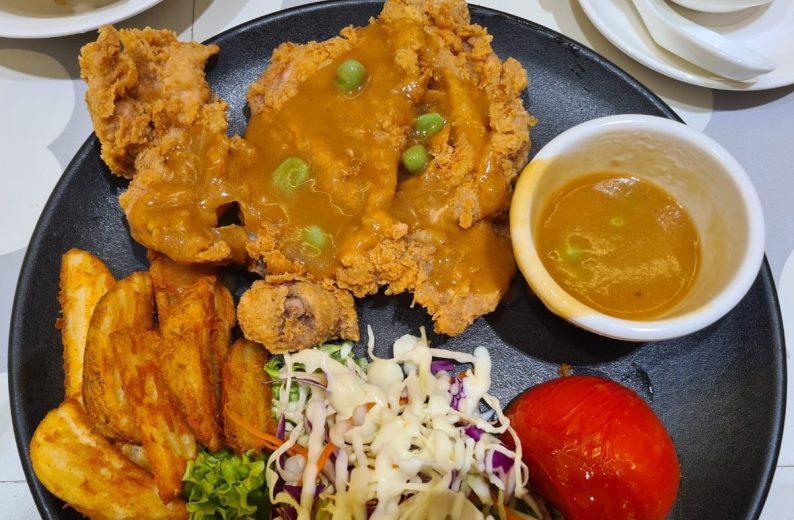
Hainanese Chicken Chop with Brown Sauce
There is also an original way to enjoy it—chicken chop and potato wedges drenched fully in the sauce. Today, it is often served on the side, a small nod to modern dining habits.
But the essence remains unchanged.
A Dish That Speaks Quietly
While the chicken chop may be Hua Mui’s most recognisable dish, its Hainan mee carries a quieter kind of significance.
It is not flashy, but memorable in a way that lingers. It is an unpretentious dish, made without elaborate ingredients.
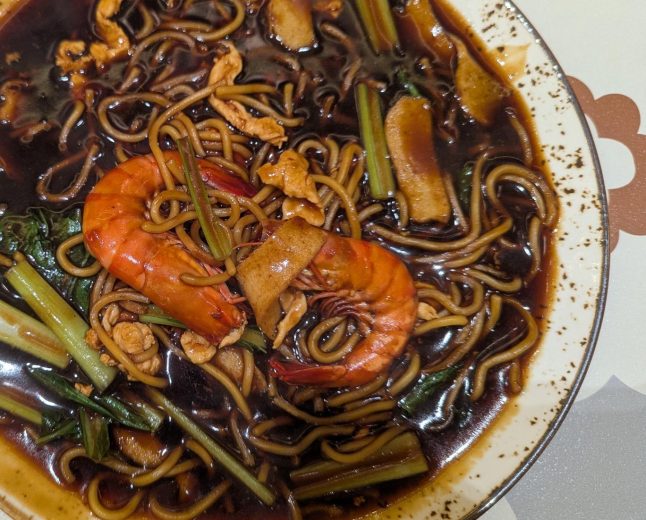
Hailam Mee made with Caramel Dark Soy Sauce unique to Malaysia
“Mee” refers to noodles in Chinese, while “Hailam” is the Malay word for the people of Hainan. Like Hainanese chicken chop, this dish is a product of Hainanese immigrants in Malaysia. Yellow wheat noodles, also known as Hokkien noodles, are typically used. There is no single standard recipe—each family and restaurant has its own interpretation.
The noodles used today are slightly thinner than before, but they still retain a gentle alkaline bite—present, but not overpowering.
It is best enjoyed with pickled green chillies, whose mild spiciness and tanginess provide a refreshing contrast to the sweet and savoury noodles.
The dish is glossy, aromatic, and comforting.
Consistency. It’s not a complicated dish, but if it’s done carelessly, you can taste it immediately. Our customers have been coming for decades—some across three generations. They know when something is off. If the food is not good, they won’t come back. That discipline—that’s what makes it special.
It’s a very traditional dish. The sauce comes from a caramelised dark soy sauce that is unique to Malaysia, which gives the noodles their deep colour. The noodles today are a bit thinner, but we keep the texture and flavour similar to before. It’s simple, but it has its own character.
In 2001, David was joined by his son Jeremy and his nephew Glenn, the third generation of the family. What followed was not a reinvention, but a careful expansion. As David prepares to step back, there is no sense of finality—only continuity.
Today, Hua Mui has grown to ten outlets across Johor, with a menu that spans over fifty dishes.
The younger team travels and draws inspiration from their experiences. A visit to Hainan Island, for instance, led to the creation of a modern dessert—Hainan Yeah Bingsu, featuring coconut caramel shaved ice.
These additions bring freshness to the menu, appealing to a younger audience. Importantly, they do not replace the original dishes.
They exist alongside them.
It’s not easy, but I have strong faith in the third generation. They are hardworking and, most importantly, they remain united as a family. That unity is essential. As a family-run restaurant that has served generations, Hua Mui is not just about food—it’s about creating a warm, social environment where people can form happy memories.
It’s important that we, as a family, embody that same spirit in everything we do. At the same time, we must keep up with changing times. The younger team has been actively exploring ways to improve the menu and introduce new dishes, ensuring we stay relevant while preserving our heritage.
I’m sure he would be very proud. We have kept the original spirit. We didn’t forget where we came from. At the same time, we are moving forward.
The identity of Hua Mui and its food cannot be separated. Our history is what gives meaning to what we do. It is our history and originality that will keep us going. This is something that cannot be replicated—it is unique to us.
As David prepares to step back from the business, there is no grand declaration. No dramatic passing of the torch.
Not chasing change, but embracing it carefully.
Not forgetting the past, but building on it.
Because in the end, Hua Mui is not just a restaurant.
It is the story of a young boy who became a custodian of something much bigger than himself. Of customers who returned, again and again—not for novelty, but for familiarity.
And now, it is the story of a new generation—one that carries forward not just recipes, but responsibility.
Long after David steps away, the doors will remain open.
The coffee will still be brewed the same way.
And somewhere, at a familiar table, a plate of chicken chop will arrive—just as it always has.