Ang Hoay Loh: The Red Fiery Stove That Refuses to Go Out
8 September 2026
Penang, Malaysia
10 min read
Hokkien · Non-halal
Penang has no shortage of famous hawker food. Char kway teow, assam laksa and prawn noodles have become culinary ambassadors for the island. But beyond the dishes visitors arrive with already written on their lists lies another layer of Penang’s food heritage – the everyday Hokkien cooking that generations once simply regarded as food from home.
Ang Hoay Loh (洪火爐) is one of the places where that cooking survives.
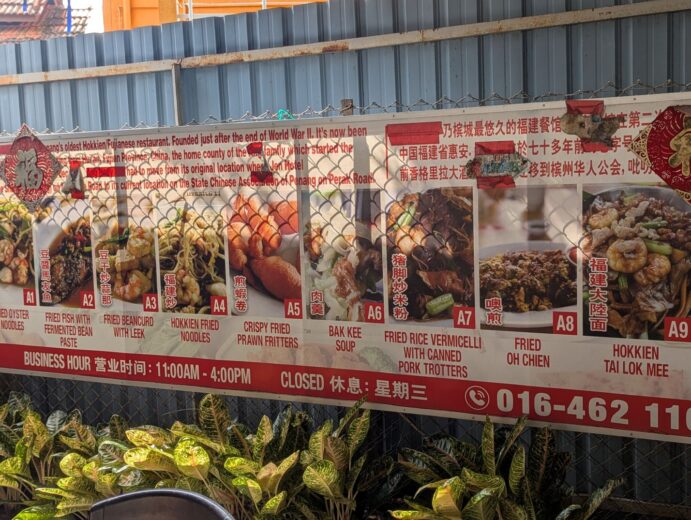
We are referring specifically to Ang Hoay Loh on Perak Road, not the similarly named Ang Hoay Lor on Gurdwara Road.
Someone Had to Keep Cooking
The story of this Ang Hoay Loh is one we find particularly admirable.
The current proprietor learnt these traditional dishes from her aunt and uncle, who had been involved in cooking at the original Ang Hoay Lor. When they were approaching retirement, she realised something rather simple: if nobody learnt to cook these dishes, customers would eventually stop tasting them.
There was no grand reinvention, no attempt to modernise the food for a new generation and certainly no elaborate heritage-themed interior required. It was simply a decision that something worth preserving was also worth the effort of learning.
And perhaps that is how food heritage actually survives – not through nostalgia alone, but because somebody is willing to stand in front of a hot wok and continue cooking.
Under the Old Tree
The setting couldn’t be more appropriate.
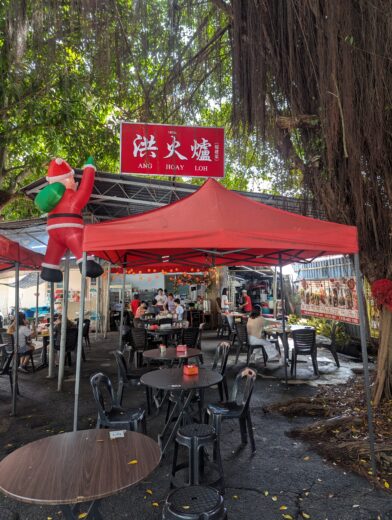
Ang Hoay Loh @ Perak Road, Penang
Ang Hoay Loh sits rather humbly beside the Penang State Chinese Association building on Perak Road. Plastic tables and chairs occupy the outdoor space while an enormous old tree stretches above, providing shade from Penang’s afternoon sun.
Nothing here appears particularly concerned about being photogenic. And that is precisely its charm.
The restaurant’s roots belong to a much older tradition of Fujianese cooking in Penang. Historical accounts trace the origin of its dishes to Hui’an in Fujian, China. Chinese migration from Fujian played an important role in shaping Penang’s Chinese community, with generations adapting their language, traditions and food to their new home.
Even the name seems appropriate. Ang Hoay Loh – “Red Fiery Stove.”
And a fiery stove is exactly what this food needs.
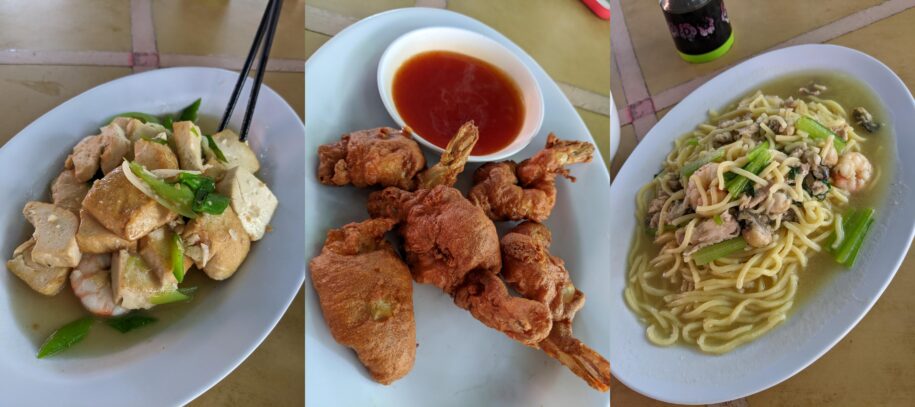
Tau Kwa Char Suan Nah
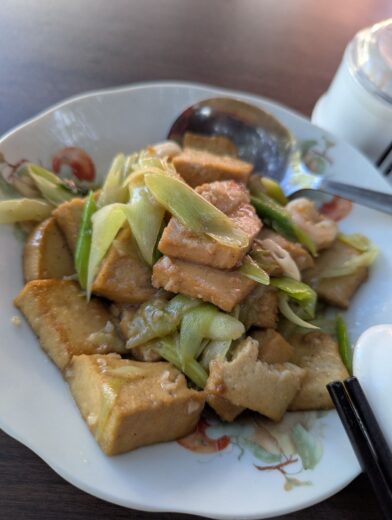
The Tau Kwa Char Suan Nah – fried beancurd with leeks – sounds almost too ordinary to warrant much discussion.
Until you eat it.
Tau kwa is a firmer, pressed form of tofu with less moisture than softer varieties, which makes it particularly suited to frying. Here, it carries a gentle hint of Chinese five-spice and is pre-fried until its pale surface develops a beautiful golden-brown exterior.
As moisture evaporates from the surface of the tau kwa, its temperature can climb high enough for the Maillard reaction to occur – a series of reactions between amino acids and reducing sugars that produces hundreds of new aroma and flavour compounds. In less scientific terms: pale tofu becomes browned, nutty and considerably more delicious.
"Tau Kwa Char Suan Nah" - Tofu fried with Leeks
Pre-frying also changes its texture. The exterior loses moisture and firms up while the interior remains comparatively tender. When the tau kwa subsequently returns to the wok with leeks, prawns and stock, that firmer surface allows it to withstand another round of high-heat cooking without simply falling apart.
Then comes the leek.
Heat softens its fibrous structure and mellows its sharper sulphur compounds, transforming its raw onion-like pungency into something gentler and sweeter. Fresh sea prawns provide yet another contrast – firm and slightly springy against the softer tofu and wilted leeks.
But the clever part happens when stock meets the fiercely hot wok. The stock reduces, concentrating its savoury flavours rather than leaving the ingredients sitting in a pool of liquid. As the surface dries and temperatures rise again, browning can resume.
It becomes a continuous little cycle of frying, moistening, reducing and browning – all controlled by the cook through heat and timing.
What arrives at the table looks deceptively simple: tofu, leek and prawns.
Orh Mee
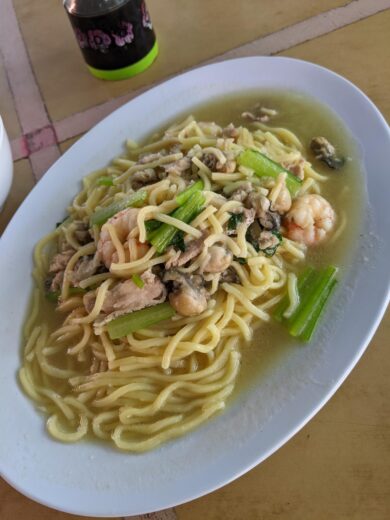
Then came one of the dishes we particularly wanted to try: Orh Mee, or fried oyster noodles.
Thick yellow Hokkien noodles are first tossed through the intense heat of the wok before broth is introduced, together with pork slices, prawns, pork lard, choy sum and small fresh oysters."Orh Mee" - Oyster Noodles
When the broth hits the extremely hot metal, some of its water rapidly turns to steam. As moisture evaporates, the remaining liquid becomes more concentrated, intensifying the savoury compounds from the stock, pork, seafood and seasonings. Meanwhile, the noodles continue absorbing some of that increasingly flavourful liquid as they braise.
As the surface becomes drier again, temperatures can rise beyond the boiling point of water, allowing browning reactions to take place. This is part of the chemistry behind the complex roasted aromas we commonly describe as wok hei. It isn’t simply a matter of owning an old wok; high heat, rapid evaporation, oil, timing and the cook’s control of the ingredients all play their part.
The result is a plate of noodles that is neither conventionally fried nor soupy. The gravy clings to the strands, carrying the flavour of the wok with it.
Then there are those little oysters.
They aren’t the enormous imported specimens that dominate a plate. These are small, briny morsels whose flavour announces the sea far more loudly than their size suggests. Their natural glutamates and other savoury compounds contribute another layer of umami to the dish, alongside the prawns, pork and stock.
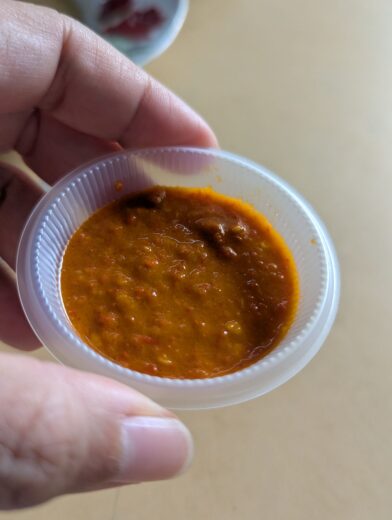
Penang-style Sambal BelachanAnd then there is the sambal belacan.
Fresh chilli, pungent fermented shrimp paste and the citrusy sharpness of calamansi produce something fiery, salty and unapologetically Penang. Take some noodles, add a little sambal, and suddenly richness, brininess, acidity and heat all arrive in the same mouthful.
Penangites do have an unusually committed relationship with chilli. Calling them spice lords might be pushing the scholarship a little, but after eating around the island, we are prepared to defend the title.
Hae Kean – The “Pong Pong” Prawn
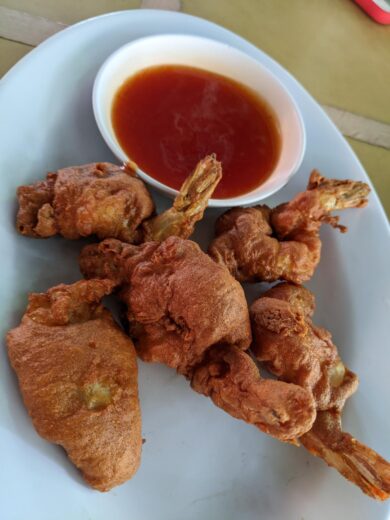
The Hae Kean, or crispy prawn fritters, look deceptively heavy. But they aren’t.
Kids tend to nickname them as “Pong Pong” prawns, each prawn disappears beneath what looks like an improbably thick shell of batter. Bite into one, however, and much of what you expected to be dough turns out to be air."Hae Kean" - Crispy Prawn Fritters
There is some rather entertaining physics responsible for that.
When the wet batter enters hot oil, the water trapped inside it heats rapidly and turns into steam. Water expands dramatically when it changes from liquid to vapour, and that escaping steam pushes against the batter while its exterior is simultaneously setting in the hot oil. The result is a puffed shell containing tiny pockets of air rather than a dense mass of dough.
The hot oil also drives moisture away from the surface. With less water remaining in the outer layer, the batter becomes rigid and brittle – which is what gives us that satisfying crunch.
Timing matters. Leave it in the oil too long and the prawn can lose moisture and become tough; remove it too early and the batter remains heavy rather than crisp. Here, the shell arrives golden and airy while the prawn inside retains its natural firmness and sweetness.
So that comically oversized fritter isn’t quite as sinful as appearances suggest. A surprising amount of it is simply trapped air. Crispy exterior, airy centre, crunchy prawn.
Dip it into the accompanying sweet chilli sauce and there really isn’t much more science required.
When Food Outlives a Generation
There are more old Hokkien dishes on the menu, but telling you about every one rather defeats the purpose of visiting.
Penang is fortunate that many of its famous hawker dishes have found successors. Yet quieter forms of home-style cooking can be more vulnerable. They don’t necessarily have queues of tourists, viral videos or hundreds of aspiring successors waiting to inherit the wok.
Which makes places such as Ang Hoay Loh important.
Sitting beneath that old tree, surrounded by plastic chairs and tables, we watched elderly customers eating alongside children and grandchildren while Penang Hokkien drifted between tables.
There is nothing curated about the scene.
No faux-retro signboards. No carefully distressed furniture. No attempt to manufacture nostalgia.
Just an old tree, a hot wok, a handful of recipes and another generation willing to cook them.
The red fiery stove is still burning. Hopefully, someone will keep that fire going.