About an hour’s drive from Gwangju, the landscape begins to change. Rice fields stretch towards distant mountains, the roads quieten, and tucked away in the countryside of Muan sits an unlikely destination. Beside Dooam is a small military museum filled with retired warplanes and tanks. Strangely enough, the restaurant attracts far more visitors than the museum ever seems to.
People come here for one thing: Gip-bul.
How Gip-bul came to be
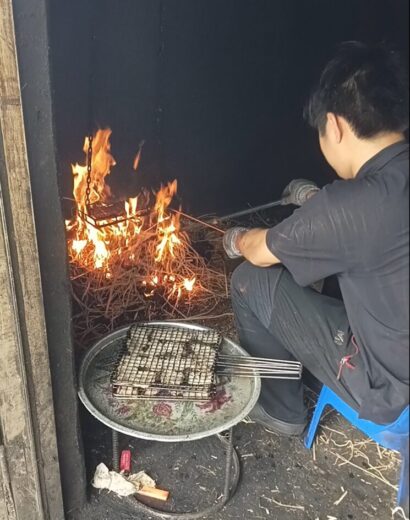
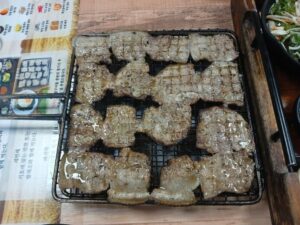
Dating back to 1950, Duam has spent more than seven decades preserving one of Korea’s oldest methods of grilling pork. Instead of charcoal or wood, the meat is cooked over burning hay.
The straw burns fiercely and almost instantly, reaching temperatures that culinary experts estimate can approach 1,000°C.
The intense heat quickly sears the pork, locking in its juices while imparting a remarkably clean, subtly sweet smokiness. Unlike charcoal grilling, the flavour never becomes overly smoky or masks the natural taste of the pork.
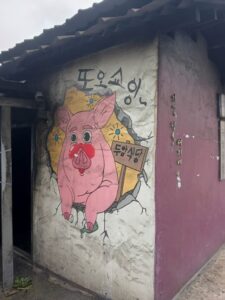
The technique itself was born out of necessity. Duam began life as a butcher shop at a time when gas burners were uncommon in rural Korea, while straw was abundant after each harvest. What started as a practical solution gradually evolved into a cooking tradition unique to the region. Even today, the hay used for Gip-bul is typically aged for around three years before it is considered suitable for grilling.
Some traditions survive because they refuse to change.
Blissful Satisfaction – Farm to Table
From the moment we arrived just before noon on a weekday, it was obvious that Duam had earned its reputation. The restaurant was already full, and we managed to secure the last available table. Reservations are not accepted, with waiting guests joining the queue through Catchtable instead.
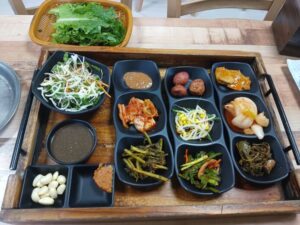
One serving consists of 200 grams of Korean pork belly accompanied by an impressive spread of banchan. Every side dish is prepared in-house using organic vegetables from Duam’s own farm alongside carefully sourced local ingredients. It was a genuine farm-to-table experience where nothing felt like an afterthought.
The selection included glazed baby potatoes, fish cake marinated with fermented prawns, kimchi, pickled soy sprouts, pickled onions, pickled dureup (Aralia shoots), pickled minari (water dropwort) and pickled siraegi (radish tops), together with a house-made spicy fermented fish sauce.
Each banchan stood confidently on its own while knowing exactly when to step aside for the pork. Like the perfect supporting cast in a film, every element elevated the star without competing for attention.
The pickled onions were a revelation. Instead of the sharp bite often associated with raw onions, their natural sweetness came through first before gentle notes of acidity and spice followed. The fish cake had a firmer texture than we were accustomed to, but its savoury marinade of fermented prawns added another layer of depth. Nothing was excessively salty or sour; everything was carefully balanced to complement the pork rather than overwhelm it.
Then came the sauce that completely changed the meal.
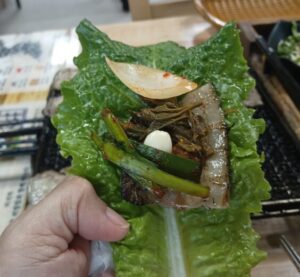
Chilgejang, made from fermented tiny shore crabs native to Korea’s coastal regions, arrived looking rather unassuming. Its greyish appearance does little to inspire confidence, but appearances can be wonderfully deceiving. Rich with briny sweetness, deep umami and just enough salinity to awaken the palate, it tasted like the very essence of the sea. Spread inside a ssam together with the pork, it transformed every bite into something unforgettable.
The pork itself demonstrated exactly why Dooam has remained popular for over 70 years.
Using only Korean pork, each slice of pork belly is cut to a thickness that perfectly suits the Gip-bul technique. Thin enough for the fat to render completely, yet substantial enough to retain its tenderness, every slice emerged juicy with delicately crisp edges.
Watching the master griller was almost hypnotic. As flames danced around the metal grilling basket, he instinctively knew when to feed more hay into the fire. Too little and the characteristic aroma would never develop; too much and the meat would overcook. It is a craft refined through decades of experience – one that cannot simply be taught by recipe alone.
Click here to view video of Gip-bul: https://youtube.com/shorts/yH6-45kvZyQ?feature=share
By this stage of our Korean road trip, we had already visited well over twenty eateries across the country. Yet Duam delivered one of the most complete meals of the journey.
It wasn’t simply because the pork was outstanding. It was because every element on the table – from the house-made sauces to the farm-grown vegetables and carefully prepared banchan – felt equally important. Nothing existed merely to fill space.
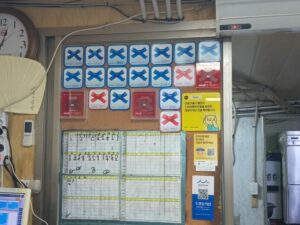
The walls tell the same story. Dooam has received the prestigious Blue Ribbon designation every year since 2013, an achievement that reflects more than a decade of consistent excellence. More importantly, the restaurant has welcomed generations of diners since 1950, proving that truly good food never falls out of fashion.
The meal was so satisfying that we ordered another serving. Leaving after only one simply didn’t feel right, we didn’t want to drive 100 miles on and live with regret.
As we drove away through the quiet countryside, one thought stayed with us. Dooam perfectly captures what humble eating should be: taking what nature provides – hay from the fields, vegetables from the farm, pork from local producers and tiny coastal crabs – and transforming them through knowledge passed down over generations into something extraordinary.
Sometimes the greatest meals aren’t found in big cities.
Sometimes they’re hidden beside an old military museum, waiting patiently for the next generation to discover them.
Nearby Attraction
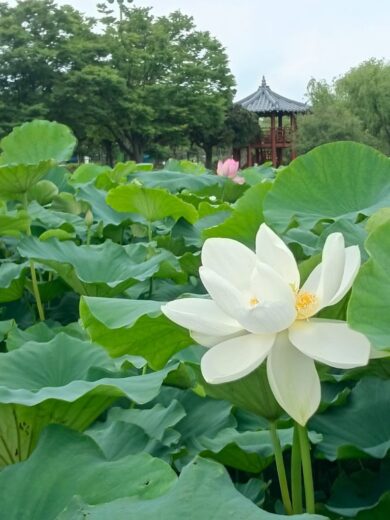
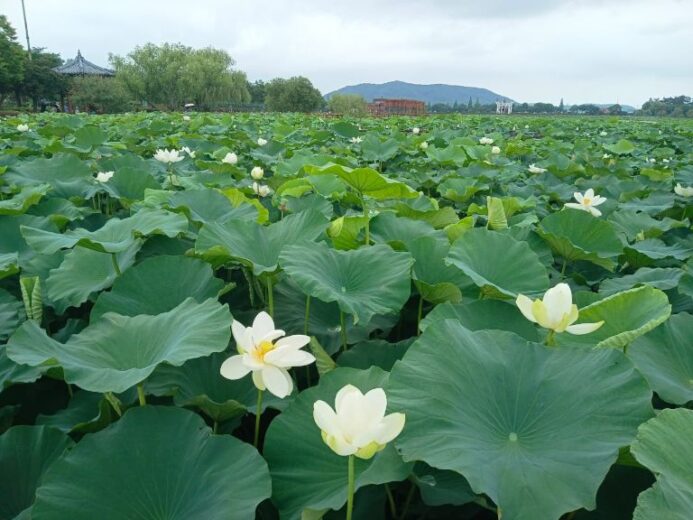
If you’re making the drive to Dooam, set aside time to visit Hoesan White Lotus Lake, the largest white lotus habitat in Asia, spanning approximately 330,000 square metres. During peak blooming season in early summer, the lake transforms into an endless sea of white and pink lotus flowers, making it one of Muan’s most beautiful natural attractions and the perfect companion to an unforgettable meal.