
Imagine ordering fried chicken and discovering that the chef has removed the entire skin of the bird, carefully flattened it, spread it with seafood paste and fried it into a delicate golden crisp. Meanwhile, the chicken meat has been diced and stir-fried with vegetables to accompany it. All that effort for a plate of fried chicken? Absolutely. And this was happening in Singapore long before anyone thought to describe food as innovative, artisanal or Instagram-worthy.
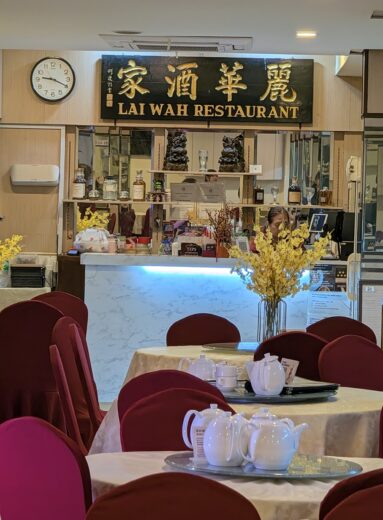
Lai Wah is perhaps best known for its association with the creation of the modern yu sheng, the colourful raw fish salad enthusiastically tossed during Chinese New Year. Yet there is much more to its story than a once-a-year festive tradition. For those who grew up attending Chinese wedding banquets and family celebrations during the 1980s and 1990s, dishes such as Yam Ring, Crispy Chicken and Spare Rib King may bring back memories of large round tables, revolving Lazy Susans and relatives urging everyone to eat more. These dishes made an occasion feel special, while showcasing a chef’s technical ability, creativity and pride. For younger diners encountering them for the first time, Lai Wah offers something equally interesting: a chance to discover just how inventive Cantonese cooking was before modern gastronomy became fashionable.
Golden Cage Crispy Chicken (金笼鸡): When Fried Chicken Required More Than a Spice Blend
Fried chicken has become a global obsession. There are Korean versions coated in sticky sauces, American versions with elaborate spice blends and endless interpretations involving cheese, chilli and dipping sauces. But back in the 1960s, Cantonese chefs were already creating something considerably more complicated. Lai Wah’s Golden Cage Crispy Chicken recalls a time when a chef’s reputation depended not merely on flavour, but also on techniques that few others could execute.
Preparation begins with the painstaking removal of the chicken’s skin in one piece. The skin is stretched and hung to dry before a paste of squid and prawns is spread across its surface. It is then deep-fried until golden and crisp, while the seafood paste develops a delicate, springy bite. The remaining chicken meat is diced and stir-fried with vegetables to accompany the crispy skin.
The first bite is a delightful surprise. The golden chicken skin shatters with a delicate, almost papery crispness before giving way to the gentle, springy chew of the seafood paste beneath. The contrast is wonderful: brittle against bouncy, savoury against subtly sweet. The natural sweetness of the prawns and squid mingles with the unmistakable fragrance of fried chicken skin, creating a rich umami flavour without the heaviness one might expect from deep-fried food.
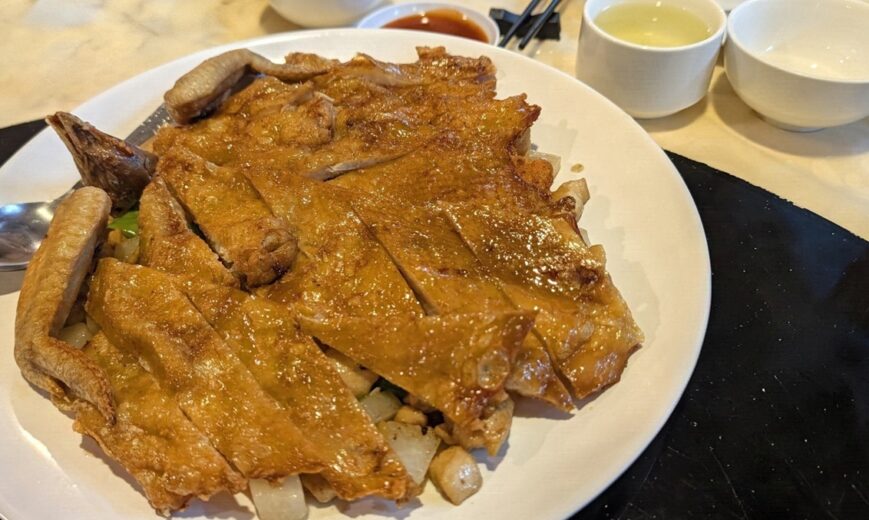
Beneath the golden chicken lies a colourful mixture of diced vegetables expertly tossed in the wok. The vegetables retain their freshness and crunch, offering a lighter, juicier counterpoint to the crispy skin. Eating the two together brings the dish into balance, with each mouthful moving between crispness, tenderness and the natural sweetness of the ingredients – a clever composition where the accompaniments have a genuine purpose rather than merely filling the plate.
What makes Golden Cage Crispy Chicken particularly impressive is that its complexity is largely invisible to the diner. There are no theatrical smoke effects or elaborate tableside performances. The drama has already happened in the kitchen, through hours of preparation and extraordinary skill. It makes one wonder why we are so quick to celebrate modern fried chicken inventions when something this ingenious has existed for generations.
Fried Ee-Fu Mee: The Art of Making Simple Noodles Taste Extraordinary
Not every great Cantonese dish needs to be spectacular. Some achieve brilliance through deceptively simple ingredients and technique, and ee-fu mee is one such example. These golden-brown, flat wheat-and-egg noodles are deep-fried and dried before being cooked again. Their slightly porous structure allows them to absorb the stock and seasonings in which they are braised, giving each strand wonderful depth of flavour.
At Lai Wah, the dried noodles are imported from Hong Kong and prepared in the classic Cantonese style with golden chives, mushrooms and prawns. The plate that arrived was a generous tangle of soft, glistening strands, each beautifully coated in a savoury sauce that has been absorbed rather than simply poured over them.
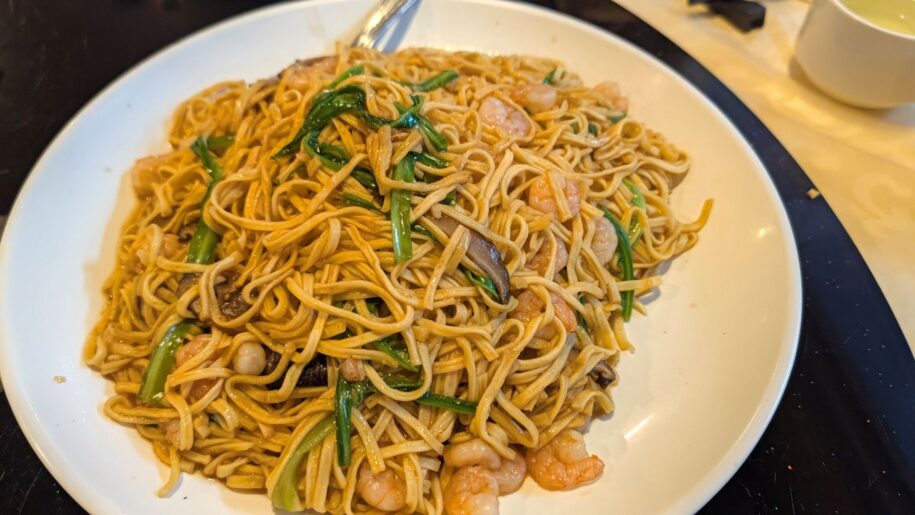
There is tremendous pleasure in lifting a mouthful of these noodles and slurping them while they are still warm. Unlike the springy resistance of ramen or the firm bite of Italian pasta, Ee-fu mee offers a more mellow experience. They are wonderfully soft and yielding, with a silky, almost slippery texture that allows them to glide effortlessly across the tongue. As you chew, the savoury stock absorbed within the noodles gradually releases its flavour, accompanied by the earthy notes of mushrooms, gentle fragrance of chives and sweetness of prawns. Nothing shouts for attention, yet everything comes together in a beautifully rounded mouthful.
Lai Wah’s rendition was so well balanced that we found little reason to even consider the typical side condiment of pickled green chillies. The noodles were savoury without being excessively salty, rich without becoming cloying, and satisfying in that quietly reassuring way of good Cantonese cooking.
Yam Ring: A Love Story That Became a Cantonese Classic
Of all the dishes on our table, the yam ring perhaps carries the most romantic story. It is said that in 1958, a young chef named Hooi Kok Wai fell in love with a waitress named Leong Ah Lian, while working at Singapore’s old Cathay Restaurant. As with all love stories, there was a complication. She had been raised by strict vegetarian Buddhist nuns, and winning their approval was no ordinary courtship challenge.
Instead of arriving with flowers or chocolates, the young chef reportedly decided to impress them through his cooking. He created an elaborate vegetarian dish using mashed yam, shaped into a ring inspired by a Buddhist monk’s alms bowl, deep-fried until golden and filled with stir-fried vegetables. Forget candlelit dinners. This man attempted to win hearts with deep-fried yam.
Hooi Kok Wai went on to become one of Singapore’s celebrated Four Heavenly Kings of Cantonese cuisine. The yam ring became a beloved fixture of Chinese restaurants and banquet tables, with Lai Wah also associated with its early development.
Making a good yam ring requires considerable skill. Fresh yam is steamed until soft and mashed while still hot. Because yam alone cannot maintain it’s structure during deep-frying, a cooked wheat-starch paste is incorporated for elasticity and stability. Lard or shortening helps create the characteristic flaky exterior before the mixture is rested, shaped and fried. A well-made yam ring should have a crisp, delicately flaky crust surrounding a smooth, almost creamy interior. It must hold its shape without becoming dense or doughy, while the frying must be controlled to prevent excessive oil absorption.
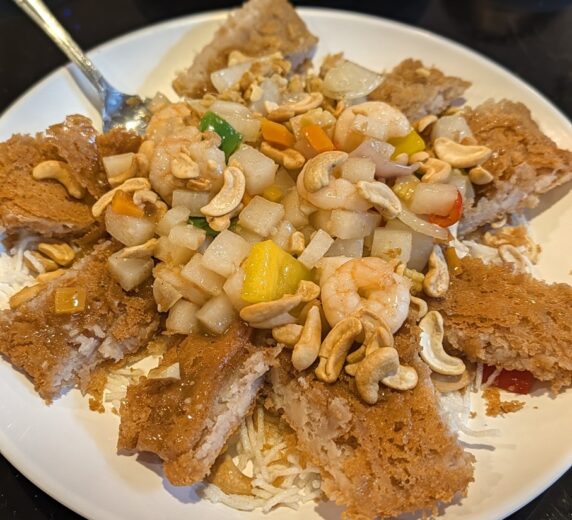
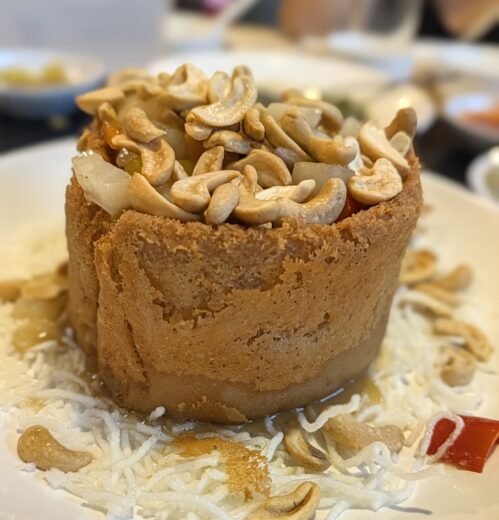
Lai Wah’s yam ring was an absolute delight, and perhaps the most technically satisfying dish of our meal. The exterior was a beautiful golden crust of delicate, feathery flakes that yielded effortlessly to the bite. Beneath it was a warm, velvety yam purée, smooth and soft, with the gentle earthiness and natural sweetness of the root vegetable coming through. The contrast was immensely pleasurable: a fleeting crispness followed by a rich, comforting softness that seemed to melt across the tongue. It had all the satisfaction of something indulgent without leaving the palate feeling greasy or weighed down.
We chose the version filled with prawns, cashews and vegetables, which introduced a mixture of firmer textures and savoury flavours against the softness of the yam. While the filling was pleasant, it did not quite rise to the same standard as the beautifully executed ring. The yam itself was so good that we found ourselves paying more attention to its delicate crust and creamy interior than to what was sitting inside it.
For those who remember yam rings from childhood celebrations, Lai Wah’s rendition offers familiar comfort. For younger diners, it is an opportunity to discover how a humble root vegetable became one of Cantonese cuisine’s most elaborate creations. And if you ever need an unusual conversation starter on a date, you now have a story about a chef who used yam to pursue romance.
Kyoto Pork Ribs (排骨王): The Original Sweet-and-Savoury Temptation
Long before sweet-and-spicy glazed meats became social media favourites, Cantonese chefs had mastered the balance of sweetness, acidity and savoury depth. Kyoto Pork Ribs, also known as Spare Rib King or Pai Gu Wang (排骨王), sounds ordinary until prepared exceptionally well.
The dish uses side cuts of pork tenderloin with bone, which are pounded, tenderised and marinated before frying. The challenge is achieving tenderness without sacrificing the meat’s natural texture. Lean pork easily becomes dry when overcooked, making control of heat and timing essential.
At Lai Wah, the pork arrives coated in a deep reddish-brown glaze, glossy enough to catch the light and cling to every curve of the meat. The first bite delivers a lively burst of sweetness and tanginess, followed by a deeper savoury richness and hints of caramelisation. The acidity in the sauce keeping the sweetness in check and encouraging another bite, and never overwhelming the natural flavour of the pork.
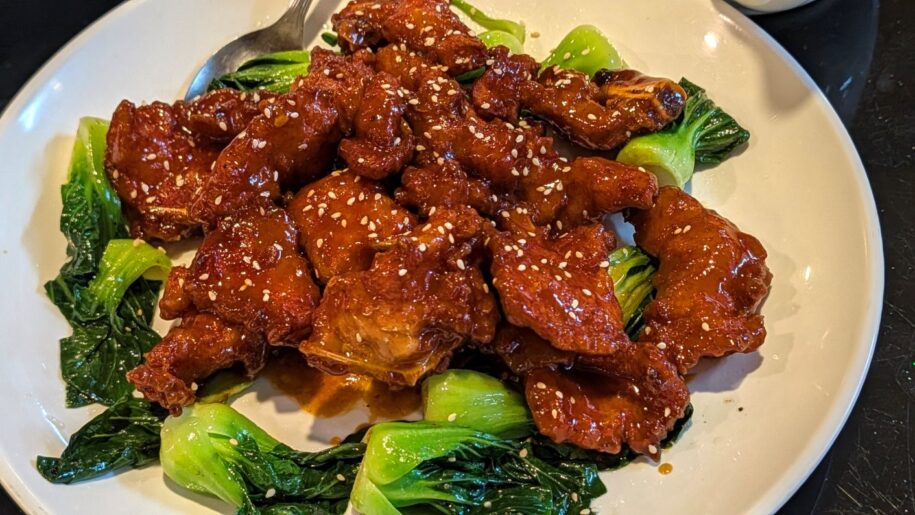
The pork is tender and succulent, offering a gentle resistance before yielding to the bite. There is none of the dry, stringy toughness that can afflict poorly prepared lean pork, and the glaze coats each piece without turning it into a sticky, overly sweet mess. Think of it as a meat lollipop, minus the stick.
Achieving this balance requires more than a good sauce recipe. The chef must tenderise the meat correctly, fry it without drawing out too much moisture, and bring everything together in a scorching wok so the sauce reduces into a glossy coating rather than a pool beneath the pork. It is this control of texture, heat and seasoning that elevates Pai Gu Wang from an ordinary sweet-and-sour meat dish into the sort of dish where good table manners may briefly give way to the temptation of grabbing the last piece before someone else does.
When Good Cooking Was the Original Fine Dining
There was a time when dining at a Cantonese restaurant was an occasion in itself. Families gathered around large tables, celebrations were marked with elaborate dishes, and chefs took enormous pride in presenting food worthy of the occasion. The measure of a great restaurant was not how fashionable it was, but how well it cooked, how generously it fed its customers and whether they would return.
What made that generation of Cantonese chefs remarkable was their understanding that good cooking required both discipline and imagination. They were not afraid of labour-intensive preparations, even when much of their effort went unnoticed by diners. Their reward was the finished dish and the satisfaction of seeing people enjoy it. Innovation was a natural extension of craftsmanship, not an exercise in attracting attention.
For those who remember Chinese wedding banquets and family celebrations of the 1980s and 1990s, Lai Wah offers familiar tastes. But the greater challenge is introducing these dishes to a generation that may never have encountered them. How do you convince someone accustomed to Korean fried chicken, Japanese ramen and contemporary fusion cuisine to try Golden Cage Crispy Chicken or an old-fashioned yam ring?
Perhaps the answer is not to sell them nostalgia, but to let them discover the food on its own merits. These dishes have fascinating stories, unexpected textures and flavours that remain thoroughly enjoyable today. A well-executed dish can delight someone tasting it for the first time just as much as someone who has enjoyed it for fifty years.
There is also a larger question about what we lose when such dishes disappear from menus. Recipes can be written down, but the judgement required to execute them well is harder to preserve. Knowing when yam dough has reached the right consistency, how to achieve a delicate crisp without greasiness, or when to remove pork from a scorching wok comes from years of practice. Without chefs continuing to cook these dishes, that accumulated knowledge risks disappearing.
This is why restaurants like Lai Wah matter. More than six decades after opening, it continues to offer diners a chapter of Singapore’s Cantonese culinary heritage, not behind museum glass, but freshly prepared and served at the table. Perhaps the next generation does not need to develop a taste for nostalgia. They simply need to discover that some of the most exciting food worth eating today was invented long before they were born.