
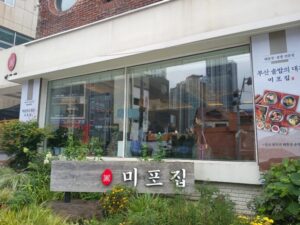
Not far from the famous Mipo Station, where the Blue Line Park train hugs Busan’s beautiful coastline, sits Mipo-jib, a restaurant renowned for its soy-marinated seafood.
This meal began long before we ever sat down.
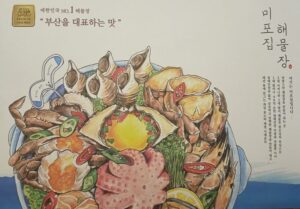
From the moment we left the hotel that morning, we knew what awaited us. Every seafood restaurant we passed heightened our anticipation, but when we spotted a giant billboard showcasing glistening soy-marinated blue crabs near Mipo Station, there was no turning back. By the time we arrived at Mipo-jib, there was hardly any need to study the menu. We had already made up our minds.
A Table of the Sea
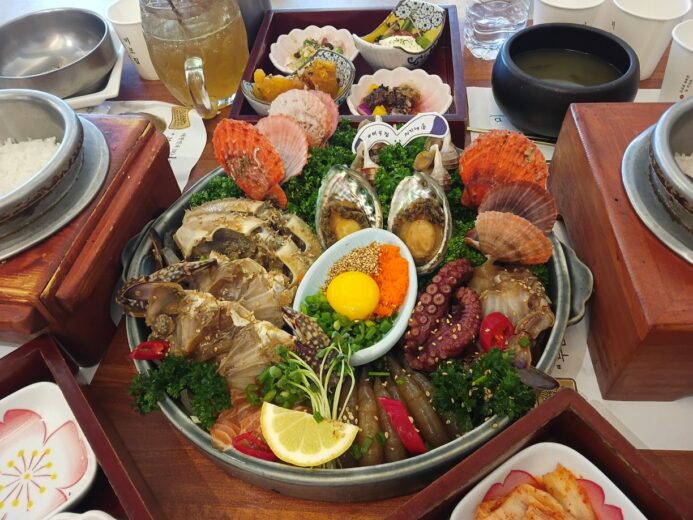
Their signature seafood platter arrived looking like Busan’s coastline laid out on a table. Soy-marinated blue crabs, prawns, scallops, salmon, abalone, sea snails and perfectly cooked octopus surrounded a bowl of rich dipping sauce made from egg yolk, sesame seeds, fish roe and fresh spring onions.
The sauce was indulgent without being overwhelming. The egg yolk gave it a silky, velvety richness that lovingly coated every piece of seafood. Bursts of salty fish roe added little pops of the sea, toasted sesame brought warmth and fragrance, while the spring onions kept everything bright and refreshing. It was a beautifully balanced accompaniment that elevated rather than masked the seafood itself.
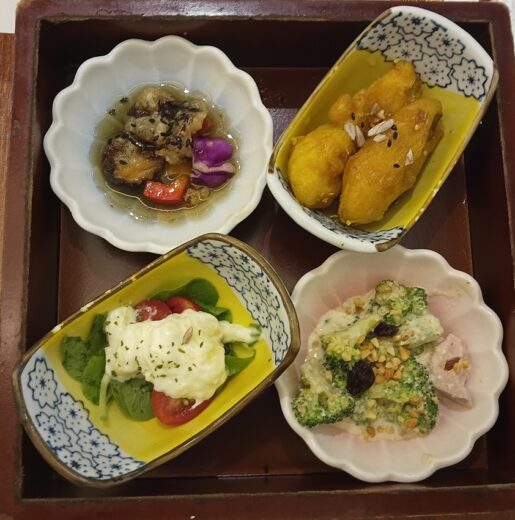
The Ganjang Gejang was undoubtedly the star of the meal.
Unlike cooked crab, the blue crab is gently cured in aromatic soy sauce until the flesh transforms into something almost jelly-like. As we gently bit into the delicate shell, the translucent meat slowly oozed from every crevice, filling our mouths with cool, silky sweetness. The first taste was savoury soy and it was brief, followed almost immediately by the natural sweetness of the crab that lingered long after the saltiness had faded. It was clean, deeply comforting and astonishingly addictive. Every bite was another explosion of umami that made it impossible to stop reaching for just one more piece.
These unique flavours are the result of their 40-year old family secret – Yeolmae soy sauce. This soy sauce is made from fruit enzymes and seasonal ingredients every spring.
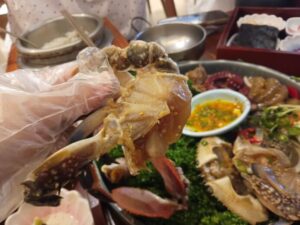
The cooked seafood was equally memorable. The octopus was wonderfully tender with just enough resistance to remind us of its freshness, while the sea snails possessed a gentle sweetness and pleasant springiness that hardly needed the dipping sauce at all. They were so naturally delicious that adding anything felt almost unnecessary. Every so often, a spoonful of steaming white rice cleansed the palate, allowing us to appreciate the seafood all over again from the very first bite.
Yet, what made this meal truly unforgettable wasn’t the platter before us.
A Table of Friends
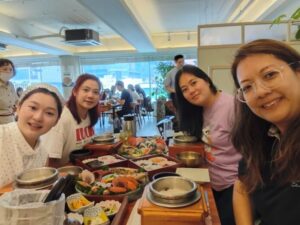
A few days earlier while exploring Busan, we had met a delightful group of young ladies from China. They told us they wanted to experience Korean food “The Humble Belly” way – not simply ticking off famous restaurants, but discovering the heritage dishes and local flavours that tell the story of Korea.
Before long, everyone had slipped on disposable plastic gloves. Formal table manners quickly gave way to excitement as we reached into the platter together, passing pieces around, encouraging one another to try something unfamiliar, laughing as crab juices inevitably found their way onto our gloves. There was little need for perfect language. Wide eyes, smiles, laughter and the occasional thumbs-up said everything that words could not.
Moments like these remind us why The Humble Belly was started.
From the very beginning, it has never been just to recommend good food. Rather, it is about wanting to help people understand the heritage behind traditional dishes, to look beyond unfamiliar ingredients, and to gently break down the cultural stereotypes and misunderstandings that often surround food. So many remarkable cuisines are misunderstood simply because they seem different to those seeing them for the first time. Yet every traditional dish exists for a reason – shaped by history, geography, climate and generations of people who preserved it with pride.
Watching these new friends enthusiastically savour soy-marinated crab, sea snails and octopus reminded us that curiosity is often the first step towards understanding another culture. Every shared meal has the power to replace hesitation with appreciation, unfamiliarity with respect, and stereotypes with genuine admiration.
It is moments like these that make everything Humble Belly does worthwhile.
If one meal can inspire someone to better understand another culture, then every article we write has served its purpose. Food is one of the few things in this world that asks for no common language. All it asks is an open mind and a willing palate.
Nothing was left on the table. Not because we were determined to finish it, but because every last bite deserved to be enjoyed.
Seafood has long been regarded as one of Asia’s great luxuries. At Mipojip, we certainly indulged in Busan’s finest bounty from the sea. Yet, as we walked away that afternoon, we realised the greatest luxury wasn’t the abundance of crab, abalone or octopus before us.
It was the privilege of sharing them with newfound friends.
Because sometimes, the richest thing on the table isn’t the food itself.
It’s the people gathered around it.
Note: The heritage-ranking awarded to Mipojip is a recognition of the family’s continued use of their 40-year old handcrafted soy-sauce recipe.