6 October 2026
Singapore
7 min read
Chinese · Non-halal · Teochew
There was a time when gathering around a charcoal fire was simply part of dinner. No induction cooker, no temperature controls and certainly no QR code required. Just a pot bubbling furiously over glowing charcoal, surrounded by family and friends.
At Nan Hwa Chong, that scene has been playing out in one form or another for nearly a century.
Its story began in 1927 as a hawker stall at Wayang Street, today part of Eu Tong Seng Road, serving fish soup and fish porridge cooked over charcoal. Bighead carp was commonly used, earning the stall its familiar nickname, “Big Head Fish Steamboat.”
There is something fitting about the steamboat surviving this long. Its communal spirit echoes the Swatow tradition of wei lu – families gathering around a warm stove, particularly for Chinese New Year’s Eve. For the early Nanyang Chinese immigrants, perhaps there was comfort in recreating a familiar ritual thousands of kilometres from home.
Even its name carries the aspirations of that immigrant generation. Nan Hwa Chong (南华昌) loosely expresses a wish for the Chinese community of Nanyang to flourish and prosper – an optimistic name for people building new lives far from their ancestral homeland.
Nan Hwa Chong would move several times over the decades before the present-day business took shape in 2002 through a partnership with Mr Lee Hong Chuan, bringing with it an expanded menu.
Not Quite the Steamboat You Expect
Choose your size – small, medium or large – followed by your fish: white pomfret, grouper or snapper.
Then comes the important distinction.
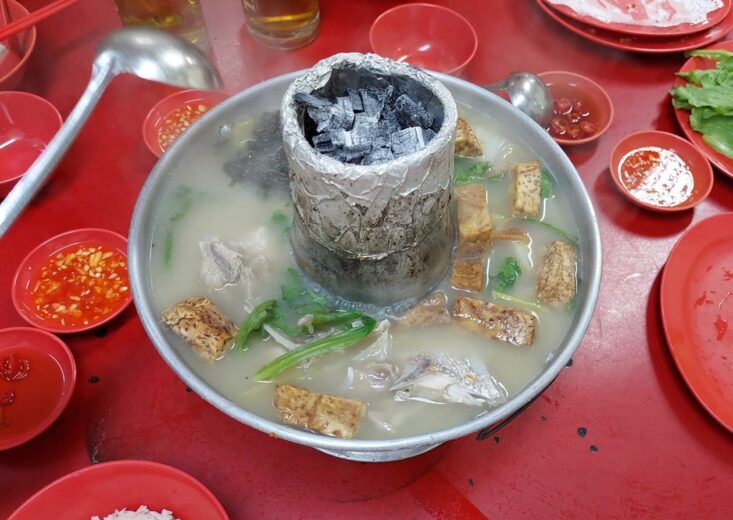
At most steamboat restaurants, the diner does the cooking. Here, much of the magic has already happened before that imposing metal pot arrives at your table.
In the kitchen, chunks of yam and fish head meet an intensely hot wok, developing charred, caramelised edges before broth is added. The liquid hits the hot wok and boils almost immediately, lifting those smoky aromas from its surface and carrying them into the soup.
The broth itself is built from dried sole fish and fried fish bones. The vigorous boiling helps emulsify the fish fats while the yam contributes sweetness and body. Napa cabbage and tang-oh (garland chrysanthemum) bring freshness to what is otherwise a deeply savoury affair. The result is not a delicate, pristine fish soup. It is rich, smoky and unapologetically robust.
Look closely at the yam and fish head and you can still see traces of the cooking that happened before they reached the table. The yam carries browned edges yet remains intact rather than disappearing into the soup. Pieces of fish head have that slight char that makes you instinctively go hunting for the next one.
There are easier ways to keep soup hot in 2026. Nan Hwa Chong simply chooses not to use them. Here, they insist on honouring their heritage of using real charcoal.
As the evening progresses and the broth reduces, servers replenish the pot with more base stock. Like most good steamboats, its personality changes as dinner goes on – becoming richer as ingredients mingle and the conversation gets louder.
Then There Is the Chilli
Never underestimate a Teochew chilli sauce.
Nan Hwa Chong’s homemade version combines fresh chilli, garlic, vinegar and fermented soybeans into something tangy, spicy and wonderfully addictive.
Dip a tender piece of fish head into it and suddenly the richness of the broth has a sharp counterpoint. It works equally well with many of the side dishes, cutting through fat and savouriness and, more importantly, encouraging you to eat far more than originally intended.
But one of our favourite combinations requires no sophistication whatsoever.
Spoon some broth over plain white rice. Add fish. A little chilli sauce. MAGIC.
The natural sweetness of the rice mellows the smokiness of the broth while the chilli wakes everything back up again. Sometimes the best combinations are the ones that need the least explanation.
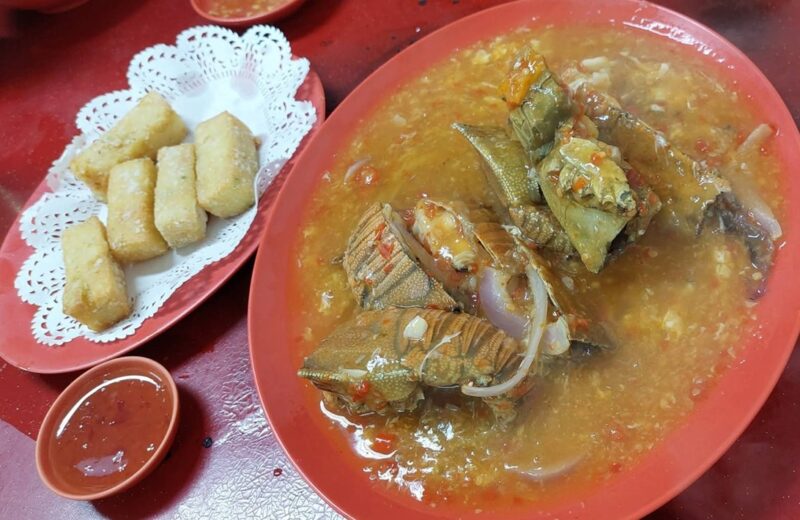
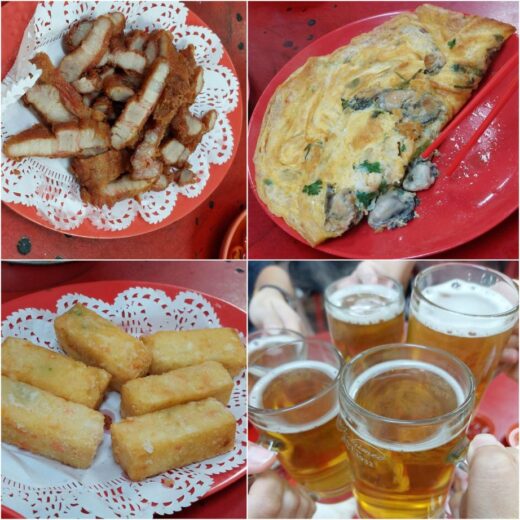
Around the steamboat are the supporting cast: belacan chicken wings, homemade seafood tofu, braised pig intestines, fried pork belly, sambal kangkong and oyster omelette among them.
The Marks Left Behind
Perhaps the most evocative part of Nan Hwa Chong isn’t just in the steamboat.
Housed in an old conservation shophouse, the restaurant offers both air-conditioned and non-air-conditioned seating. Choose the latter and you can experience the full historical package: Singapore humidity plus a pot of boiling soup sitting over hot charcoal. The plastic chairs and simple tables are unapologetically ordinary. Look at most of the tabletops, however, and their centres have darkened from years of hot steamboats being placed upon them.
Around us are families, friends, tourists and locals. Singlish floats from one table; Mandarin and other familiar languages from another. Sleeves are rolled up. Bowls are filled. Nobody particularly cares how anyone is dressed.
And perhaps this is where Nan Hwa Chong’s longevity matters most.
A grandparent who once ate here in his or her youth can now sit around a similar charcoal-fired pot with grandchildren. The city outside has changed almost beyond recognition, but the simple pleasure of gathering around hot soup has not.
This is the sort of food heritage The Humble Belly searches for. Not something preserved behind glass, nor tradition recreated purely for nostalgia, but food that remains part of everyday life.
Come after a rainy afternoon and you may have to wait – fish head steamboat was never meant to be rushed.
There are few things quite as comforting as a bowl of steaming soup, some rice, a glowing charcoal fire and good company on a cool evening.