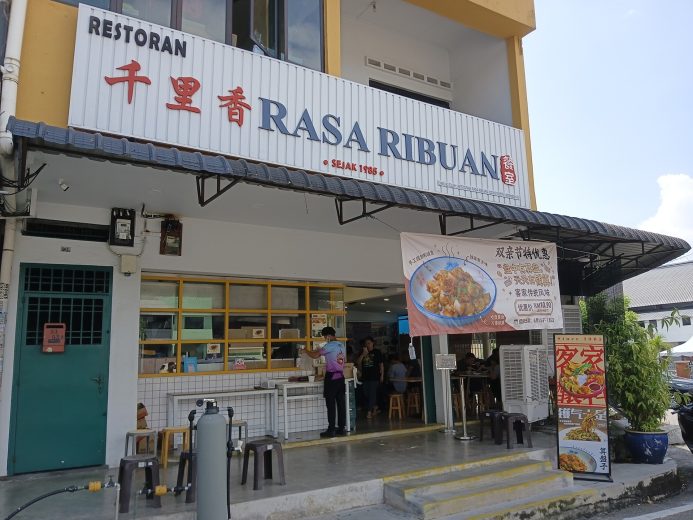
Established in 1985, Rasa Ribuan 千里香 still stands on its original ground at Taman Sri Tebrau, with a second outlet now in Mount Austin. But stepping into the original shop feels like stepping into a slower, older rhythm of eating—one that has not lost its sense of familiarity. The name Rasa Ribuan 千里香 means “A Thousand Flavours” Or “Flavours from AFar”.
Yong Tau Foo here carries more than nostalgia. It connects back to the Hakka people, originally from the Yellow River basin in central China, who migrated south over nearly 2,000 years due to waves of invasions from the north. As they moved, their food adapted with them.
One of their earliest staples was the dumpling—pork wrapped in thin wheat dough. But in the southern regions where wheat was less common and life was shaped by hills and different crops, the Hakka found new ways to preserve the same idea. Instead of wrappers, they began stuffing ingredients into whatever was available. This gave rise to a whole category of dishes known as niang cai (酿菜), meaning “stuffed dishes”.
That same idea lives on in Yong Tau Foo today.
At Rasa Ribuan, Yong Tau Foo means more than just stuffed tofu. It extends to okra, bittergourd, eggplant, chilli, beancurd skin, and tau pok—each carefully filled by hand. The fillings are typically a pork and fish paste blend, soft yet structured, often carrying a gentle savoury depth that reflects its roots. The Hakka community is also the second largest Chinese dialect group in Malaysia, and this dish remains one of its most enduring everyday expressions.
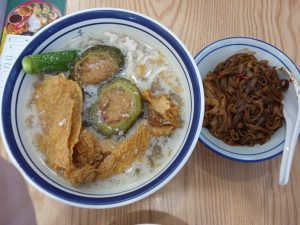
What makes it comforting here is the way it feels unforced. Each piece is generously filled, almost plump to the point of bursting, and served without pretence. You see the care in its shape before it even reaches the bowl.
The broth is clear, light, and quietly savoury, without msg. It doesn’t overwhelm. Instead, it ties everything together in a way that feels steady and familiar. When the stuffed pieces soak just enough, each bite releases a warm, soothing burst of soup—simple, grounding, and deeply comforting.
There is also a quiet sense of choice that feels personal rather than complicated. You pick your Yong Tau Foo pieces, decide your portions, and add extras like pork slices, pork tendon, or minced pork. Noodles can be served dry in a dark soy sauce that clings gently to each strand, or wet in broth that feels like a meal in itself.
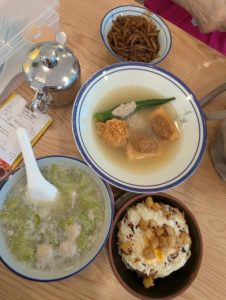
Beyond Yong Tau Foo, the kitchen continues the same home-style approach with Hakka dishes like Hakka fried noodles, bittergourd soup, yam abacus seeds, and crispy pork lard egg rice. Nothing feels rushed or dressed up.
This is food shaped by migration, memory, and adaptation—but what reaches the table today is simple: warm bowls, familiar flavours, and the quiet comfort of being fed well.