
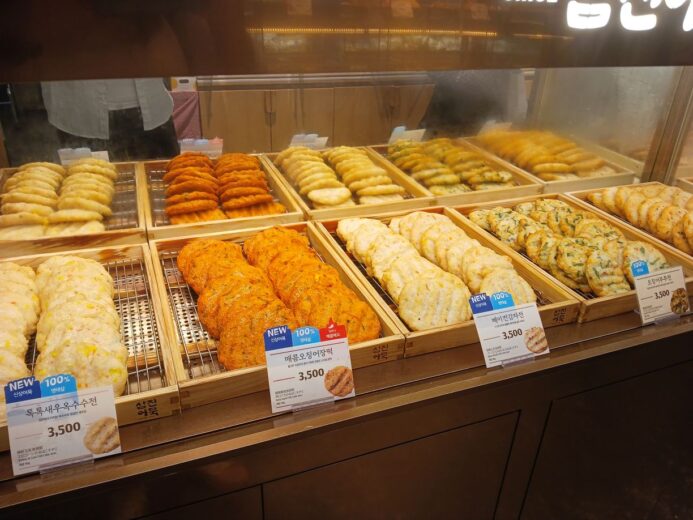
One of the easiest ways to understand a city’s food culture is to eat what its people have relied on for generations. In Busan, that food is fish cake.
Fish cakes exist across much of Asia – from Indonesia and Malaysia to Taiwan, Japan and China – but nowhere are they more closely associated with a city than in Busan. Among the many producers, none is more recognisable than Samjin Amook.
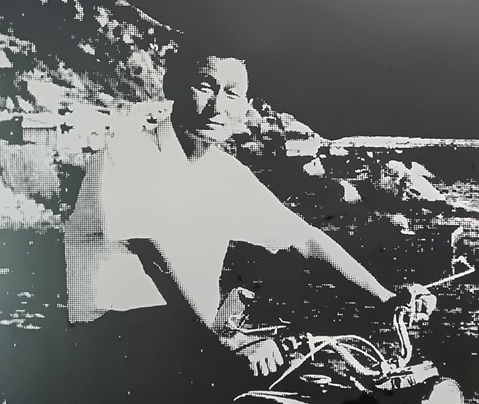
Founded in 1953 in the aftermath of the Korean War, Samjin began as a small fish cake workshop at Mokdo Market in Yeongdo (today’s Bongnae Market). Food was scarce, but Busan still had what the sea generously provided. Fresh fish became an affordable source of protein for thousands of refugees rebuilding their lives.
It was the first-generation founder, Park Jae-deok, who laid the foundation. Having learnt fish cake making while conscripted to Japan, he returned believing that even ordinary people deserved food made with quality ingredients. That philosophy continues more than seventy years later.
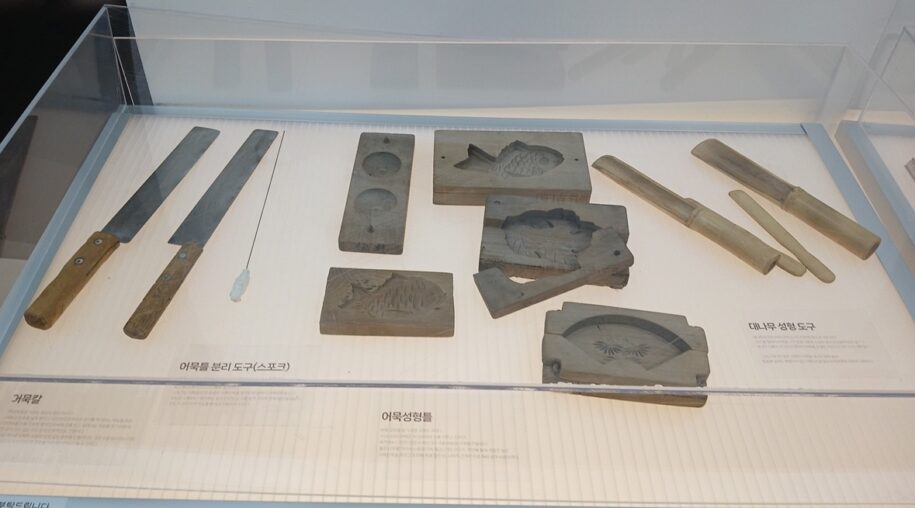
Fish cakes themselves have an even longer history in Korea. Records dating back to the royal court in the early 1700s describe dishes remarkably similar to modern fish cakes, while banquet records for Emperor Gojong’s birthday in 1902 mention elaborate fish preparations that reflected the craft long before commercial production began.In the 1950s, fish cakes were fried in makeshift oil drums using whale or sardine oil, with craftsmen relying on specialised knives and hand tools to pound the fish into the perfect texture before shaping them in traditional moulds. Looking back, they were perhaps one of Korea’s earliest forms of convenient street food.
Today, Samjin has evolved into a modern manufacturer while still producing fish cakes that taste surprisingly fresh and artisanal. Made primarily from mullet, pollack and sea bream, many varieties are enriched with squid, octopus and vegetables before being lightly fried or steamed.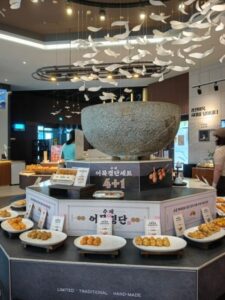
Walking into a Samjin store is almost overwhelming. More than fifty varieties line the shelves, each showcasing a different ingredient or flavour from Busan. Squid. Octopus. Mushrooms. Cheese. Chilli. Pepper. Mild. Spicy. Choosing just a few becomes the hardest part.
Our favourite was the Japchae Perilla Leaf Roll Amook. The aroma of fresh perilla leaf arrives first, followed by the unmistakable fragrance of seafood. Despite perilla being a bold herb, it never overwhelms the fish. Instead, it complements the subtle sweetness and umami of the seafood beautifully.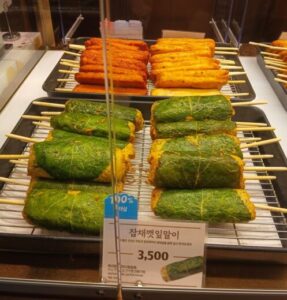
Texture is where Samjin excels. The fish cake is springy and pleasantly bouncy – not soft or rubbery – with carrots and spring onions adding freshness and natural sweetness. The japchae filling contributes another layer of texture, making each bite more satisfying than expected from what many would dismiss as a simple snack.
It is easy to understand why fish cakes became an everyday food in Busan. They are convenient, filling and deeply comforting. More importantly, they tell the story of a city that transformed hardship into craftsmanship.
Sometimes the most meaningful foods aren’t luxurious. Sometimes they’re simply the foods that helped people through difficult times – and never stopped being delicious.