
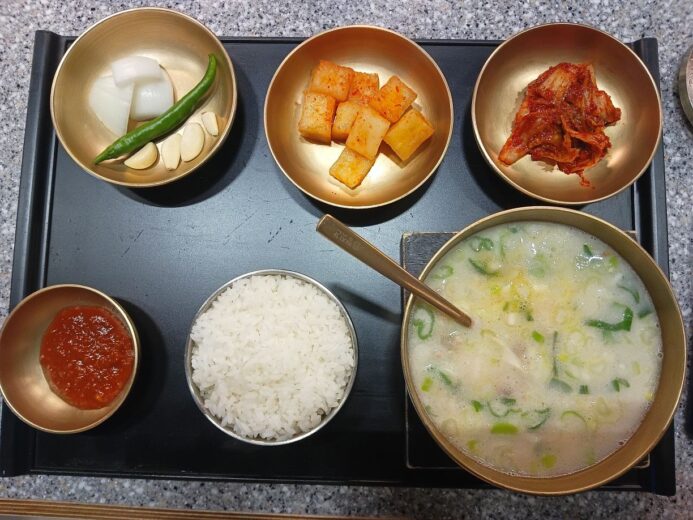
There is something universally comforting about a bowl of soup. It asks for nothing more than a spoon, a quiet moment and an appetite. Yet behind every memorable bowl lies patience, restraint and years of understanding.
Established in 2011, Jeong Jit Gan traces its roots to the founder’s mother, who once ran a modest eatery tucked away in a Busan alley. She was known not only for serving generous portions, but also for treating students and the elderly with the warmth and compassion of a mother. Her kitchen became a place where people came not just to eat, but to feel cared for. Fittingly, Jeongjitgan is the Gyeongsang-do dialect word for “kitchen”, and today that same spirit continues through every bowl they serve.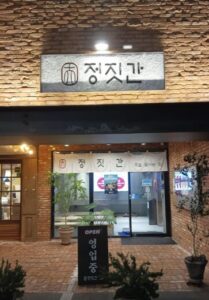
That sincerity has not gone unnoticed. In 2026, Jeong Jit Gan was once again recognised in the Michelin Guide for its Busan-style Dwaeji Gukbap. The founder honours his mother’s legacy not by chasing trends, but by preparing every bowl with the same honesty and generosity she practised for decades.
Cooking pork broth may sound simple, but it is anything but. The process itself is straightforward, yet coaxing a broth to become silky, rich and soothing requires remarkable discipline. The wrong temperature, insufficient preparation or excessive cooking can leave a broth tasting greasy, rancid or overly porky. Achieving balance is what separates a good bowl from an exceptional one.
Our bowl arrived with a beautifully milky-white broth carrying the unmistakable fragrance of fresh Korean garlic. We happened to visit during Korea’s garlic harvest season between May and June, when the garlic is noticeably sweeter and gentler than many varieties found elsewhere in Asia. Rather than overpowering the soup, its delicate aroma intertwined gracefully with the natural sweetness of the pork. The generous spring onions brought another layer of sweetness that rounded out every spoonful, creating a broth that felt both deeply comforting and quietly refined.
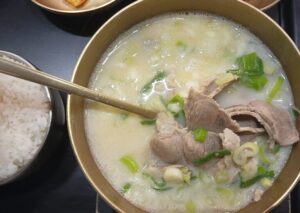
The pork shoulder slices were tender and thinly sliced, yet retained enough texture to remind us we were eating proper cuts of meat rather than overcooked shreds.
We also appreciated the kimchi, seasoned with salted fermented shrimp instead of relying heavily on acidity. Its savoury salinity gently awakened the palate before the next spoonful of broth settled everything once again. Even the rice deserved recognition. The glossy, plump grains remained beautifully distinct in the soup, carrying their own natural sweetness while completing the meal with a sense of warmth and satisfaction.
When a broth is this good, its honesty becomes impossible to miss. There is a purity to its flavour that can only come from patience, discipline and sincere craftsmanship. It is the kind of food that comforts the soul as much as it nourishes the body. In many ways, it mirrors the founder’s mother’s kitchen, where a simple bowl of soup was never just a meal, but an expression of kindness and care.
We visited on a Monday morning at 10.30am, barely half an hour after opening, and the dining room was already half full. It was easy to understand why.
Jeong Jit Gan serves more than an excellent bowl of Dwaeji Gukbap. It preserves a legacy built on compassion, honesty and quiet excellence. Sometimes, the most sophisticated food isn’t the most elaborate – it is the food that makes you feel at home.
Other Related Article
Just around the corner from Jeong Jit Gan is another establishment serving its own version of pork soup. Read about them here.